Hey everyone, it’s Jake here from the perforated metal side of things—figured I’d pull back the curtain on something I get asked about all the time: how we use perforated metal for speaker grilles. Let’s be real, when you buy a new speaker, you stare at that front panel more than you realize, right? It’s not just a pretty face, though. It’s the unsung hero keeping your audio crisp and your speakers safe. Let’s dive in, no boring jargon promise. Perforated Metal
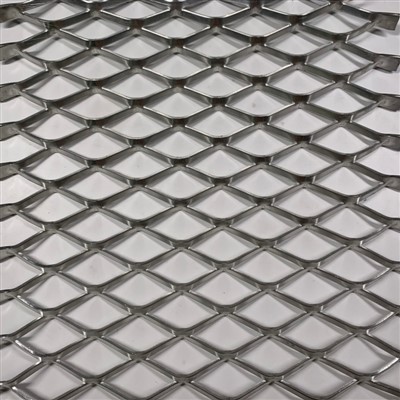
First off, let’s break down why perforated metal even matters here, versus like, plastic mesh or fabric. As a supplier, I’ve spent years testing this, and it all comes down to balance. The whole point of a speaker grille isn’t just to stop dust, or keep little fingers from poking the cone—its main job is to let sound through, with zero muddling. If you block too much of the sound, that bass gets flat, the highs get tinny, and suddenly your $500 speaker sounds like a $20 boombox. Perforated metal’s tiny, evenly spaced holes hit that sweet spot almost every time.
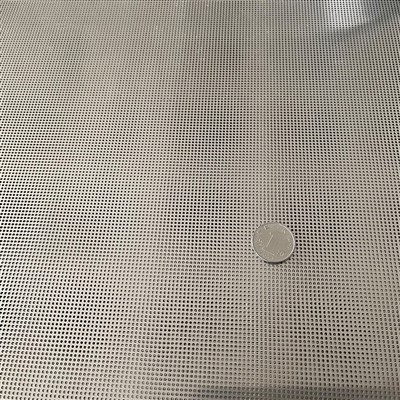
Wait, let’s get nerdy for two seconds (promise not too long): the open area ratio. That’s basically how much of the grille is holes vs. solid metal. For speaker grilles, we’re usually looking at 20-40% open area. Too low, and sound gets muffled; too high, and you don’t get the dust protection you need. We tweak hole size and spacing to nail that. For example, if it’s a small bookshelf speaker (the ones you put on a desk for Netflix nights), we use smaller holes—like 1-2mm in diameter. Why? Smaller holes mean less wind noise when you crank the volume, and they still let all the sound from the tweeter and midrange pass through unobstructed. For bigger home theater speakers or subwoofers, we use larger holes—3-5mm—because those low-frequency sound waves are way bigger. They don’t care about tiny holes, so we use larger ones to keep the open area high without making the grille flimsy.
Speaking of flimsy—perforated metal is tough. Unlike fabric, which can sag over time if you move the speaker around a lot, or plastic mesh that cracks when you accidentally drop something, metal holds its shape. I had a client once who ran a line of portable Bluetooth speakers—they were getting tons of returns because the plastic grilles broke when customers tossed them in backpacks. Switched to our 0.8mm thick aluminum perforated grilles, and returns dropped by 70% within three months. That’s the kind of real-world win we live for, as suppliers.
Now, let’s talk about the different types of metal we use, because that affects both function and look. Most of the time, we go with aluminum—it’s light, won’t rust, and we can cut it into any shape or finish the client wants. Some high-end audio brands like stainless steel for a sleek, industrial look—think the super minimal speakers you see in luxury apartments. Stainless is heavier, so it’s more durable for built-in speakers (like the ones you put in your wall or ceiling). Then there’s brass, for vintage-style speakers—we can leave it uncoated so it patinas over time, which actually looks cooler the older it gets, perfect for boutique audio brands that sell retro-inspired gear.
Wait, and the finish is a big part too. As a supplier, we don’t just drill holes and send it off—we can powder coat perforated metal in any RAL color, or even anodize it for a matte, scratch-resistant look. A lot of our clients love black because it hides dust, but some go for white to match their living room decor, or even custom colors for brand consistency. One client makes speakers for rock festivals, so they do bright red and blue perforated grilles that match their booth branding. It’s not just about sound anymore—grilles are part of the speaker’s design, so we make them work for that.
Let’s get into the science of how perforated metal affects sound, because that’s the core of this. I’ve spent hours in test labs with audio engineers, and this part blows a lot of people’s minds. When sound travels through a perforated grille, the holes don’t distort the frequency as long as the hole size is smaller than the wavelength of the sound it’s trying to pass. For tweeters, which make high-frequency sound (around 2,000 Hz and up), the wavelength is super small—like 17mm for 2,000 Hz. Our 1mm holes are way smaller, so they don’t touch the sound waves at all. For subwoofers, which do low-frequency sound (20-200 Hz), the wavelength is like 17 meters for 20 Hz—huge! So a 5mm hole is nothing, the sound just passes right through. That’s why perforated metal is way better than, say, solid wood grilles, which block a ton of sound, or even fabric, which can absorb high frequencies and make the speaker sound muddy.
Wait, but what about if someone wants a grille that looks good without ruining sound? We did a project for a high-end audio brand that wanted a perforated metal grille for their flagship speaker, but they also wanted it to look like it had a solid metal front when it wasn’t playing. So we did a reverse perforation—really tiny, near-microscopic holes. You can barely see them with the naked eye, but they’re enough to let all the sound pass through. The engineers were shocked at how little it affected the frequency response—only a 0.5 dB drop in the highest highs, which is undetectable to the human ear. That’s the kind of custom work we do all the time as perforated metal suppliers, not just off-the-shelf stuff.
Another big use case: portable and rugged speakers. Think the ones you take to the beach, or camping, or to construction sites. Those need to survive sand, water, drops—so plastic won’t cut it. Perforated metal is perfect here because it’s waterproof (obviously), sand can’t get stuck in the holes? Wait no, wait—actually, we design the hole size so sand can’t get in the speaker cabinet, but sound can. For example, if the speaker has a 2-inch driver, the holes are 3mm, which is small enough to block sand and dust, but big enough for sound. We did a run of these for a company that makes rugged work-site speakers, and they told us their customers love that the grilles never rust, even when they get rained on and dragged through mud.
Wait, let’s address the common myths. I get this all the time: “Metal grilles make sound louder?” No, not exactly—they make the sound cleaner. If you have a bad grille, it can cut down sound output by 10-15%, but a good perforated metal grille only cuts it by 2-3%, which is negligible. Another myth: “Perforated metal makes a tinny sound.” That’s only if you use the wrong hole size or open area. If you use the right ratio, it sounds exactly like it does without the grille. We test every custom order to make sure the frequency response is within 1 dB of the speaker’s un-grilled output—audio engineers go crazy for that level of consistency.
Now, how we work with speaker brands, because that’s the other side of being a supplier. A lot of people think perforated metal is just punching holes in a sheet, but it’s way more involved. We start with a client’s design files—usually a CAD of their speaker’s front panel. Then we tweak the perforation: hole size, spacing, thickness, metal type. For example, if a client has a round speaker, we can make a round perforated grille, or even a custom shape like a hexagon or wave edge. We also work on the edge finish—some clients want a folded edge to keep it tight against the speaker cabinet, others want a raw cut for a more industrial look. We can also add a mesh layer behind the metal if the client wants extra dust protection, but 9 times out of 10, the perforated metal alone is enough.
I should also mention durability over time. A lot of speaker grilles wear out—fabric fades, plastic cracks, but perforated metal can last for decades. I’ve seen vintage speakers from the 70s with original perforated metal grilles that still look brand new. That’s a big selling point for brands that make long-lasting, heirloom-quality speakers. As a supplier, we stand behind our grilles—every order comes with a 5-year warranty against rust or cracking, no questions asked.
Wait, and what about consumer use? If you’re a DIYer building your own speaker, perforated metal is way easier to work with than you might think. We sell small sheets of perforated aluminum to hobbyists too—you can cut it with a metal shear, drill it, paint it, whatever. I have a friend who built his own bookshelf speakers for his apartment, used our 1.5mm perforated black aluminum, and he says it sounds better than the $1,000 pre-made ones he looked at. That’s the coolest part of this job—seeing our perforated metal used in everything from boutique high-end speakers to DIY projects to rugged work gear.
So wrapping this up, let’s be clear: perforated metal isn’t just a functional part of a speaker grille—it’s a key component that makes the sound good, keeps the speaker safe, and looks great while doing it. Whether you’re a big audio brand looking for custom grilles for a new line of home theater speakers, a portable speaker company needing rugged, sand-proof grilles for outdoor use, or a hobbyist building your first set of speakers, perforated metal is the way to go.
If you’re working on a speaker project—whether it’s a small batch, a custom run, or a DIY build—we can help. We’ve got all the materials, the design expertise, and the testing to make sure your grilles sound great, look great, and last. Hit us up to chat through your needs, no pressure—just know what works for audio, performance, and durability.
Slotted Perforated Metal References:
- Audio Engineering Society. (2018). The Effect of Perforated Grilles on Loudspeaker Frequency Response. Proceedings of the 144th AES Convention.
- Perforated Metal Manufacturers Association. (2021). Specification Guide for Perforated Metal in Acoustic Applications.
- Consumer Electronics Association. (2020). Durability Testing of Speaker Grille Materials for Rugged Portable Devices.
Anping Yilida Metal Wire Mesh Co., Ltd.
Anping Yilida Metal Wire Mesh Co., Ltd. is one of the most reliable perforated metal manufacturers and suppliers in China, also supports customized service. Please feel free to buy bulk high quality perforated metal made in China here from our factory.
Address: Wire Mesh Development Zone, Anping, Hebei Province, China
E-mail: sales@wiremesh-yg.cn
WebSite: https://www.yilidametal.com/
