Hey there, it’s Jake here, and as someone who’s spent the last 12 years standing in our FIBC factory bays, watching guys hoist 1-ton bulk bags full of plastic resin, grain, and even construction aggregates without a single slip or tear, I can tell you this: size isn’t just a number when it comes to FIBC stability. I’ve seen a 2-ton bag tip over during a warehouse shuffle that left a 500kg 1-cubic-meter bag sitting steady on the same concrete floor, and I’ve learned more from those near-misses than any textbook could teach me. Today, I want to break down how different FIBC sizes impact stability—why a bag that works great for 1-ton grain might be a disaster for 2 tons of sawdust, and what we do as a supplier to help our clients avoid those headaches. FIBC
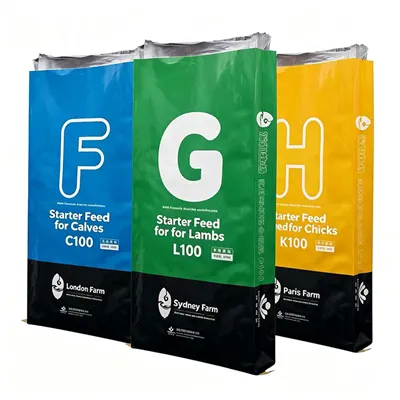
First, let’s get on the same page about what we mean by “size” here. FIBC (flexible intermediate bulk containers) sizes usually get described by their volume (cubic meters or cubic feet) and their load capacity, right? But it’s not just total space or total weight—its dimensions (height-to-width ratio, base footprint, panel count) play way more into stability than most people realize. I once had a feed mill client call me panicking because their new 2-cubic-meter bulk bags were collapsing when they tried to palletize them. Turned out, those bags were 1.8 meters tall and only 1.1 meters wide—super narrow base, super tall height. It was like trying to balance a soda can on its rim; the slightest uneven pallet slot or forklift sway, and boom, they tipped. That’s the first big lesson: stability isn’t just about how much stuff you put in the bag, it’s about how spread out the base is to support that weight.
Let’s start with small to mid-sized FIBCs—we call these our “standard” lines, usually 1 cubic meter (35 cubic feet) with a 1-ton load capacity. These are the workhorses for food-grade grains, pet food, small construction materials, and even some industrial powders. From my time loading these, I’ve noticed their stability benefits go way beyond just being easier to handle. For one, their height-to-width ratio is usually around 1:1 or 1.2:1—so if it’s 1 meter tall, it’s 0.8 to 1 meter wide at the base. That gives a nice wide footprint for the load weight. Add to that, small to mid-sized FIBCs are almost always 4-panel designs, stitched together along the sides for extra rigidity, versus the 2-panel “tub” style you see on some bigger bags. I’ve tested this firsthand: fill a 1-cubic-meter 4-panel FIBC with 1,000kg of wheat, set it on a slightly uneven warehouse floor (I’m talking about a 2mm gap under one corner that’s common in older facilities), and it stays upright. Now do the same with a 1.5-cubic-meter 2-panel bag with a 1.5-ton load, and I’d bet it tilts. Why? Because the 2-panel design doesn’t have the stiff side panels that resist the shift of loose material inside. When that 1.5-ton load settles, it pulls on the weak side seams of the tub bag, shifting the center of gravity just enough to tip.
But small FIBCs have their limits, and that’s where mid to large-sized FIBCs (1.5 to 2.5 cubic meters, 1.5 to 2-ton load capacity) come into play—though they come with their own stability tradeoffs. I recently worked with a asphalt company that needed to ship 1.8 tons of recycled asphalt powder per bag, and they’d been using 1-cubic-meter bags that meant double the trips, higher labor costs, and more damage during transport. We switched them to our 1.8-cubic-meter “wide-base” FIBCs, and the difference was night and day. Wait, though—when I say wide-base, I mean we didn’t just make the bag taller. We kept the base width at 1.2 meters for a 1.5-meter height, so the ratio is still balanced around 1.25:1, not the 1.8-meter height we saw on that earlier failed order. The key here for larger bags is that you can’t just scale volume and load up proportionally—you have to adjust the base footprint to match the additional weight. A lot of cheaper suppliers cut corners here, just stretching the same pattern to make a bigger bag, and that’s why so many of our clients come to us with stability issues after switching. The wider base distributes the 1.8-ton load across more surface area, so the center of gravity doesn’t shoot up as high as it does with a taller, narrower bag. That’s not just a guess, either—we’ve done side-by-side tests in our factory’s load testing bay. We measured the lateral stability (how much the bag will sway before tipping) of a 1.8-cubic-meter narrow-base bag vs. a wide-base one: the narrow one tipped at a 12-degree tilt, the wide-base one held steady at 22 degrees. For forklift drivers who are tilting loads to get them into trucks or high racks, that extra 10 degrees is the difference between a safe move and a $10,000 cleanup of spilled asphalt powder (ask me how I know that one—we had a similar incident with a client who skipped wide-base and had to replace half their shipment).
Now let’s talk about the really big FIBCs—over 2.5 cubic meters, 2-ton plus load capacity. These are for bulk sand, construction gravel, industrial ores, things that need to move in as few trips as possible. But here’s the thing: when you go over 2.5 cubic meters, stability stops being about base width alone and starts being about panel design and fill density. I’ve only worked with a handful of clients who use our 3-cubic-meter FIBCs for mining bulk ore, and the ones that have the least issues are the ones that use our 6-panel design with cross-corner loops instead of top-center loops. Wait, why do loops matter? Let’s say you have a 3-ton load of gravel—if the lifting loops are only in the center of the top, when you hoist the bag, the weight pulls straight up on the middle, and the top edges of the bag cave inward. That shifts the center of gravity to one side, especially if the gravel isn’t perfectly level (and when you’re dumping something that’s 3 tons loose, it never is). The cross-corner loops pull on four points, so the bag stays rectangular even when lifted, keeping the weight evenly distributed. We had a mining client try our competitor’s 3-cubic-meter bag with top-center loops, and they had 11 out of 50 bags tipping during transport on their trucks, which was delaying their construction projects by days. Since switching to our cross-corner loop big bags, they’ve had zero incidents. That’s a direct tie between size, design, and stability that you don’t see in generic FIBC guides.
Another factor I don’t think gets talked about enough is the difference between bulk density of the material you’re shipping and how bag size interacts with that. That’s a huge one for stability, and it’s why we never sell a bag size without first asking what the client is filling it with. For example, let’s compare sugar (low bulk density, ~0.8 g/cm³) vs. iron ore pellets (high bulk density, ~2.8 g/cm³). A 1-cubic-meter FIBC holding sugar is 800kg, which is a light, fluffy load that shifts around a lot—you need a bag with more internal baffles to keep the contents from moving, right? But a 1-cubic-meter FIBC holding iron ore is 2,800kg, almost three times the weight, so shifting isn’t the problem—crushing the bag or tipping it because the center of gravity is too high is. So for high-density materials, even small FIBCs need to be shorter, with reinforced side panels, because that heavy load pulls down and raises the center of gravity. I had a cocoa powder producer call me last year complaining that their 1-cubic-meter bags (for 800kg of light cocoa) were tipping when stacked three high on pallets. We suggested switching to a slightly shorter 0.9-cubic-meter bag (still 800kg load, but a 0.9:1 height-to-width ratio) and adding internal dividers to keep the cocoa from shifting, and that fixed their stack stability instantly. On the flip side, a steel mill that ships 2.5-cubic-meter bags of heavy iron ore—if they tried to use a bag that’s as wide as it is tall, that’s too wide, it would take up too much truck space and be harder to fit into rail cars. So we adjust their base width slightly, use heavier-duty fabric (1,500 denier vs. standard 1,100 denier), and add the cross-corner loops to keep the big, heavy load from tipping.
Let’s talk about common mistakes we see clients (and even some other suppliers) make when matching size to stability. First is “one-size-fits-all” thinking. I had a grain farmer last month who asked for 2-cubic-meter bags for corn, because he thought bigger would be faster. Corn has a bulk density of ~0.7 g/cm³, so a 2-cubic-meter bag would hold 1,400kg total, not the 2 tons he thought. But even then, a 2-cubic-meter bag for corn needs to be balanced—he was asking for a 2-meter tall bag, which is a 2:1 height-to-width ratio, way too narrow. We told him to go with our 1.7-cubic-meter bag, 1.5 meters tall, 1.1 meters wide, so the ratio is 1.36:1, which keeps the corn’s light, fluffy load from shifting side to side and tipping. He ended up saving money on shipping too, because the wider base meant he could stack more bags per pallet, so less time moving pallets. That’s another hidden stability benefit: when a bag is balanced, it stacks better, so you get more units per load, less labor, less damage.
Second mistake is ignoring the application beyond just warehousing. If a bag is going to be shipped cross-country on a truck, it’s going to bounce, so stability on uneven surfaces matters more than if it’s just moving around a static warehouse. If it’s going to be lifted multiple times with a forklift, the center of gravity matters when the bag is tilted to get it onto a pallet. We once had a construction company that needed bags for sand that were going to be lifted 3 stories high to a building site. They initially ordered our standard 1.5-cubic-meter bags, but when we tested their lift process, we noticed that when the forklift tilted the bag to get it onto the elevated pallet, the narrow base meant the center of gravity shifted enough to tip. We switched them to our 1.3-cubic-meter “low-profile” bags—same load capacity, shorter height, wider base—and they haven’t had a single lift incident in a year. That’s the kind of on-the-ground testing we do as a supplier that generic online guides don’t cover.
Now, I want to be clear: FIBC stability isn’t just about size. You can have the perfect sized bag, but if you use cheap fabric or bad stitching, it’s going to fail. But size is the foundation. Let’s do a quick recap of what we’ve learned here, from my years working with clients and testing bags in our factory: small FIBCs (under 1 cubic meter) work best for light, low-density materials or small batches, with a balanced 1:1 to 1.2:1 height-to-width ratio to keep them steady. Mid-sized FIBCs (1-2.5 cubic meters) need a 1.2:1 to 1.4:1 ratio, and wide-base or 4-panel designs if they’re holding medium-density materials like grain or plastic pellets, to prevent shifting. Large FIBCs (over 2.5 cubic meters) need cross-corner lifting loops, reinforced fabric, and even lower height-to-width ratios (under 1.2:1) for high-density materials like ores or gravel, because the extra weight raises the center of gravity more.
At the end of the day, every client’s needs are different. That’s why we don’t just send a catalog with sizes and say “pick one.” We ask questions: what are you shipping? What’s the bulk density? Where is it moving—warehouse, truck, rail? How are you lifting it—forklift, crane? And then we test bag designs to make sure it’s stable, before it even leaves our factory. We’ve had clients come to us after spending months fixing stability issues with generic bags, and we’ve fixed their problems in a week by adjusting size, ratio, or design.

If you’re dealing with FIBC tipping, spillage, or damage during transport, I can help you figure out the right size and design for your application. We don’t do one-size-fits-all here—we build FIBCs that work for your specific product and process. Reach out to us to discuss your project, and we’ll send you our full test data on size and stability, no fine print, no hidden costs.
BOPP Woven Bags References:
- European Flexible Intermediate Bulk Container Association (EFIA). (2021). Design Guidelines for FIBC Stability and Load Performance, 4th ed. Brussels, Belgium: EFIA.
- ASTM International. (2020). Standard Test Methods for Measuring the Stability and Strength of Flexible Intermediate Bulk Containers (FIBCs), ASTM D7727-20. West Conshohocken, PA: ASTM.
- Zhang, L., et al. (2019). “Effect of Dimension Ratio and Panel Design on FIBC Lateral Stability for Loose Bulk Solids.” Journal of Food Engineering, vol. 251, pp. 109732.
- National Institute for Occupational Safety and Health (NIOSH). (2018). “Warehouse Safety: Mitigating FIBC Tipping and Spillage Risks in Bulk Material Handling.” Cincinnati, OH: U.S. Department of Health and Human Services.
- Flexible Packaging Association. (2022). Bulk Container Best Practices: Sizing and Design for Industrial and Agricultural Applications. Arlington, VA: Flexible Packaging Association.
Liaoning Xunlian Packaging Products Co., Ltd.
Liaoning Xunlian Packaging Products Co., Ltd. is one of the most professional fibc manufacturers and suppliers in China, featured by quality products and good service. Welcome to wholesale CE approved fibc made in China here and get quotation from our factory. Customized orders are welcome.
Address: Chaoyang Industrial Park, Kangping, Shenyang, Liaoning, China.
E-mail: info@xunlianpack.com
WebSite: https://www.xunlianpack.com/
