What is doubles bocce ball, anyway? If you’ve ever wandered a backyard BBQ, a beach picnic, or a local rec center league and spotted a group of four people standing around a set of colorful balls, yelling something that sounds like “bocce!” but with way more back-and-forth, you’ve basically seen doubles bocce in action. I’m the guy who’s been supplying bocce sets to folks just like you for years, and let me tell you—doubles isn’t just “bocce with two more people.” It’s the version that turns a casual game into a strategic, competitive blast, and it’s way more popular right now than singles bocce for weekend groups, neighborhood leagues, even corporate team building. Bocce Ball

Let’s break it down simple. First, the basics of any bocce set: you’ve got the pallina (that tiny white target ball), and then 8 larger bocce balls, 4 per team. For doubles, each team has two players—so Team A is Player 1 and Player 2, Team B is Player 3 and Player 4. No exceptions (well, not unless you’re messing around for a backyard game, but the official rules? Solid two per side). Here’s the part that trips newbies up: turns don’t go to every player individually. In doubles bocce, one player from Team A throws first, then a player from Team B, then the second player from Team A, then the second from Team B. It’s a rotation, and that’s where the strategy kicks in. You’re not just thinking about your own throw—you’re also thinking about what your teammate will need to make their shot, and what the other team is gonna do to mess it up.
Wait, let’s get specific on how a game actually plays. Start with the pallina: the first lead player (usually Team A’s first thrower) lobs the tiny white ball out into the playing area (most people use a flat patch of grass, a driveway, even a polished concrete floor indoors for winter games). Once the pallina is settled, that same lead player throws their first bocce ball, trying to get as close to the pallina as possible. Then Team B’s lead player does the same. If their ball lands closer, Team A gets to throw their second lead player’s ball next—either to knock Team B’s ball away (that’s called a “bocci strike,” yeah, that’s a term) or to move their own team’s ball even closer.
Here’s the twist: once all 8 bocce balls are thrown (4 per team), you add up points. The team with the ball closest to the pallina gets 1 point for every one of their balls that’s closer than the other team’s closest ball. No points if it’s a tie. So if Team A has three balls closer than Team B’s best one, Team A gets 3 points. That’s it for the end, right? Except… there’s a “doubles only” rule that makes this way more fun: a team can only take out an opponent’s ball or move their own if the thrower’s teammate is in a position to follow up immediately. If your first throw misses, your second teammate doesn’t get a free pass to whack balls around—they have to build on the first one’s shot. That’s the difference between casual backyard play and actual league doubles.
I’ve seen so many new groups mess this up when they buy their first set from me. They get excited, let both guys on the team throw at once, and then wonder why the ref (or the buddy who’s keeping score) calls a foul. Trust me, I get it—when you’re playing with friends, it’s easy to skip the tiny rule stuff. But that’s why doubles is such a hit: it’s easy to learn, hard to master. Like, last month a guy bought a commercial-grade set from me for his local league, texted me two days later going, “Dude, your set has the rule sheet? Saved my league from kicking me out. I was just throwing both balls at the same time.”
Now, why should you care about doubles vs. singles? Let’s be real: singles is great for a one-on-one match, but doubles is where the teamwork comes in. It’s the reason you’ll see a couples’ tournament, a company picnic where two departments go head-to-head, or a weekend rec league that only does doubles. You’re not just competing against someone—you’re coordinating with a partner, calling shots like, “You take out their third ball, I’ll get our second one right next to the pallina.” That camaraderie is huge, and it’s why my best-selling sets right now are the doubles-specific ones—with extra balls, a carrying case that fits two sets, and even a little scorecard holder so you don’t lose track mid-game.
Wait, let’s clear up another common question: is doubles bocce the same as doubles petanque? Nope. Petanque is a French version that’s played on dirt or gravel, and you throw the ball underhand (no overhand tosses). Bocce, including doubles, is usually played on grass or a smooth court, and you can throw it any way you want—overhand, underhand, even sidearm, as long as you don’t break the rules. No fancy technique required, which is why it’s so accessible. I’ve had 10-year-olds and 70-year-olds buy the same doubles set from me and play together, no one feeling left out.
Let’s talk about the fun, real-world side of doubles. Last summer, I supplied a set to a family for their annual summer reunion. The two teams were the “South Cousins” and “North Cousins” (no prizes, just bragging rights). By the third end, they were yelling so loud that the neighbor came over to join in. They told me later that doubles was way better than their usual volleyball—no diving, no bruised knees, and they got to hang out with both cousins instead of splitting up. That’s the stuff I live for as a supplier: helping people create moments, not just sell balls.
Now, let’s get to the strategic stuff, because that’s what separates casual play from actual fun. A good doubles team has a “lead” and a “partner.” The lead is usually the more consistent thrower—they set up the first shot, get the first ball close to the pallina. The partner is the one who does the “dirty work”: knocking opponent balls away, moving their own team’s balls into better positions. For example, if the lead throws a ball 6 inches from the pallina, the partner’s job is to not just add another ball 5 inches away, but to take out the opponent’s ball that’s 4 inches away. That way, their team has two balls closer than the other’s, for two points, instead of one. I’ve seen teams flip a game in the last five minutes just by switching who throws lead and who throws partner—small adjustments, big results.
And yes, there are fouls, just like any sport. If you step over the foul line when you throw, your ball doesn’t count. If you touch the pallina with your ball before it’s settled, you have to replay that end. That’s why I include a little chalk line stencil with every doubles set I sell—so you don’t have to guess where the line is. Way too many new players mess up the line, and I get a text every other week from someone going, “Your chalk stencil saved me from a fight with my roommate.” Relatable.
Wait, should you get a doubles set for your next event? Let’s list the reasons: it works for any group size (four is perfect, but if you have more, you rotate subs), it’s low-impact so no sore bodies after, it’s easy to learn in 10 minutes, and it’s way more engaging than cornhole or bean bags. I’ve even supplied sets for birthday parties, wedding receptions, and senior centers—all of them rave about doubles. Unlike some games that get boring after an hour, doubles has a little bit of everything: luck (the pallina’s first toss), skill (throwing close), and strategy (teammate coordination).
Let me make this real for anyone who’s still on the fence. I started selling bocce sets because I love playing—my buddies and I used to play singles all the time, and we got bored. Then we tried doubles, and suddenly we were playing every weekend. We started a league, made up silly team names (The Bocce Ballers, The Pallina Pushers), and even hosted a tournament last year. That’s why I don’t just sell sets— I give people the stuff to make their own little traditions.
If you’re reading this, you’re probably either looking to buy a set for yourself, your group, or your next event. Maybe you’ve heard of doubles bocce, but you weren’t sure if it’s worth the investment. Let me be clear: it is. It’s the game that brings people together, no matter their age, skill, or background. No one feels like a loser in doubles because you’re a team—even if you lose, you laugh about the terrible shot your partner threw, and you play again next weekend.
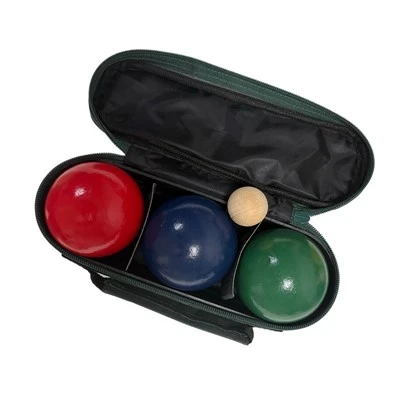
So, if you’re ready to skip the confusing rulebooks and get a set that’s built for doubles, I’ve got you. My sets are durable, come with everything you need (pallina, eight bocce balls, scorecards, the chalk stencil), and they’re priced for every budget. Whether you’re a backyard homeowner, a rec league coordinator, or someone who just wants a fun game for their next gathering, I’ve got options. No overpriced junk, no complicated stuff—just good, solid bocce that’s made for doubles, because that’s where the fun is.
If you’re curious about sizing, custom colors, or just want to ask a question about how to set up your first doubles game, reach out to me. I’m here to help, not just sell balls. This game’s been around for thousands of years (yeah, people played bocce back in ancient Rome, can you believe that?), and doubles is the version that’s kept it alive and fun for groups for decades. Don’t miss out on the chaos, the teamwork, and the bragging rights that come with a good doubles bocce match.
Petanque Boules References
- Bocce Ball Federation. Official Rules of Doubles Bocce. 2023.
- International Game Suppliers Association. Recreational Bocce Trends: Doubles Participation Growth. 2022.
- United States Bocce League. Tournament Structure for Team Events. 2021.
Hebei Honde Industrial Trade Imp. & Exp. Co., Ltd.
As one of the most experienced bocce ball manufacturers and suppliers in China, we have world-leading production equipment and strong manufacturing capabilities. Please feel free to wholesale customized bocce ball made in China here from our factory.
Address: Room 1904, Yintai International Building, Guang’an Street, Chang’an District, Shijiazhuang, Hebei Province
E-mail: activeballs@hbhonde.com
WebSite: https://www.hbactiveballs.com/
