If you’ve ever shopped for a network switch for your office, security system, or Wi-Fi 6 access points, you’ve probably seen the terms “POE” and “POE++” thrown around a lot. As someone who’s been supplying POE switches for the past 8 years—talking to installers, IT managers, and even small café owners who just need to power a few cameras—I can tell you that mixing these two up is one of the most common mistakes people make. It’s not just jargon; it’s the difference between a system that works reliably for 5 years and one that fries a camera or drops your Wi-Fi mid-meeting. Let’s break this down like I would over a coffee with a client, no fancy engineering degree required. POE Switch
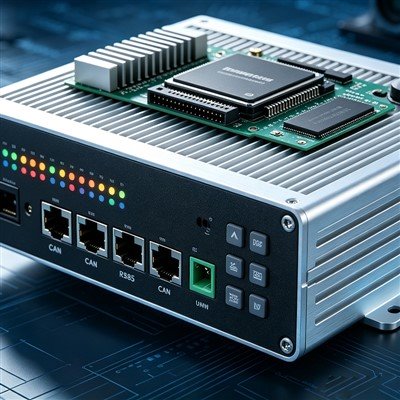
First, let’s start with the basics: POE stands for Power over Ethernet. It’s the technology that lets an Ethernet cable carry both data and electrical power, so you don’t need two separate cables for your device and power outlet. That’s huge for devices like IP cameras, Wi-Fi access points, VoIP phones, and even small IoT sensors. Before POE, you’d have to run a power cord and a network cable, which is a pain if you’re mounting a camera on a 20-foot ceiling or an access point on a warehouse wall—no outlet nearby, no extension cords hanging everywhere. Makes sense, right?
Now, the original POE standard, known as 802.3af, came out in 2003. It had a maximum power output of 15.4 watts per port, and the device (called a PD, powered device) could actually use up to 12.95 watts of that (the rest is lost as heat in the cable). That works for most basic devices: a desktop VoIP phone, a entry-level 1080p security camera, a small single-band Wi-Fi access point. If you just need to power those, regular POE is totally fine. But around 2009, everyone started needing more power: 4K cameras, Wi-Fi 5 and 6 access points, video doorbells, even small IoT devices like digital signage or PTZ cameras that pan/tilt/zoom. Those need more oomph, so POE++ (or 802.3bt, if you want the official name) was created.
Here’s the big, practical difference no one tells you: power. POE tops out at 15.4W per port, POE++ goes up to 90W. That’s not just a number—90W is enough to power a 4K PTZ camera, a dual-band Wi-Fi 6 access point, or even a small LED display. If you try to plug a 4K camera into a POE switch, it might turn on for a minute, then shut off because it can’t get enough power, or it might run slow because it’s starved. I’ve had a client last year who bought a cheap POE switch to replace a broken one for his 4K security cameras; half the cameras kept cutting out, and he thought the cameras were bad, until we explained he needed POE++. That’s the kind of mistake that costs people time and money, so it’s way more important than it sounds.
Wait, but there’s another thing that trips people up: how the switches negotiate power. Both use a standard called “Discovery and Classification” to make sure they don’t send power to a device that doesn’t need it (that’s how it doesn’t fry your laptop if you accidentally plug it into a POE port). But regular POE (af) only has two power classes for PDs: Class 0 (0-12.95W, that’s most devices) and Class 1-3 which are lower. POE++ (bt) adds Classes 4, 5, 6, 7, 8, all the way up to 71.3W of power available to the PD, with the switch sending up to 90W. So the negotiation is a bit more detailed, and not all switches can do it—cheap off-brand switches might advertise POE++ but actually only do 30W, which is useless for a lot of devices. That’s why you want a supplier you can trust, not just whatever pops up on Amazon.
Another common myth: longer cables. A lot of people think if they run a 100-foot Ethernet cable, they need POE++, but actually, the cable length depends more on the Ethernet standard (Cat5e can go up to 100m, that’s standard for all POE), not the power type. The power does drop a tiny bit over longer cables, but if you’re using Cat5e or Cat6 (which you should be for modern networks), you won’t lose enough power to matter for most devices up to 100m. Where POE++ helps with longer runs is if you’re powering a higher-wattage device—say, a 60W digital sign—over a 80-foot cable: regular POE might only deliver 10W at the end of the cable, which is not enough, while POE++ will deliver around 50W, which works. So it’s not just the device’s power needs, it’s the cable length too, especially for higher-wattage gear.
Let’s talk about use cases, because that’s how most people pick. If you’re a small business with 5 VoIP phones and 2 1080p cameras, regular POE (802.3af) will work perfectly. It’s cheaper, simpler, and you don’t need the extra power. But if you’re a retail store with 8 4K PTZ cameras, 3 dual-band Wi-Fi 6 access points, and a digital menu board, you need POE++ (802.3bt). If you try to skimp and get regular POE, you’ll end up with devices that don’t work right, and you’ll have to upgrade the switch in 2 years anyway—so it’s better to get the right one the first time. And there’s even a middle ground, sometimes called “POE+” or 802.3at, which is between af and bt: 30W per port. That’s enough for mid-tier devices, like a 2K camera or a single-band Wi-Fi 5 AP. I see a lot of people mixing up POE+ and POE++, too, so just remember: POE is 15.4W, POE+ is 30W, POE++ is 90W. That’s the quick cheat sheet.
Wait, but what about heat and efficiency? I get asked this a lot, because running more power means more heat, right? Good POE switches—whether regular or POE++—are designed to dissipate that heat, but cheap ones can overheat. That’s why we build our POE switches with metal casings, not plastic, so they run cool even when all ports are at full power. I had a customer a few years ago who bought a $20 POE++ switch for his warehouse, and after 3 months it died because it was plastic, couldn’t handle the 90W per port, and overheated. Ours have a 3-year warranty, and we test every switch before it leaves the warehouse, so you don’t have to worry about that. That’s the difference between a supplier who knows their stuff and one who just slaps a label on a cheap knockoff.
Another thing: backward compatibility. Is that a thing? Yes, both POE and POE++ switches work with older POE devices. So if you have a mix of old and new devices, a POE++ switch will power your old VoIP phones just fine, and give extra power to your new 4K cameras. That’s a big plus—you don’t have to replace all your devices at once when you upgrade your network. I always tell clients, if you’re planning to add any higher-power devices in the next 2-3 years, go with POE++ now. It’s only a little more expensive upfront, and you won’t have to buy a new switch later.
Let me give you a real example from last quarter: a small construction company came to us. They needed a switch for their job site, where they had 6 4K cameras, a Wi-Fi access point for the foremen’s tablets, and a portable printer for blueprints. Their old POE switch died, and they bought a generic one online. The cameras kept cutting out, the access point was slow, and the printer wouldn’t turn on at all. When we looked at the switch, it was a POE+ switch, only 30W per port. The 4K cameras needed 15W each, the Wi-Fi AP needed 18W, and the printer needed 25W—total of 115W. The POE+ switch only put out 150W total across all ports, but it couldn’t handle the peak load, so it was shutting off ports to save itself. We sold them a POE++ switch, which has 370W total power, enough to handle all their devices, and now their job site network runs 24/7 without issues. That’s exactly why the difference matters—this isn’t just tech jargon, it’s solving real problems for real people.
Now, let’s clear up some confusion with brands and marketing. A lot of brands use terms like “Gigabit POE” or “Industrial POE” but the power standard is still the same. Industrial POE can be both POE or POE++, it just means it’s built to handle extreme temperatures (for warehouses, outdoor use) or physical damage. Outdoor POE switches, for example, need to be weatherproof, so we make both regular and POE++ outdoor models—just make sure when you’re buying, you check the per-port power, not just the label. Some brands will advertise “90W POE++” but if you look at the fine print, that’s only for one port, not all. That’s a scam, and we never do that. Our POE++ switches deliver full 90W per port, even if all ports are in use—no tricks, no fine print.
So, to sum up the key differences, plain and simple:
- Power output: POE = max 15.4W per port, POE++ = max 90W per port.
- Use case: POE works for basic devices like 1080p cameras and VoIP phones; POE++ is for high-power devices like 4K PTZ cameras, Wi-Fi 6 APs, and digital signage.
- Total system power: POE switches usually have lower total power (like 120W or 240W), POE++ switches have higher total power (370W, 600W, even 960W for larger setups) to handle multiple high-wattage devices at once.
- Backward compatibility: Both work with older POE devices, so you can mix and match.

If you’re still not sure which one you need, that’s totally fine—most people aren’t network engineers, and that’s why we’re here. We’ve helped hundreds of clients pick the right switch for their specific setup, from small offices to large warehouses and retail locations. Whether you’re setting up a new security system, upgrading your Wi-Fi, or replacing a broken switch, we can walk you through what you need, no pressure, no confusing jargon. Don’t risk buying a switch that won’t work for your devices or will die in a year. Reach out to us to discuss your POE switch needs, and we’ll make sure you get the right product at a fair price.
Flow Detection Instruments References
IEEE 802.3af-2003: Standard for Power over Ethernet (POE)
IEEE 802.3bt-2018: Standard for Power over Ethernet Plus (POE++)
Network Computing Industry Association: Power over Ethernet Deployment Guidelines
International Electrotechnical Commission (IEC): Safety Standards for POE Equipment
Liaoning Yifang Wisdom Technology Group Co., Ltd.
Liaoning Yifang Wisdom Technology Group Co., Ltd. is one of the most professional poe switch manufacturers and suppliers in China, also supports customized service. We warmly welcome you to wholesale the newest poe switch in stock here from our factory. If you have any enquiry about quotation, please feel free to email us.
Address: Minmetals Corporation Building Yingkou Liaoning China
E-mail: LN-YF@hotmail.com
WebSite: https://www.yifangwisdom.com/
