When a customer first walks into our shop, looking to source stator bars for a new generator or motor, they often zero in on the copper conductor, the outer winding, or the overall dimensions of the bar—those are the parts they can see and measure easily. It’s only when we pull out a finished bar and point to the tapered, layered ends that most ask: “What is stator bar end part insulation, and why does it matter so much?” As someone who’s been supplying stator bars for 18 years, part of my job is not just selling a product, but walking customers through the details that turn a good bar into a reliable one. End part insulation isn’t a niche add-on; it’s the final line of defense that keeps a generator or motor from failing mid-operation, and it’s what separates a standard bar from a custom-engineered one for heavy industrial use. Stator Bars
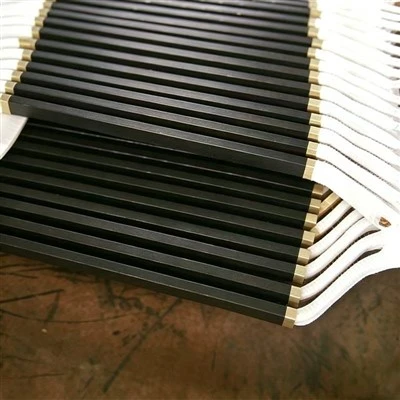
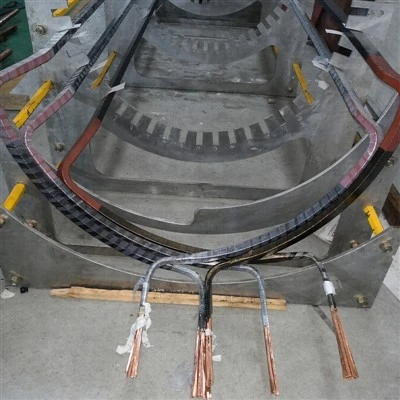
To get what makes end part insulation unique, you have to start with how a stator bar works inside a machine. A stator bar is the long, rigid copper conductor that carries alternating current, wound into the stator slot (the hollow channels that line the inside of a generator’s or motor’s outer housing). The part of the bar inside the slot is protected by the slot insulation, a thick, heat-resistant material that keeps the copper separated from the steel stator core. But beyond the two ends of the stator bar—where it bends to form the winding connections, sticking out of the slots to connect to other bars—there’s nothing but air, oil, and other electrical components. That open space, called the end winding region, is one of the harshest, most underrated environments in the entire machine.
Think about it: every time the generator runs, the end windings vibrate. The currents flowing through them create magnetic forces that make the bars shake back and forth, sometimes with enough force to wear down bare copper against adjacent bars or the machine’s housing. They’re exposed to high voltage, too—far higher than the voltage inside the slots, because the ends aren’t insulated by the core’s steel, which acts as a ground. In many large generators, the end winding region is also where coolants flow, either air, hydrogen, or oil, that can erode insulation if it’s not properly formulated. So end part insulation isn’t just one material; it’s a tailored system built to handle four main threats: electrical breakdown, mechanical damage, thermal stress, and environmental contamination.
Let’s break that down layer by layer, because it’s not a single sheet of tape wrapped around the end. The first layer closest to the copper is the semiconducting stress grading coat. This is a fine, carbon-impregnated resin that smooths out the sharp edges of the copper bar where it exits the slot. If those edges were left bare, the electric field would concentrate there like water flowing over a rock, creating “partial discharge”—tiny sparks that eat away at insulation over time. Even a small partial discharge can lead to a full breakdown after a few thousand operating hours, which is why the stress grading coat is non-negotiable for any stator bar rated above 6 kV. It’s thin, flexible, and matched to the voltage of the machine, so it doesn’t interfere with the electrical current but redirects the field evenly.
Next comes the main electrical insulation for the end part. Unlike the slot insulation, which is often a thick, rigid glass-mica composite, end part insulation needs to flex. The ends bend at a sharp angle to connect to other bars, so it can’t crack or flake off when the bar is formed. Most of our customers use a combination of mica tape and epoxy resin here. Mica is the best insulating material for high-voltage applications; it has a very high dielectric strength, meaning it can withstand thousands of volts without breaking down, and it’s resistant to heat. We impregnate the mica tape with a low-viscosity epoxy, then apply it in overlapping layers to cover the entire end from the stress coat to the last inch of the bent section. We adjust the number of layers based on the machine’s voltage: a 12 kV bar might have 8 layers of mica tape at the ends, while a 30 kV bar will have 12 or more, with extra layers at the bends where stress is highest.
Then there’s the mechanical protection layer, sometimes called the semiconducting overwrap or the outer insulating coat. This is a layer of glass fiber tape, reinforced with a epoxy resin that’s cured to be hard but not brittle. It wraps around the entire end to hold the mica layers in place, protecting them from the vibration I mentioned earlier. When the end windings vibrate, they can rub against each other or against the machine’s end bracket; this tape acts as a buffer, preventing the insulation from wearing down to the copper. For generators that operate in tough environments—mines, offshore platforms, or power plants with frequent load changes—we add a layer of polyurethane or silicone rubber on top of that. That’s what seals out oil, dust, and moisture, which can seep into cracks in the insulation and cause partial discharge even in normal operating conditions.
A lot of first-time customers ask us: why not just use the same insulation for the slot and the end? It comes down to physics. Inside the slot, the steel core grounds the electric field, so the insulation there only has to handle the voltage between the bar and the core. At the end, there’s no ground nearby, so the electric field spreads out, making the required insulation thickness much higher, and the risk of partial discharge far greater. The slot insulation is rigid to fit tightly into the slot; the end has to bend, so it needs flexible materials that don’t crack during installation. We tested this early on with a customer who tried to skimp on end insulation, using slot tape instead of custom end layers. Their stator failed after 1,200 hours of operation, a fraction of the expected 40,000 hours. When we pulled the bar apart, the mica tape at the ends had cracked from bending, and the semiconducting coat had worn away, leaving sharp copper edges that caused massive partial discharge. That’s the mistake we’re always helping customers avoid.
Another thing that makes end part insulation unique is that it’s not just a protective layer—it’s part of the electrical design of the bar. Different machines have different end winding configurations: some have short, tight bends, others have long, sweeping ends that carry more current. We work with each customer’s engineering team to adjust the insulation’s properties accordingly. For a generator used in a hydroelectric plant, where load changes are gradual, we use a thicker mechanical layer to handle long-term vibration. For a motor used in a steel mill, where load jumps up and down quickly, we use a more flexible epoxy resin that can expand and contract with thermal stress, since rapid load changes make the bar heat up and cool down hundreds of times a day.
We also add an extra step for bars that use hollow conductors for cooling. Many large generators have hollow copper stator bars, through which hydrogen or water flows to keep the bar from overheating. The ends of these hollow bars have to be sealed to attach the cooling pipes, and the insulation has to be applied without clogging the hollow core. Our team has a dedicated process for this: we seal the ends temporarily before applying the insulation layers, then drill small holes to re-open the hollow core after the insulation is cured. This way, the insulation doesn’t seep inside and block the coolant flow, which would cause the bar to overheat and fail. That’s a detail that a lot of new suppliers miss, because they don’t work with hollow conductor bars regularly—something we’ve specialized in for years.
Over the past decade, as generator and motor operators push for higher efficiency and longer run times, the standards for end part insulation have gotten stricter. The IEEE (Institute of Electrical and Electronics Engineers) now has specific guidelines for partial discharge inception voltage (PDIV) for end windings, and most industrial customers require their bars to pass a 10,000-hour thermal cycling test for the insulation. We’ve invested in testing equipment to measure the PDIV of every bar before it ships, so our customers know that the end insulation will hold up even during extreme operating conditions.
I remember a customer from a wind farm who came to us a few years ago. They were having problems with their generator’s end windings failing every 18 months, even though they were using a well-known brand of stator bars. When they sent us a sample, we pulled the bar apart and saw that the end insulation only had 4 layers of mica tape, not the 7 that our standard design uses for wind turbines, which operate in cold, high-vibration conditions. The supplier had used the same insulation for slots and ends, cutting corners to keep costs low. We redesigned their end insulation, added the flexible overwrap, and ran the PDIV test. That generator has now been running for 5 years without an issue. It’s stories like that that drive what we do—end part insulation isn’t just a part of the bar, it’s the guarantee that a machine will keep running when it’s needed.
For anyone sourcing stator bars, it’s easy to focus on the copper and the slot insulation, but never overlook the end part. That’s where most failures start, because that’s the part exposed to the most stress, the highest voltage, and the harshest environment. A stator bar with good slot insulation but poorly designed end insulation is just a ticking time bomb. We don’t just supply stator bars; we work with you to design the insulation layers that match your machine’s specific needs, whether that’s a small industrial motor or a 1,000 MW power generator.
If you’re sourcing new stator bars, looking to replace failed ones, or just want to learn more about how end part insulation impacts your machine’s performance, we’re here to help. We’ll walk you through the process, answer your questions about material selection, and make sure your bars are built to last. Don’t let a small detail turn into a major downtime issue—reach out today to discuss your stator bar needs.
Motor Coils References
- IEEE Standard for Rotating Electrical Machines – General Requirements, IEEE Std 112-2020
- Electrical Insulation for Rotating Machines: Design, Evaluation, Aging, Testing, and Maintenance, Stone, G.C., Boulter, E.A., Culbert, I., and Dhirani, H., 2004
- Generator Stator Winding Insulation: A Practical Guide, EPRI (Electric Power Research Institute), 2018
- Guidelines for Partial Discharge Testing in Rotating Machine Windings, NEMA Standard MG 1-2021
Hangzhou Purun Science & Technology Co., Ltd.
As one of the most professional stator bars manufacturers and suppliers in China, we have world-leading production equipment and strong manufacturing capabilities. Please rest assured to wholesale customized stator bars made in China here from our factory. Welcome to contact us for pricelist.
Address:
E-mail: Purun_sci_tech@163.com
WebSite: https://www.puruncoil.com/
