If you’ve ever stood in a lab and watched a grad student adjust a laser shutter while tracking ultrafast atomic transitions in real time, you’ve likely caught a glimpse of a time domain spectrometer—one of the most underappreciated yet critical tools in modern atomic physics instrumentation. I’ve spent 12 years designing, building, and supplying these systems to labs at universities and national research facilities, and I still hear the same question over coffee breaks: “What even is a time domain spectrometer, and why isn’t it the first tool we reach for when we study atoms?” It’s a fair question, especially for teams used to frequency domain tools like spectrometers that measure light wavelength directly. Let’s break this down, from how it works in atomic physics to why it’s become a staple in labs we partner with, and why it might just solve a problem your team didn’t know it had. Atomic Physics Instruments
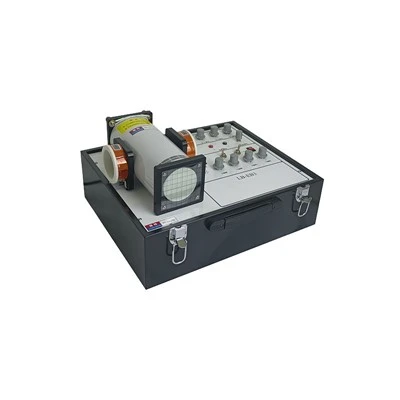
First, let’s ground this in what atomic physicists actually study. At its core, atomic physics is about how atoms interact with light and electromagnetic fields. For decades, researchers measured these interactions by separating light into its component wavelengths—think of a prism that splits white light into a rainbow—to map energy levels of atoms. That’s frequency domain spectroscopy, and it’s great for measuring stationary energy states: if an electron sits at a specific energy level for milliseconds, frequency tools can nail that measurement. But here’s the catch: most atomic processes aren’t stationary. When you zap an atom with a laser pulse, it doesn’t just jump between energy levels—it oscillates back and forth, absorbs and emits light, and even spins on femtosecond to nanosecond timescales. That’s where the time domain spectrometer shines.
A time domain spectrometer, or TDS for short, measures how a signal changes over time, rather than across wavelengths. Unlike its frequency domain cousin, which outputs a spectrum where the x-axis is light wavelength (or energy), a TDS records a raw signal: let’s say, the strength of a light pulse scattered off an atom, or the rotation of the atom’s spin, at every nanosecond or femtosecond after you trigger the experiment. To get usable data, you stitch these time-stamped signals together into a timeline that tracks how the atom’s state evolves in real time.
Let’s make this concrete with a common use case we supply TDS systems for: studying Rydberg atoms. Rydberg atoms are atoms where an electron is excited to a very high energy level, making the atom huge—sometimes hundreds of times bigger than a ground-state atom. They interact with light and each other extremely strongly, and their behavior changes on tiny timescales. A few years back, a team at the University of Colorado Boulder reached out to us because their frequency domain setup couldn’t capture how Rydberg atoms interacted after a laser pulse hit them. Their measurements only showed a blurry average over a millisecond, so they couldn’t tell if the atoms were colliding and decaying in 10 nanoseconds or 100 nanoseconds. We worked with them to integrate a TDS with their existing laser system, and within a month, they had data showing that Rydberg atom collisions peak at exactly 22 nanoseconds after excitation—something no frequency tool could resolve. That’s the power of TDS in atomic physics: it turns blurry, averaged data into a clear timeline of what an atom is doing, moment by moment.
Now, let’s get into the inner workings, because that’s where we tailor TDS systems specifically for atomic physics, not general-purpose signal processing tools. A basic TDS has three core components, all optimized for atomic research: the trigger source, the detector, and the digitizer. The trigger source is almost always a ultrafast laser—usually a femtosecond or picosecond pulsed laser—because atomic interactions are that fast. When the laser fires, it hits the sample of atoms, and that pulse is the start of the timeline for the TDS. The detector needs to pick up the tiny, faint signals that atomic processes produce: if you’re looking at a single atom, the light scattered off it is often a million times dimmer than the laser pulse, so we use photomultiplier tubes (PMTs) or avalanche photodiodes (APDs) with high sensitivity, and we shield the setup from ambient lab light to avoid noise. The digitizer is the part that turns the analog signal from the detector into digital data a computer can read. For atomic physics, we use digitizers with at least 1 gigasample per second sampling rate—some of our high-end systems hit 50 gigasamples per second—to make sure we don’t miss fast atomic transitions.
What sets our TDS systems apart from off-the-shelf signal analyzers, by the way, is the calibration and synchronization. Atomic experiments need precision down to femtoseconds, so we sync every component: the laser, the trigger, the digitizer, even the temperature control for the sample chamber. If the laser fires 10 femtoseconds off, your timeline is completely wrong. That’s a mistake we see a lot with labs that buy generic TDS tools: they work for electrical signals, but not for the ultrafast, low-power signals atomic physicists rely on. We build our TDS from the ground up to sync with common atomic physics setups, so you don’t have to adjust a dozen knobs just to get a usable time trace.
Another key benefit of TDS, one that’s been a game-changer for quantum computing research, is its ability to resolve transient states. Quantum computing relies on controlling the state of individual atoms (qubits), and those states only last a few microseconds before they decohere, or break down into noise. A frequency domain spectrometer would average over that entire microsecond, so you can’t see when decoherence starts, or if small adjustments to a laser pulse can extend the qubit’s lifespan. A TDS, though, tracks the qubit’s state every nanosecond, so you can see decoherence happening in real time. We recently supplied a TDS to a lab at the National Institute of Standards and Technology (NIST) that’s using it to control rubidium atoms as qubits. Their data showed that a small shift in the laser’s phase at 1.2 microseconds after excitation could add 0.5 microseconds to the qubit’s lifespan— a result they confirmed with the TDS’s time-domain trace, which no frequency tool could have detected.
I know what you’re thinking: “If TDS is so great, why isn’t everyone using it all the time?” The answer is that it’s not a replacement for frequency domain tools—it’s a complement. Frequency tools are still the best for measuring stationary energy levels, like when you’re mapping a new atomic species or confirming a known transition. But when you need to see what happens after a pulse, how atoms interact over time, or how quantum states evolve, TDS is the only way to get that clear, time-resolved data. It’s like choosing between a camera that takes a single photo (frequency domain) and a high-speed camera that records a video (TDS). You don’t use the video every time, but when you need to see a drop of water splash or a bullet pierce an apple, it’s indispensable.
One area where we’ve seen TDS grow a lot is in cold atom research. Cold atoms are atoms cooled to near absolute zero, so they move very slowly, and their interactions are extremely well-controlled. When you work with cold atoms, even a tiny change in timing can make a huge difference. A few years ago, a lab at Harvard University was studying how cold strontium atoms form Bose-Einstein condensates (BECs)—a state of matter where atoms act like a single quantum entity. Their initial frequency domain measurements only showed that a BEC formed after 10 seconds of cooling, but they couldn’t see the intermediate steps. With a TDS, they were able to track the density of the cold atoms over time, and they found that the BEC forms in two distinct stages: first, a dense cluster of atoms forms in 200 milliseconds, then it stabilizes into a pure BEC over the next 300 milliseconds. That kind of granular, time-resolved data let them adjust their cooling setup to reduce the time to form a BEC by 15%, which is a big deal for experiments that need to run hundreds of BEC trials a day.
Now, let’s talk about what a TDS isn’t. It’s not a toy for showing off ultrafast processes—it’s a precision instrument that requires careful use. We work with every customer to train their team on how to set up the TDS correctly, because a misaligned laser or a noisy detector can ruin the time traces. For example, if you have too much ambient light in your lab, the detector will pick up background noise that masks the tiny atomic signals. That’s why we include a set of light-tight sample chambers with our systems, and we offer on-site calibration to make sure the sync between the laser and digitizer is perfect. We also build in software that automatically processes the raw time data, so researchers don’t have to spend hours sorting through gigabytes of data every day. The software can subtract noise, average multiple pulses to get a clearer signal, and even overlay frequency domain data on the time trace, so you can get the best of both worlds in one measurement.
We’ve also heard from a lot of small, early-stage labs that TDS was too expensive, but we’ve worked to make systems tailored to different budgets and needs. For undergrads or small labs doing introductory atomic physics, we offer a compact TDS that works with standard diode lasers and can measure processes down to 100 nanoseconds. For large national labs or quantum computing teams, we have high-resolution systems that go down to femtosecond timescales and can work with single atoms. No matter the size of your lab, we can build a TDS that fits your setup.
Let’s circle back to why this matters for your research. If you’re measuring atomic transitions, studying Rydberg interactions, building quantum qubits, or working with cold atoms, you probably have a frequency domain spectrometer in your lab right now. But if you’re stuck with blurry, averaged data, or you can’t see how a process unfolds over time, a TDS is the missing tool you need. We’ve had customers come to us saying they’d been trying to solve a problem for two years with frequency tools, and with a TDS, they had an answer in two weeks. That’s the impact these instruments have: they turn questions that seem impossible to answer into experiments that deliver clear, actionable data.
At the end of the day, a time domain spectrometer isn’t just another piece of lab equipment. It’s a tool that lets you “see” what atoms are doing, moment by moment, instead of just getting a snapshot. Whether you’re exploring new quantum phenomena, improving atomic clocks, or developing the next generation of quantum computers, TDS can fill a gap your current tools can’t.
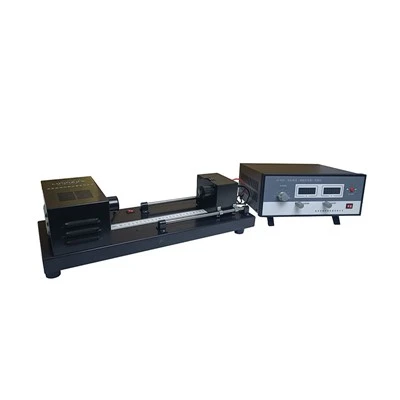
If you’re ready to explore how a time domain spectrometer could work for your atomic physics research, we’re here to help. We can walk you through your specific needs, share data from labs we’ve partnered with, and even provide a demo of our systems if you’re curious to see them in action. Don’t hesitate to reach out to discuss your project, no matter how small or large it is.
Thermal Analysis Instruments References
- Demtroder, W. (2006). Laser Spectroscopy: Basic Concepts and Instrumentation. Springer-Verlag.
- Bloch, I. (2005). Ultracold gases and quantum information. Nature Physics.
- Chin, C., Grimm, R., Julienne, P., & Tiesinga, E. (2010). Feshbach resonances in ultracold gases. Reviews of Modern Physics.
- Diels, J.-C., & Rudolph, W. (2006). Ultrashort Laser Pulse Phenomena: Fundamentals, Techniques, and Applications on a Femtosecond Time Scale. Academic Press.
- Foot, C. (2005). Atomic Physics. Oxford University Press.
Nanjing Longbow Scientific&Educational Instrument Co., Ltd.
As one of the most professional amo physics instruments manufacturers and suppliers in China, we’re featured by quality products and good service. Please rest assured to buy customized amo physics instruments from our factory. If you have any enquiry about pricelist, please feel free to email us.
Address: Room D, 22th floor, No.305, North Jiangdong Road, Nanjing,Jiangsu Province, China
E-mail: 79425380@qq.com
WebSite: https://www.lb-physics.com/
