If you’ve ever walked past a construction site watched a farmer pull a hay bale across a field, or seen a crew grading a residential lot, you’ve probably seen both a utility tractor and an industrial tractor at work. For someone who’s spent years selling utility tractors to small-scale farms, landscaping businesses, and community maintenance teams, I’ve heard this question a hundred times: “What’s the actual difference between these two?” It’s not just a matter of looks—trust me, I’ve had customers show up thinking a big industrial tractor will work for their small hobby farm, only to leave frustrated because the machine was too heavy, too hard to maneuver, and way more expensive than they needed. The line between the two can feel blurry if you’re not in the equipment business, but once you break down their core design, intended use, and key features, the difference is pretty clear-cut. Utility Tractors
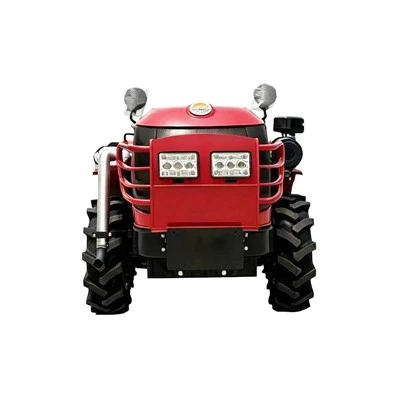
Let’s start with what a utility tractor is, because that’s the line of work I’ve been in for over a decade. When I first got into supplying these machines, I thought utility tractors were just “smaller tractors” for people with small jobs, but that’s a huge oversimplification. Utility tractors are built for a mix of light agricultural work, residential and commercial landscaping, and general property maintenance—think mowing 10 acres of pasture, pulling a small trailer full of firewood, or operating a front-end loader to move mulch around a nursery. Their design prioritizes versatility and ease of use above all else. Most models range from 20 to 100 horsepower, which is enough to handle regular tasks but not so much that it’s overkill for a small team or individual operator. They’re lightweight, usually between 2,000 and 10,000 pounds, which means they can navigate tight spaces without tearing up lawns or getting stuck in soft, wet soil that’s common in small fields or backyard properties.
A big part of what makes utility tractors unique is their ability to switch between attachments quickly and easily. One day you can put a rotary mower on the three-point hitch to cut hay, the next you can swap that for a snowblower to clear a private driveway, or a pallet fork to move pallets of supplies around a garden center. We supply models with open operator stations that are comfortable for a 20-minute mowing session, but also offer optional cabs with heat and AC for longer workdays in extreme weather. They’re also engineered to be intuitive—most new operators can learn to run a basic utility tractor in an afternoon, no specialized training required. That’s not a mistake; utility tractors are made for farmers, landscapers, and property managers who might not be equipment experts, just people who need a reliable workhorse that can do a little bit of everything.
Now, let’s talk about industrial tractors, which are in a whole different class of heavy-duty equipment. If utility tractors are the Swiss Army knives of the tractor world, industrial tractors are the specialized construction tools built for high-output, heavy-lift work on large commercial sites, infrastructure projects, or industrial facilities. These are the machines you see moving piles of dirt at a new housing development, pulling heavy machinery along a highway construction site, or pulling large loads of raw materials in a factory yard. Unlike utility tractors, which are focused on versatility, industrial tractors are built for maximum power and durability, with little emphasis on the kind of quick-switch versatility that utility tractors offer.
Industrial tractors range from 100 horsepower all the way up to 600 horsepower, some even higher for specialized heavy-duty jobs. Their weight starts at around 15,000 pounds and can go well over 50,000 pounds for the largest models, built to handle the extreme stress of pulling or pushing massive loads. That extra weight isn’t just for show—it gives them the traction they need to move heavy material over rough, uneven construction ground without slipping. Their operator stations are way more robust too, designed for long shifts of hard labor, often with reinforced cabs that meet strict construction safety standards, and controls that are heavy-duty to stand up to constant use. The attachments for industrial tractors are specialized too: you’re not putting a snowblower or rotary mower on an industrial tractor—they hook up to heavy-duty scrapers, bulldozer blades, large dump trailers, or industrial pullers designed for massive loads.
The key differences between these two machines come down to three main factors: intended application, power and weight, and operator needs. Let’s break those down with real examples from the customers I work with. Last year, I had a customer who runs a 50-acre family farm in central Ohio. He came in asking about industrial tractors because his neighbor had one and he thought it would be better for his hay operation. After talking through his needs, I realized he only bales hay twice a year, and mostly uses the tractor for mowing his pastures, pulling a small trailer for feed, and moving firewood for his family. A utility tractor with 75 horsepower would have done everything he needed, for a third of the cost of an entry-level industrial tractor, and would have been light enough to not tear up his lawn when he’s mowing around his farmhouse. He didn’t need the extra power or durability of an industrial tractor, because his workload didn’t demand it.
On the flip side, I had a conversation with a site foreman from a large construction company last year who was looking for replacement equipment for their road-building crews. They needed a machine that could pull a 20-ton scraper to move dirt along a new highway route, operate 12 hours a day in extreme heat and rough terrain, and handle heavy loads without breaking down. A utility tractor would have struggled to pull that scraper—most top utility tractors max out at around 100 horsepower, which isn’t enough for that kind of heavy-lift, continuous work. The industrial tractor they went with was built to handle that exact job, with a reinforced frame, heavy-duty transmission, and power enough to pull that scraper all day without overheating.
Another big difference is the ground pressure each machine generates. Utility tractors, because they’re lightweight, have lower ground pressure, which means they leave fewer ruts and less damage to soft soil, lawns, or pavement. That’s a huge win for landscapers or small farmers who can’t afford to damage their property or the lawns of their clients. Industrial tractors, with their massive weight, have much higher ground pressure, which is perfect for construction sites where you need traction, but terrible for use on residential lawns or soft fields—they’d tear up the grass and leave deep ruts that take weeks to repair. That’s why you never see an industrial tractor at a small farm or a local landscaping job; they’re just not designed for that kind of delicate, tight-space work.
Operator training is another key factor I always bring up to customers. Utility tractors are designed for operators with basic mechanical knowledge, often for occasional or part-time use. Most new operators can get certified to run a utility tractor through a quick workshop, no specialized heavy-equipment license required. Industrial tractors, on the other hand, require specialized training and often a commercial driver’s license (CDL) to operate, because they’re heavy machinery used in high-risk, large-scale projects. Operating an industrial tractor on a construction site isn’t like driving a car—it requires understanding load limits, site safety protocols, and how to handle the massive power of the machine, which is why the barriers to entry are much higher.
I also want to talk about total cost of ownership, because that’s a big decision point for almost every customer I work with. Utility tractors are significantly cheaper to buy, operate, and maintain than industrial tractors. A top-of-the-line utility tractor can cost between $25,000 and $75,000, depending on horsepower and features. Maintenance is straightforward—most repairs are basic, parts are easy to source, and oil changes, filter replacements, and small fixes can be done by the owner or a local mechanic, no specialized technicians needed. Industrial tractors, by contrast, start at $100,000 and can go well over $500,000 for the largest models. Their parts are custom-built, repairs require specialized industrial equipment technicians, and fuel costs are much higher because of their massive engines. For a small business or individual, that cost is just not justified for the kind of work utility tractors handle.
I’ve seen way too many people make the mistake of buying an industrial tractor when they only need a utility tractor, and it almost always ends badly. One customer a few years back bought an entry-level industrial tractor because he thought it would “last forever” for his 10-acre hobby farm. Within a year, he was complaining that it was too heavy to maneuver around his small vegetable plots, that the rotary mower attachment kept slipping because the tractor’s power was too high for delicate mowing, and that he was spending twice as much on fuel as he did with his old utility tractor. He ended up trading the industrial tractor in for a mid-range utility tractor, and told me he wished he’d asked the difference sooner. The same mistake happens the other way around—large construction companies sometimes try to use utility tractors for small on-site jobs, and they get stuck because the machine doesn’t have the power to pull even a small load.
At the end of the day, the difference between utility and industrial tractors comes down to purpose: utility tractors are built for versatility and light-to-moderate work for small-scale operators, while industrial tractors are built for heavy-duty, high-output work for large commercial and industrial operations. That’s why my team and I focus exclusively on utility tractors—we work with small farmers, landscaping businesses, community maintenance teams, and residential property owners who need a reliable, flexible machine that fits their budget and their daily work. We don’t sell industrial tractors because they’re not the right fit for most of our customers’ needs, and we’d never try to upsell someone on a machine they don’t need.
If you’re in the market for a tractor, the first step is to be honest about what you’ll actually be using it for. Are you mowing a few acres, moving mulch, pulling a small trailer, or clearing snow? A utility tractor is almost certainly the right choice. Are you working on large construction sites, moving massive loads, or operating heavy attachments for 10+ hour shifts? Then an industrial tractor might be the right fit. But don’t guess—talk to a supplier who knows the difference, and can help you find the machine that works for your specific jobs, not the biggest or most powerful one on the lot.
If you’re ready to talk through your needs, or want to learn more about our utility tractor models, reach out to our team to start a conversation about what will work best for you. We’re here to help, not just sell you a machine.
Utility Tractors References:
- American Society of Agricultural and Biological Engineers (ASABE). Tractor Classification and Terminology Standards. 2022.
- Construction Equipment Association (CEA). Industrial Tractor Design and Safety Guidelines. 2021.
- National Agricultural Statistics Service (NASS). Farm Tractor Usage and Owner Demographics. 2023.
- Occupational Safety and Health Administration (OSHA). Heavy Machinery Operation Training Requirements. 2022.
Shandong Jiayuan Agricultural Equipment Co., Ltd.
As one of the most professional utility tractors manufacturers and suppliers in China, we have world-leading production equipment and strong manufacturing capabilities. Please feel free to buy advanced utility tractors for sale here from our factory.
Address: No.2, No.002777 Zhongjiang West 4th Street, Yangzi Subdistrict, Binhai District, Weifang City, Shandong Province, China
E-mail: sdjynyzb@163.com
WebSite: https://www.jiayuantractor.com/
