If you’re in the machining game, you’ve probably stared at a reaming machine and wondered, “Why does it matter how fast this thing spins when I’m just trying to get a smooth hole?” As a reaming machine supplier who’s talked to thousands of machinists over the years, I get it—speed feels like a tiny detail, but mess it up, and you’re looking at scrap parts, worn tools, and wasted time. Today, let’s cut through the jargon, talk straight, and break down what you actually need to know about a reaming machine’s speed adjustment range, no stuffy textbooks here. Reaming Machine

First, let’s get one thing clear: reaming is not drilling. Drilling’s about cutting a rough hole fast, chipping away big chunks of material. Reaming’s the fine-tune work—taking a hole that’s already drilled (or maybe bored) and shaving off a tiny layer to get that perfect size, tight tolerance, and mirror-smooth finish. Speed is make-or-break here, way more than it is for drilling. Mess up your reaming speed, and you’ll get work-hardened edges, tool chatter, or a hole that’s either too big or too small.
Now, when we talk about a reaming machine’s speed adjustment range, that’s just the full spread of RPM (rotations per minute) the machine can crank out. It’s not a one-size-fits-all number, either. I’ve seen machines with a range as narrow as 50 RPM to 500 RPM for small, high-precision work, and others that go from 10 RPM to 2,000 RPM for heavy-duty jobs. So why the huge difference? It all boils down to two big factors: what material you’re reaming, and what reamer you’re using.
Let’s start with materials, because that’s the biggest variable. Think about reaming aluminum vs. reaming stainless steel. Aluminum is soft, cuts super easy—you can spin fast without the tool digging in too much. Stainless? It’s tough, gummy, works harden like crazy if you go too slow, and generates a ton of heat. So for aluminum, you’ll want to crank the speed up, maybe 1,000 to 2,000 RPM. For stainless, you’re probably in the 100 to 500 RPM range, max out at 700 if it’s a specialty grade. Then there’s cast iron—brittle, good heat conductor, you can run a mid-range speed, like 500 to 1,200 RPM. And don’t forget wood or plastic? Those run even faster, sometimes 2,000+ RPM, but that’s more specialty woodworking reamers, not the industrial ones most of us deal with.
Next up, the reamer itself. Reamers come in all shapes and sizes, from tiny 1mm ones for electronics parts to big 100mm ones for engine blocks. A small reamer has fewer flutes, right? Each flute’s cutting edge takes a tiny bite, so spinning it fast doesn’t put too much stress on the tool. A big reamer with tons of flutes needs more torque, so you can’t spin it as fast—all those cutting edges rubbing at high speed would generate way too much heat, and the tool would wear out in no time. That’s why a 2mm reamer’s sweet spot is around 1,500 RPM, while a 50mm reamer tops out at 400 RPM. It’s a straight-up balance between tool size, material hardness, and heat.
Now, let’s talk about what a good speed adjustment range actually looks like for most shops. If you’re a small machine shop doing a little bit of everything—aluminum brackets, steel parts, maybe some medical device components—you want a machine with a range that covers low and high ends. Our most popular mid-tier reaming machine, for example, has a range of 80 RPM to 1,800 RPM. That’s not too narrow, not too wide. It works for most common materials: you can run stainless at 200 RPM, aluminum at 1,500 RPM, cast iron at 800 RPM. Some of our heavy-duty models for automotive or aerospace work go lower—down to 10 RPM—for those ultra-tough heat-resistant alloys, and go up to 2,000 RPM for high-volume aluminum parts.
Wait, but here’s a common mistake I see shops make: buying a machine with a super wide range thinking it’s better, then ignoring the middle. No, the resolution matters too. A machine that only has 5 speed settings between 50 and 2,000 RPM? That’s useless. You need fine adjustments—like, every 50 RPM, not every 500. Why? Because tolerance is everything in reaming. If your hole needs to be within 0.005mm, a 500 RPM jump is way too big. You need to dial it in 10 RPM at a time to get that perfect finish. That’s a big part of the speed adjustment range people don’t talk about—range is good, but having precise control across that range is what actually gets you good parts.
Let’s throw in a real example to make this concrete. Last year, a customer came to me with a problem: he was reaming 316 stainless steel parts for a food processing machine. He was using a basic drill press (not even a dedicated reaming machine) and running it at 1,200 RPM, which sounded fast to him. But his holes were coming out with rough edges, and his reamers were breaking every 50 parts. I told him to drop the speed to 220 RPM, which is right in the sweet spot for 316 stainless. He swapped his drill press for one of our mid-tier reaming machines with a range down to 50 RPM, and boom—his reamer life jumped to 400 parts, and the hole finish went from 63 Ra to 16 Ra, which is exactly what his customer required. That’s the difference between guessing at speed and having a machine with a proper adjustable range.
Another example: a medical device shop that reams tiny titanium holes for surgical instruments. Titanium is tough, and the reamer is only 3mm big. If they run it too fast, the tool overheats and the hole gets out of tolerance. If they run it too slow, the titanium work hardens, and they have to re-ream. Our specialty precision reaming machine has a range of 50 RPM to 2,500 RPM, and lets them adjust in 10 RPM increments. They landed on 850 RPM—perfect for their 3mm reamer, titanium material, and their 0.002mm tolerance requirement. No broken tools, no scrap parts, just consistent, high-quality parts.
Now, what about if you’re buying a new reaming machine? How do you pick the right range for your shop? Let’s break it down:
- List the materials you work with every day. If 70% of your parts are aluminum or soft plastic, you don’t need a machine that goes down to 10 RPM. Save money, get a machine with a 500 RPM to 2,000 RPM range. If you work with stainless, titanium, or Inconel, you need that low end—10 RPM to 500 RPM—to avoid work hardening.
- Think about your reamer sizes. If you’re mostly reaming parts smaller than 20mm, you can go for a machine with a higher top end (1,500+ RPM). If you’re doing big engine block reaming, your top end can be lower, but the bottom end still matters for heavy cuts.
- Don’t sleep on adjustable feed rates! Wait, did I say speed? Yep, but feed rate (how fast the reamer moves into the hole) pairs with speed. A good reaming machine will let you adjust both, so your combination of speed and feed doesn’t put too much pressure on the tool. That’s why our machines have dual adjustment for speed and feed—way better than single-knob machines that don’t let you fine-tune.
Common myths here, let’s bust ’em. Myth #1: “Faster speed always means better finish.” No way. Go too fast, and you get tool chatter—those wavy lines on the hole wall. Go too slow, and the material rubs instead of cuts, leading to a rough, work-hardened surface. Myth #2: “All reaming machines have the same speed range.” Nope. I’ve seen budget brands advertise a range that looks wide, but half the range is just empty—they can’t actually reach those low or high RPMs without the motor stalling. Our machines are tested across the entire range, so you know 100 RPM is accurate, 1,800 RPM is accurate, no surprises.
Another thing: modern reaming machines have variable frequency drives (VFDs) which make that speed adjustment range smooth and reliable. Old machines with belt-driven speed changes would jump from one RPM to the next, so you’d have to swap belts or pulleys to adjust. Our machines use VFDs, so you can adjust speed on the fly, mid-job, without stopping. That’s a game-changer for shops that run multiple part types in one day.
Wait, what about high-volume production? If you’re running 10,000 identical aluminum parts a day, you can set your speed once, lock it in, and let the machine do its thing. But you still need a wide enough range to handle any small variations in your material or tools. I had a customer who ran 50,000 aluminum brackets last month—they used our machine’s 1,600 RPM setting, and when a batch of aluminum came in a tiny bit harder than usual, they dialed it back to 1,450 RPM, no tool wear, no scrap. That’s the flexibility a good speed adjustment range gives you.
Now, let’s get to the part you probably care about most if you’re in the market: how to tell if a machine’s speed range is right for you. Don’t just look at the top number. Ask us (or any supplier) specific questions: “What’s the minimum RPM for my 40mm stainless reamer?” “Can this machine hit 1,200 RPM consistently for aluminum?” “What’s the resolution of the speed control—can I adjust in 10 RPM steps?” A lot of suppliers will give you a generic range, but the real test is if that range works for your specific jobs.
As a reaming machine supplier, we don’t just sell machines—we’ve been on the shop floor, troubleshooting, helping guys fix speed problems, so we know what works. We’ve seen shops waste thousands of dollars on parts and tools because they bought a machine with a speed range that didn’t fit their needs. That’s why we make our machines with ranges tailored to different use cases: small precision shops, medium job shops, heavy production facilities.
At the end of the day, the speed adjustment range isn’t just a spec number—it’s what lets you get consistent parts, keep tool costs low, and avoid headaches. If you’re still running reaming jobs on a drill press or a cheap reaming machine that can’t adjust speed properly, you’re leaving money on the table. Your tools will wear out faster, you’ll have more scrap, and you’ll spend more time tweaking speeds than you spend on actual production.
If you’re ready to upgrade your reaming process, or just want to talk through what speed range would work best for your specific parts and materials, hit us up. We can walk you through different models, show you how the speed adjustment works, and even connect you with other customers who’ve used our machines for similar jobs. No hard sell, just real advice from guys who’ve been doing this for years.
Before I wrap up, here’s a quick recap to make sure you didn’t miss anything:
- Reaming speed isn’t arbitrary—it’s tied to material, reamer size, and tolerance requirements.
- A good speed adjustment range is wide enough to cover your common jobs, and precise enough to let you fine-tune.
- Avoid generic numbers; ask about actual performance across the range, not just the min and max.
- The right range saves you money on tools and scrap, and gets you the consistent finish your parts need.
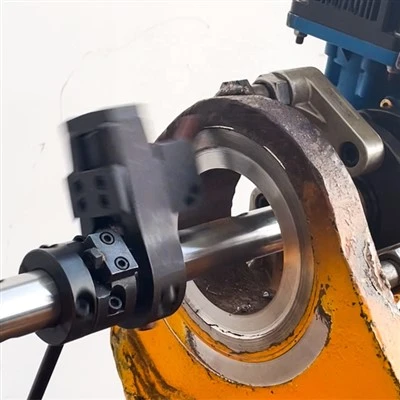
If you’ve got questions about reaming speed, or want to see how our machines work, don’t hesitate to reach out. We’re here to help you find the right solution, not just sell you a machine.
Line Boring Accessories References
- Machining Fundamentals, 5th Edition. Goodheart-Willcox, 2019.
- Tool and Manufacturing Engineers Handbook: Machining. Society of Manufacturing Engineers, 2020.
- “Optimizing Reaming Parameters for Precision Hole Manufacturing,” Journal of Manufacturing Processes, Vol. 45, 2020.
- Practical Guide to Reaming for Machinists. Industrial Press, 2018.
Shangqiu JDA Machinery Technology Co., Ltd.
With abundant experience, we are one of the most professional reaming machine manufacturers and suppliers in China. We warmly welcome you to buy cheap reaming machine for sale here from our factory. Quality products and reasonable price are available.
Address: No. 55 Pingyuan Middle Road, Liangyuan District, Shangqiu, Henan, China
E-mail: sales@jdamachines.com
WebSite: https://www.jdamachines.com/
