If you’ve ever walked a warehouse floor or stood next to a production line that needs to switch between raw materials—say, rice one week, birdseed the next, or powdered spices—you’ve probably glanced at your bagging equipment and asked that exact question: Can a small bagging machine be moved easily? As a small bagging machine supplier who’s spent the last seven years testing these units in everything from 500-square-foot craft bakeries to 10,000-square-foot feed mills, I can tell you the answer isn’t a simple yes or no. It depends on what “move easily” means to you, what you’re moving, and how you plan to move it. Most small bagging machines are designed for flexibility, but the details of their design and your workspace will make all the difference. Small Bagging Machine
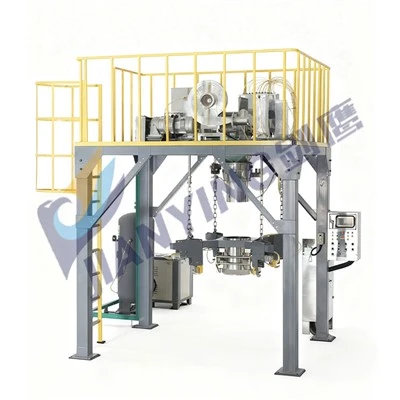
Let’s start with the basics: What counts as a “small bagging machine”? For our purposes, we’re talking about tabletop or floor-standing units that weigh between 150 and 800 pounds, handle 1-50 pound bags, and don’t require permanent utility installations (beyond a standard 110V outlet and a compressed air line, if needed). These aren’t the industrial behemoths that run on 480V three-phase power and bolt to concrete foundations. They’re built for operators who don’t have a dedicated engineering team on call to move heavy equipment. But even among these small units, design choices create major variations in maneuverability.
A few years back, I worked with a craft coffee roaster in Portland who had been using a large, floor-model bagger from a different supplier. Every time they shifted their roaster from one end of the shop to the other to accommodate different roasting schedules, they had to hire a third-party rigging company to lift the 1,200-pound machine onto a pallet, secure it, and move it. The cost was $800 a pop, plus downtime for a full day. When they switched to one of our compact, floor-standing bagging machines—weighing 320 pounds—they told me they could roll it from one end of their shop to the other in 10 minutes, no extra help required. That’s the kind of flexibility we design for, and it’s rooted in two key features: integrated casters and balanced weight distribution.
Integrated casters aren’t just an afterthought for small bagging machines. The best units have 5-inch, rubberized swivel casters rated for at least 1,000 pounds each, mounted to a reinforced steel base frame rather than the thinner outer body. I’ve seen cheaper machines where casters are bolted to the plastic side panels, which bend under the weight of even a half-full 50-pound bag, leaving the machine lopsided and hard to roll. Our casters are locked into place with a spring-loaded brake that works with one foot, so you can set the machine up and secure it in 10 seconds flat, no wrenches required. That’s a small detail that makes moving the machine easy when you need to, and stable when you don’t.
Balanced weight distribution is another non-negotiable. A lot of smaller baggers concentrate all their weight at the base, which makes them tip forward when you’re adding a heavy hopper, or lean to one side if the bag spout is off-center. We design our small bagging machines so that the main weight—motor, scale, and bagging mechanism—sits midway up the frame, with the hopper holding product at the top. That keeps the center of gravity low, so even when the machine is half loaded with 10 pounds of coffee, you can tilt it back just 5 degrees to roll it over a small bump in the floor (like a narrow seam between concrete slabs or a thin threshold ramp) without it tipping over. I’ve watched new operators try that with unbalanced machines and end up spilling 20 pounds of rice all over the warehouse floor, which is both a mess and a safety hazard.
But here’s the catch: “Moving easily” doesn’t just mean rolling it across a flat floor. If your move involves navigating stairs, loading it into a pickup truck, or lifting it into a storage space above a production line, even the most maneuverable small bagging machine will hit limits. Last year, a vegetable farm in Ohio reached out to me because they wanted to move a small bagger from their ground-level packing shed to a second-floor storage area during the off-season. Their machine was 750 pounds, and their only access was a narrow wooden staircase with a 3-foot width limit. We had to help them disassemble the machine into three parts—hopper, scale unit, and base frame—each of which weighs less than 250 pounds, so two workers could carry them up the stairs. If they’d tried to move the whole unit, it would have been too heavy and too wide to fit.
That’s why, when you’re shopping for a small bagging machine, you should ask about tool-less disassembly. Many of our competitors’ units are welded together, so taking them apart requires cutting metal or removing dozens of bolts. Ours uses quick-release clamps for the hopper and the control panel, and the scale unit bolts to the base with just four hex bolts that you can remove with a standard wrench. That takes 5 minutes total, versus 30 for a similar unit from another brand. For moves that involve truck transport, disassembly also means you don’t need a flatbed truck—you can fit the parts in a standard pickup or van, which saves on transport costs.
Power and utility connections are another often-overlooked factor in how easy a small bagging machine is to move. Unlike industrial baggers that require specialized electrical or air connections, most small baggers run on standard 110V household power. That means you don’t need an electrician to rewire the machine when you move it—just plug it into any outlet. We’ve had customers who move their bagger between their main production line and a small pop-up sales booth at a local farmers’ market. They plug it into a generator at the market, run a compressed air line from a small portable compressor, and they’re set up in 15 minutes. It’s not just about moving the machine itself; it’s about how quickly you can get it up and running in a new location.
Of course, there are exceptions. If you’re using a small bagging machine for materials that are extremely hot, like molten chocolate, it might have additional heat-resistant components that add weight and bulk, making it less easy to move. Or if you’re handling very fine powders, like flour or cocoa, you might need a dust extraction system that connects to the machine, which could add complexity to disassembly. But for the vast majority of applications—food products, animal feed, fertilizers, small chemicals—our small bagging machines are designed to be moved by two people, with no specialized equipment.
I’ve also learned over the years that ease of movement isn’t just a physical feature; it’s about how the machine handles during transport. The last thing you want is to move your bagger only to find that the scale has shifted, or the bag spout is bent, because it wasn’t secured properly. That’s why we add built-in tie-down points to the frame, so you can strap the machine to a pallet or truck bed without putting pressure on the delicate internal components. We also include a small carrying handle on the control panel for when you need to adjust it on the fly, like when you’re moving the machine a short distance across the shop.
One story that sticks with me is from a small organic farm in Vermont. They started with a small 100-pound bagging machine that they moved from their processing area to their front-of-house store every weekend, so customers could buy pre-bagged herbs and vegetables. At first, they hired a hand truck to move it, but after a few months, their two part-time employees got good at tilting the machine back, rolling it across the gravel path, and setting it up in the store. They told us that when they expanded their operation and upgraded to our larger small bagging machine (500 pounds), it was still easy for them to move—they just added a helper to steady it on the gravel. That’s the kind of customer feedback that tells us we’re getting it right.
If you’re still wondering whether a small bagging machine can be moved easily for your operation, the best way to confirm is to think about your specific move needs. Ask yourself: How far will I need to move it? What’s the floor surface like (concrete, gravel, tile)? Do I need to move it through narrow doorways or up/down stairs? Will I need to disassemble it for transport? Once you have those answers, you can choose a machine that matches your needs.
At the end of the day, the goal of a small bagging machine is to make your operation more flexible, not less. If your machine is so heavy or unwieldy that moving it costs more than the time it saves you, it’s not doing its job. Our small bagging machines are built to adapt to your workflow, whether that means moving them to a different line, a storage space, or a temporary event. They’re not just pieces of equipment—they’re tools that let you scale your operation without being tied to a fixed location.
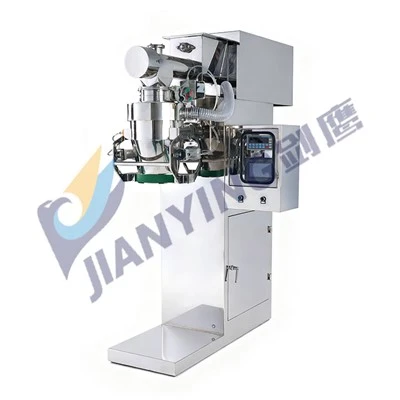
If you’re looking for a small bagging machine that balances ease of movement with reliability, feel free to reach out to discuss your exact needs. We can walk you through the features that matter most for your workspace, answer any questions about disassembly and transport, and help you find a unit that fits your production goals.
Jumbo Bagging Machine References:
- Industrial Bagging Equipment Association. (2022). “Mobility Design Considerations for Small-Scale Bagging Systems.” Annual Technical Report.
- Small Manufacturing Business Network. (2023). “Flexible Equipment Solutions for Small Food and Agriculture Operations.” Industry White Paper.
- Occupational Safety and Health Administration (OSHA). (2021). “Manual Material Handling Guidelines for Warehouse Equipment.” Safety Standards Publication.
- International Society of Automation. (2022). “Tool-Less Disassembly Guidelines for Portable Industrial Equipment.” Engineering Journal.
Wuxi Jianying Intelligent Equipment Co., Ltd.
We are one of the most professional small bagging machine manufacturers and suppliers in China, featured by quality products and good price. Please rest assured to buy durable small bagging machine for sale here from our factory. Welcome to contact us for custom service and OEM service.
Address: No.88, Xinyang Road, Ehu Town, Xishan District, Wuxi City, Jiangsu Province, P.R.China
E-mail: wuxijianying@163.com
WebSite: https://www.wuxijianying.com/
