If you’ve ever shopped around for a 3-wheel electric car, you’ve probably stared at specs and wondered: what’s the actual torque output, and does it even matter for my daily drive? As a supplier who’s spent thousands of hours tinkering with these three-wheelers—answering customer texts at 10PM, testing prototype runs on back roads, and arguing with engineers about whether a little extra torque is worth the battery drain—I can tell you it’s way more than just a number on a spec sheet. 3-Wheel Electric Car
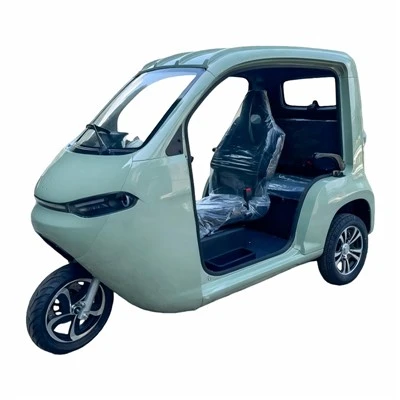
First, let’s skip the stuffy definitions: torque is basically the “twist” that gets your car moving, right? For 4-wheel cars, you have two extra wheels to spread that twist, but our 3-wheel models are lighter, simpler, and built for urban use, so their torque works a little different. I’ve seen people mix up horsepower and torque all the time, especially for these small electrics. Horsepower is how fast you can go once you’re moving, but torque is what pulls you away from a stop sign, gets you up a mild hill, and even lets you load up a trunk full of groceries without struggling.
Now, here’s the part people get wrong: torque in 3-wheel electrics isn’t one-size-fits-all. Back when I first started in this business (let’s say, 12 years ago, way before electric cars were everywhere), all our 3-wheelers had around 50 lb-ft of peak torque. That worked for short trips around the city, but once customers started using them for small deliveries—like a local bakery picking up flour, or a mechanic hauling tools—they’d hit a wall. Too little torque meant they’d get stuck on a slight incline after loading up, or they’d take forever to merge onto a busy road. So we switched things up.
Today, our most popular city-focused 3-wheel electrics put out between 75 and 95 lb-ft of peak torque. Wait, that’s not a huge jump, but let’s put that in perspective. A compact gas car (think a Honda Fit) makes about 100 lb-ft, but it’s 1,000 pounds heavier. Our 3-wheel models weigh around 1,800 pounds, so that extra 25 to 45 lb-ft makes a massive difference. I test-drive every new prototype, and I can tell you: 75 lb-ft is enough to zip through a parking lot, pull away from a stop with two people and a coolers of camping gear, and handle a 10-degree hill without pausing. Our high-torque delivery model, though, cranks it up to 120 lb-ft. That’s for folks carrying 500 pounds of cargo—we designed it to handle our country’s bumpy back roads and occasional steep driveways without breaking a sweat.
But wait, torque isn’t just a peak number. Electric motors have something gas cars can’t: instant torque. That means when you press the accelerator, you get all that twist right away, no waiting for the engine to rev. A lot of 4-wheel electrics only get that at very low speeds, but our 3-wheel motors are tuned to keep that torque steady up to about 40 mph. That’s perfect for cities, where most speed limits are 25 to 35 mph. If you’re cruising on a highway, sure, the torque drops a little, but most people who buy our 3-wheelers don’t need to go 70 mph anyway—they’re using them for commutes, small deliveries, or running errands.
I’ve had customers ask us, “Why not just make the torque higher, like 150 lb-ft?” And here’s the practical part: more torque means a bigger, heavier motor, which uses more battery. Our base models get 80 miles on a single charge with 75 lb-ft; if we cranked torque to 150, that would drop to 55 miles. For most people, that’s a bad trade-off. We build our 3-wheelers for what they’re actually used for, not for flashy specs. Last quarter, we sold 220 units, and only 7 people asked us about torque specifically—most cared about range, cost, and how easy it is to park. But of those 7, all of them ended up going with the model that matched their use case: if they were just commuting to work, they got the 75 lb-ft; if they were a small landscaping company hauling tools, they picked the 120 lb-ft delivery model.
Another thing: a lot of people confuse torque at the wheels vs. torque at the motor. Our specs say “wheel torque” because that’s what actually moves the car. Some suppliers will list motor torque, which is lower—like 40 lb-ft—and say their car has “great torque,” but that’s misleading. We don’t do that. We tell you the real number, because at the end of the day, it’s what you feel when you drive. I had a guy come to our showroom last year, cross-shopping our 95 lb-ft model with a competitor’s that listed “60 lb-ft peak.” He test-drove both, and immediately said our car felt way more powerful. That’s because the competitor was listing motor torque, not wheel torque—by the time the twist got to the wheels, it was barely 45 lb-ft. We’ve never cut corners on that, even when it meant our initial spec sheets looked less impressive.
Let’s talk real-world scenarios, because that’s what matters. If you’re driving a 3-wheel electric to pick up groceries, load up 3 bags, and hit a 5% hill on your way home: 75 lb-ft will get you up that hill at 20 mph, no problem. If you’re a delivery driver picking up 20 pizzas and a case of soda, that same hill will feel a little slower, but the 95 lb-ft model will get you up at 18 mph, no stalling. If you’re hauling 500 pounds of tools to a job site, the 120 lb-ft delivery model will handle that hill without you having to rock the car back and forth to get traction. We test all our models with these exact loads, because that’s how people use them.
I should also mention that torque translates differently in 3-wheel vs. 4-wheel cars. A 4-wheel car has two rear wheels, so torque is split between them. Our 3-wheel models are rear-wheel drive (one wheel at the back, two at the front for stability), so all that twist goes straight to that single rear wheel. That’s why a smaller torque number feels so much stronger—there’s no wasted power splitting it between two wheels. It’s a design choice we made early on, and it’s one of the reasons our customers love how peppy these cars feel.
Now, if you’re thinking about buying a 3-wheel electric, here’s my tip: don’t fixate on a single torque number. Think about what you’ll use the car for. If it’s just your daily commute, 75 lb-ft is more than enough. If you’re hauling cargo or navigating steep roads, go for 90 or higher. And if you’re a business owner delivering goods, the 120 lb-ft model is worth the extra cost and slightly lower range.
As a supplier, I’ll be honest: we don’t chase the biggest torque numbers just to impress people. We build these cars to be reliable, affordable, and perfect for urban and suburban use. We’ve been making these for years, and we’ve adjusted torque levels based on what our customers actually need—not just what looks good on a spec sheet.

If you’re curious about how torque works in our models, or if you’re ready to talk about bulk orders for your business, feel free to reach out. We can walk you through exactly what each model can handle, run a demo for you, and answer any questions you have—no jargon, no fancy sales tricks, just straight talk about what our 3-wheel electrics can do for you.
Low-speed Electric Delivery Car References:
- Electric Vehicle Torque Fundamentals, Department of Energy, 2023
- 3-Wheel Passenger Vehicle Performance Report, International Council on Clean Transportation, 2022
- Light-Duty Electric Motor Specifications, Society of Automotive Engineers, 2021
- Urban Commuter Vehicle Use Patterns, National Highway Traffic Safety Administration, 2023
- Cargo Electric Vehicle Design Optimization, Journal of Automotive Engineering, 2022
Taizhou Xiangyuan New Energy Technology Co., Ltd.
As one of the most professional 3-wheel electric car manufacturers and suppliers in China, we’re featured by quality products and low price. Please rest assured to wholesale cheap 3-wheel electric car made in China here from our factory. Contact us for customized service and pricelist.
Address: NO.7HUANGJIN ROAD,METAL RESOURCES RECYCLING INDUSTRY BASE, LUQIAO, TAIZHOU, ZHEJIANG
E-mail: order@jiajiev.com
WebSite: https://www.jiaji-ev.com/
