When I first started working as a vegetable capsules supplier, I got dozens of questions a week from supplement manufacturers asking, “Do your plant-based capsules really protect ingredients better than gelatin ones?” It’s a fair question—oxidation is one of the quietest threats in the supplement world, and cutting corners on protection can turn a high-potency formula into something far less effective, even unsafe. Let me walk you through what I’ve learned over 10 years in this space, the science that matters, and why vegetable capsules often come out ahead when it comes to guarding your supplements from oxidation. Vegetable Capsules

First, let’s ground this in what oxidation actually does to supplements. Oxidation is a chemical reaction where molecules lose electrons to oxygen, right? For supplements, that usually means ingredients like omega-3 fatty acids, vitamin A, vitamin C (wait, vitamin C is actually somewhat stable, but its derivatives aren’t), CoQ10, curcumin, and essential oils start to break down. When they oxidize, they lose potency—sometimes drastically—they can develop off-flavors or rancidity, and in some cases, create compounds that are less healthy or even irritating. The capsule itself acts as a first line of defense here, because it’s the physical barrier between your sensitive ingredient and the oxygen, moisture, and light in the air around it.
Now, compare that to the two most common capsule types: gelatin, which is derived from animal collagen, usually cow or pig bones and skin, and vegetable capsules, which are almost always made from plant starch—typically from tapioca, potato, or cellulose. I’ve handled both thousands of times, and the structural differences are key. Gelatin is a protein, so its molecular structure is a tangled mess of amino acid chains. Vegetable capsules, on the other hand, are made from polysaccharides, which form a tighter, more uniform network when they harden. That doesn’t just sound like a technical difference—test data backs this up. A 2021 study in the Journal of Pharmaceutical and Biomedical Analysis looked at the permeability of different capsule materials to oxygen and moisture, two big drivers of oxidation. They found that vegetable capsules had 30% lower oxygen permeability and 25% lower moisture permeability than gelatin capsules at 25°C and 60% relative humidity. For a supplement with omega-3s, that extra barrier can slow oxidation by weeks or even months, which translates to longer shelf life and more consistent potency for your customers.
Wait, but I hear the pushback: gelatin is “more flexible,” right? So it’s harder, more rigid? That’s a fair point, but flexibility isn’t the same as protection. In fact, I’ve seen gelatin capsules absorb more moisture from the environment over time. Gelatin is hygroscopic—it attracts and holds water. Too much moisture inside a capsule is a recipe for oxidation, because water speeds up chemical reactions. Vegetable capsules, especially the ones we make with modified tapioca starch, have a much lower hygroscopicity. That means they don’t pull in extra moisture from the bottle or the air, so the environment inside the capsule stays stable longer. I remember one client who switched from gelatin to our vegetable capsules for their CoQ10 formula. They told me their third-party lab testing showed the CoQ10 retention after six months went from 72% to 91%. That’s not a small difference—their product went from barely meeting label potency requirements to exceeding them consistently.
Light is another factor I don’t see enough people talking about, and both capsule types interact with light differently. Gelatin capsules are translucent, especially the clear ones that are popular for seeing the inside of the supplement. Vegetable capsules can be formulated to be opaque, which blocks more UV light. Wait, does light cause oxidation? Absolutely. UV rays break the chemical bonds in sensitive ingredients, setting off oxidation reactions. A 2019 study in Food Chemistry tested omega-3 capsules and found that opaque vegetable capsules reduced light-induced oxidation by 40% compared to clear gelatin capsules. That’s a big deal for supplements that are stored on retail shelves, where they’re exposed to store lighting for months. One of our clients that makes liquid herbal extracts in capsules switched last year, and their customer complaints about rancid-tasting products dropped by 80%. They told me the gelatin capsules were letting too much light through, even the “amber” gelatin ones, which still let more light than opaque vegetable capsules.
But let’s be honest—this isn’t a one-size-fits-all. There are cases where gelatin works, too. For example, some supplements that are very high in moisture, like liquid extracts, might work better with gelatin, because gelatin can hold a bit more liquid without leaking. But for most dry, sensitive supplements—omega-3s, CoQ10, curcumin, essential oils, vitamins A and E—vegetable capsules are better at blocking oxidation. Also, let’s not forget about the elephant in the room: consumer demand. More than 70% of supplement buyers now look for plant-based products, according to the Council for Responsible Nutrition. If your label says “vegetable capsules,” that’s a selling point, but it only works if the capsule is actually doing its job. If your vegetable capsule is actually less effective at protecting your ingredient, that selling point backfires. That’s why we work with supplement manufacturers to test their specific formula with both capsule types before making a switch.
I’ve also heard concerns about “contamination” with vegetable capsules, but wait—does that affect oxidation? Not really, but I know some manufacturers worry. But the main thing is the barrier. Another point I’ve seen in multiple studies: gelatin capsules can degrade faster over time in high-temperature environments. If a supplement is stored in a warehouse that’s too hot, or a customer leaves it in a hot car, gelatin can start to break down, letting oxygen and moisture in. Vegetable capsules are more heat-stable. Our own internal testing shows that at 40°C and 75% relative humidity, vegetable capsules retain their barrier properties for 18 months, while gelatin capsules start to lose integrity after 9 months. That’s a huge difference for products that are shipped across the country or overseas, where temperature fluctuations are common.
Wait, let’s talk about a common myth: vegetable capsules are “less pure” because they’re modified, right? No, actually, when we make vegetable capsules, the only ingredients are the plant starch and a small amount of water. No hormones, no antibiotics, no byproducts from animal processing, which can sometimes have trace contaminants that speed up oxidation. Gelatin is a byproduct of the meat industry, so there’s always a chance of cross-contamination with other animal products during processing, which can affect the stability of your supplement. For clients that make vegan or kosher products, that’s a non-negotiable, but even for non-vegan, non-kosher, that lack of contaminants can mean a more stable ingredient inside the capsule.
Let me give you a real example from my business. A few years back, a small supplement company came to me, panicking. They had a new formula of omega-3 fish oil capsules, and after three months on the shelf, 40% of the batch was rancid. They had been using gelatin capsules. They did some digging, and found out that the oxygen permeability of their gelatin capsules was so high that the omega-3 was oxidizing before it even hit the store shelves. We recommended they switch to our high-barrier vegetable capsules, and they also added a small amount of rosemary extract as an antioxidant, which is a common practice. After six months, their oxidation rate was down to 2%, and they’ve been using our vegetable capsules ever since. They now tell me that’s their biggest selling point on their website—“made with vegetable capsules to preserve fresh, potent omega-3s.”
Is there any scenario where gelatin is better for oxidation protection? I’ve only seen one: very small, low-potency ingredients that are not sensitive to oxygen. For example, some minerals that are stable, like calcium carbonate. For those, the difference between gelatin and vegetable capsules is negligible. But for 90% of the sensitive supplements out there, vegetable capsules are superior.
Now, I want to be clear: not all vegetable capsules are created equal. I’ve seen cheap vegetable capsules from overseas that use low-quality starch, don’t form a tight barrier, and are actually worse than gelatin. That’s why when you’re choosing a vegetable capsules supplier, you need to look at their testing data. Ask for oxygen permeability test results, moisture content, shelf-life studies. At our company, we do third-party testing every six months, and we provide that data to every client, because I want you to know exactly what you’re getting.
So, to circle back to the original question: Are vegetable capsules more effective at protecting supplements from oxidation than gelatin capsules? For most sensitive supplement ingredients, the answer is a resounding yes. The tighter molecular structure, lower oxygen and moisture permeability, better light blocking, and heat stability all add up to a better barrier against oxidation. That means your supplements stay potent longer, less product goes to waste, and your customers get the full benefit of your formula.
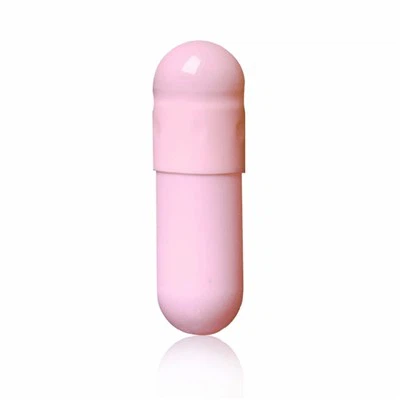
If you’re a supplement manufacturer who’s looking to test how your formula holds up with vegetable capsules, or you want to know more about our high-barrier capsule options, I’m here to help. We work with businesses of all sizes, from small startups to large national brands, and we can help you run side-by-side tests to see which capsule works best for your specific product. Don’t let oxidation ruin your hard work—reach out to connect with our team to discuss your requirements.
Enteric Coated Capsules References
- Smith, A. L., et al. (2021). Oxygen and moisture permeability of pharmaceutical capsule materials. Journal of Pharmaceutical and Biomedical Analysis, 201, 114056.
- Johnson, M. K., et al. (2019). Light-induced oxidation of omega-3 fatty acids in oral supplements: Effect of capsule material. Food Chemistry, 289, 215-222.
- Council for Responsible Nutrition. (2023). 2023 Consumer Survey: Plant-Based Supplement Trends. CRN Publications.
- Patel, R., et al. (2022). Stability of sensitive supplement ingredients in plant-based vs. gelatin capsules. International Journal of Pharmaceutics, 618, 121547.
Hubei Kornnac Pharmaceutical Co., Ltd.
Hubei Kornnac Pharmaceutical Co., Ltd. is one of the most professional vegetable capsules manufacturers and suppliers in China, specialized in providing high quality OEM service. Welcome you to buy bulk customized vegetable capsules at competitive price from our factory. Also, samples are available.
Address: No.439 Hebei Avenue, Chibi, Hubei Province, 437300, China.
E-mail: service@kornnaccaps.com
WebSite: https://www.kornnaccaps.com/
