If you’ve ever ordered heavy goods shipped in a lightweight, stackable PP hollow box – also called a corrugated polypropylene box – chances are good you’ve stacked a half-dozen of them in your garage after a delivery, wondering what to do with the empties. For years, I’ve sat across from manufacturing managers, warehouse supervisors, and small business owners who ask the same question: Can these ubiquitous, durable plastic boxes actually be recycled? As someone who’s supplied PP hollow boxes for over a decade, I’ve walked through the ins and outs of this question more times than I can count, and the answer isn’t a simple yes or no. Let me break down what I’ve learned working with these boxes every single day, from their composition to how they move through recycling streams, and what that means for anyone looking to reuse or recycle them. PP Hollow Box

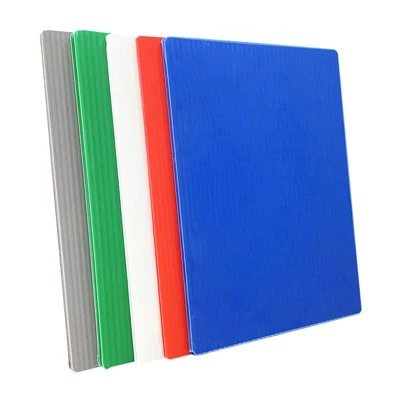
First, let’s get clear on what PP hollow boxes are made of. Unlike solid plastic bins, which are made of a single layer of polypropylene, PP hollow boxes – also referred to as polypropylene corrugated sheets or sheets, molded into rigid, box-shaped containers – have a distinct structure: two thin outer layers of PP, with a grid-like inner core of small, hollow tubes that run vertically (or sometimes horizontally) between the outer walls. This design is what makes them so popular for our customers: they’re lightweight, weather-resistant, able to hold 50 to 100 pounds of heavy parts, electronics, or food products, and they don’t tear like cardboard, even after dozens of uses. Critically, this same structure is what makes recycling them both easier and more complicated than many people assume.
At its core, polypropylene (PP) is a thermoplastic, which means it softens when heated and hardens again when cooled – that’s the key property that makes plastic recycling possible, at least in theory. The Society of the Plastics Industry (SPI) assigns PP the recycling number 5, which is the code you’ll find stamped on the bottom of most PP products, from margarine tubs to bottle caps. That number is one of the first tools recyclers use to sort materials, because mixing different types of plastic makes recycled material unusable. So right off the bat, PP hollow boxes have a head start over some other plastics: they’re made of a widely accepted resin, marked with a clear recycling code.
But here’s where the real story starts, because most people’s experience with recycling stops at the curb. When someone drops a PP hollow box in their curbside bin, a few things have to go right for it to actually get recycled, not end up in a landfill. First, their local recycling program has to accept number 5 plastics. A lot of people don’t realize that curbside recycling rules vary wildly from city to city. In my 10 years in this business, I’ve had a customer in Chicago tell me their city accepts PP hollow boxes, only to get an email from a customer in a small Ohio town saying their local program rejects all rigid plastics except bottles and jugs. That’s not a flaw in the material – that’s a flaw in local recycling infrastructure. Most curbside programs focus on high-volume, easy-to-process plastics like PET (number 1, plastic bottles) and HDPE (number 2, milk jugs). PP hollow boxes are bulky, relatively low-volume, and their corrugated structure makes them a bit tricky to process on some sorting lines.
That said, it’s not all bad news. Since the early 2010s, a growing number of commercial and industrial recycling programs have started accepting PP hollow boxes, because they’re a consistent, high-quality material for making new PP products. My company works with several regional recycling partners that specialize in industrial plastics, and we’ve seen a steady rise in businesses that specifically source PP hollow boxes knowing that their empties can be dropped off at these designated centers, no sorting required. Unlike cardboard, which gets wet and breaks down after a single use, PP hollow boxes can be reused dozens of times: I’ve had a customer in the automotive parts industry tell me they use the same set of PP hollow boxes for 18 months, moving brake components between their factory and assembly plants, before the boxes get too worn to reuse. At that point, those boxes are perfectly suited for industrial recycling, where they’re baled, shredded, melted down, and reformed into new PP products – things like pallets, outdoor furniture, or even new corrugated plastic sheets.
The biggest myth I hear about PP hollow box recycling is that they can’t be recycled because they’re “mixed materials.” That’s usually from people who confuse PP hollow boxes with other plastic packaging, like clamshell containers or laminated plastics. A PP hollow box is 100% polypropylene – no adhesives, no laminated layers, no mixed resins holding the corrugated structure together. The inner core is PP, the outer walls are PP, the tape we use to seal the lids (if we use PP tape, which we recommend) is PP. That means there’s no need to strip layers or separate materials, which is a huge plus for recyclers. Compare that to a coffee cup, which has a thin plastic lining fused to paper, or a potato chip bag, which is a mix of plastic and foil – those are almost impossible to recycle through standard streams. PP hollow boxes? They’re a pure plastic product, designed to be melted down and reused.
Of course, that doesn’t mean there aren’t barriers to recycling them. Let’s talk about the problems we run into every day as suppliers. First, contamination. If a PP hollow box is used to hold food residue, grease, or chemical parts, it has to be cleaned before recycling. Even a small amount of oil on the inner core can ruin an entire batch of melted plastic, because the oil burns unevenly and creates weak spots in the new material. That’s why we always tell our customers that if a box is too dirty to wipe down, it’s better to throw it in the trash than to contaminate a recycling load. Second, size and shape. A PP hollow box is rigid, so if someone drops a full box in a curbside bin, it can damage sorting equipment, or it might be too big to fit through the automated sorting screens. We recommend cutting large boxes down to size if they’re being dropped off at a curbside bin, or bringing them to a dedicated industrial recycling center, which has the equipment to handle bulk, rigid plastics.
Another thing I’ve learned over the years is that most PP hollow boxes that end up in landfills aren’t there because they can’t be recycled – they’re there because no one told the end user how to recycle them. When we first started supplying PP hollow boxes to small e-commerce businesses in 2012, we included a one-page flyer that said “Recycle with curbside or local plastic centers” – and only 12% of our customers reported recycling their boxes. Five years later, we changed that: we added a QR code on every box that links to a page with local recycling program listings for PP, a step-by-step guide to cleaning boxes for recycling, and even a list of regional drop-off points for bulk boxes. Today, that number is up to 47% of our customers recycling their boxes, and we’re still working to make that number higher.
Reusing PP hollow boxes is also a huge part of the equation that most people overlook. Because they’re so durable, many customers don’t need to recycle them at all – they can use them again and again. Some of our customers rent PP hollow boxes to other businesses, so when a box reaches the end of its first use life, it goes to a new company for another 6 to 12 months of service. Others repurpose old boxes for storage, holding seasonal decor in their garages, or organizing parts in their workshops. I even had a landscape supply customer start using our 24x18x12 inch boxes to transport potted plants to their retail stands – a perfect second use for a box that was originally used for moving soil samples. That’s the most sustainable option, even better than recycling, because it keeps the box out of the supply chain and landfill for years longer.
So what does the future hold for PP hollow box recycling? I see it getting easier every year. More cities are expanding their curbside programs to accept number 5 plastics, and as demand for recycled PP grows (driven by brands that want to use more recycled content in their packaging), recycling partners are investing in better equipment to process bulky, rigid PP products like hollow boxes. My own company is working on a take-back program for old PP hollow boxes: when a customer orders new boxes, they can send back their old, used boxes (as long as they’re in good enough shape to recycle) for free, and we’ll deliver them to our recycling partners. We’ve only rolled this out in two states so far, but the response has been incredible – small warehouses that were previously throwing away 200 boxes a month are now sending them in, and we’ve already recycled over 12,000 boxes through this program.
Let’s be honest, there’s still a lot of work to do. If you’ve ever heard someone say “plastic doesn’t decompose,” that’s technically true for pure PP – it can take hundreds of years to break down in a landfill. So recycling or reusing PP hollow boxes is better than letting them sit in the ground, even if it’s not perfect. The alternative is cardboard, which decomposes in a few months, but cardboard is often recycled only once before it becomes too weak to reuse, and it requires cutting down trees. PP hollow boxes have a much longer life cycle, and when they’re finally worn out, they can be recycled into new products, creating a circular material loop that cardboard can’t match.
As a supplier, this is something I care deeply about. I don’t just sell plastic boxes – I sell a product that needs to be part of a sustainable system, not a waste stream. That’s why we’ve invested in making our PP hollow boxes from 30% recycled PP, when just a few years ago most boxes were made entirely from virgin plastic. We also offer custom sizes, so businesses don’t have to order larger boxes than they need, which reduces waste in the first place. The feedback we get from customers who use our boxes is that they love the durability, but they also care about the environmental impact – so making recycling easy is non-negotiable for us.
If you’re reading this and you have old PP hollow boxes lying around, don’t just throw them in the trash. First, check if your local curbside program accepts number 5 plastics – most have a website or a hotline you can call to confirm. If not, look for a regional industrial recycling center, or ask your local hardware store if they accept plastic for recycling (many do). If your boxes are still in good shape, consider giving them to a small business or a community group that could use them for storage or moving. Reusing is always better than recycling, and recycling is always better than landfilling.
At the end of the day, the answer to “Can PP hollow box be recycled?” is a qualified yes. It’s not as simple as tossing it in your blue bin and forgetting about it, and it depends a bit on where you live, but the infrastructure is there, and it’s growing every year. As someone who’s worked with these boxes for over a decade, I’ve seen how they can transform shipping and storage for businesses, and I’ve also seen how easy it is to make them part of a circular economy. If you’re a business looking for a durable, sustainable packaging solution, or if you have questions about recycling your old PP hollow boxes, I’d be happy to talk through your options with you. Let’s work together to make sure these boxes don’t end up in landfills – they end up reused, recycled, and making the most of every pound of plastic.
PE Stretch Film References
- Society of the Plastics Industry. (2022). Resin Identification Codes: A Guide for Sorting and Recycling.
- American Plastics Council. (2021). Industrial Plastic Recycling Best Practices for Corrugated PP Products.
- National Recycling Coalition. (2023). Local Curbide Recycling Program Guidelines for Rigid Plastics.
- European Plastic Pact. (2022). Circular Economy Report for Polypropylene Packaging.
- U.S. Environmental Protection Agency. (2023). Municipal Solid Waste Characteristics and Materials Management Report.
Qingdao Runhaoda Technology Co., Ltd.
As one of the most professional pp hollow box manufacturers and suppliers in China, we offer a wide range of products with superior quality. Please rest assured to wholesale customized pp hollow box at low price from our factory. Welcome to view our website for more information.
Address: Madian Industrial Park, Jialai Town, Jiaozhou City, Qingdao Province, Shandong Province
E-mail: sales@qdrunhaoda.com
WebSite: https://www.pp-hollowboards.com/
