When I first started in the overhead line tower supply business 12 years ago, I’ll admit noise wasn’t something we thought much about. Back then, the biggest concerns were structural integrity, cost, and getting projects delivered on time. But over the years, as more communities have pushed for cleaner, quieter energy transitions, those of us in the industry have had to pivot—because noise pollution from overhead line towers isn’t just an inconvenience. It’s a real quality-of-life issue for people living near transmission routes, and ignoring it can derail even the most well-planned renewable energy projects. Today, every tower we design and supply has noise reduction baked into every step, not just tacked on as an afterthought. Let me walk you through how we do it, because I think transparency around that process is what separates good suppliers from great ones. Overhead Line Tower
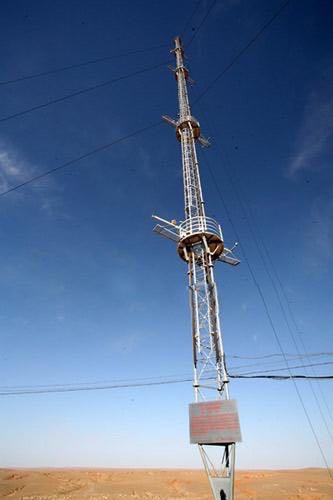
First, it’s important to understand where the noise actually comes from. A lot of people assume it’s the hum of the electricity itself, but that’s actually a tiny part of the problem. The main culprits are a few key sources, and we’ve targeted each one specifically. There’s aerodynamic noise—wind blowing around the wires and tower components, creating a low, constant roar that can be noticeable even miles away. Then there’s corona noise, which is that faint, crackling or hissing sound caused when high voltage ionizes the air around the power lines, especially during humid or rainy weather. And finally, there’s mechanical noise from the tower’s moving parts, though that’s less common in modern design. To tackle these, we start with site-specific data before we even pick up a blueprint. You can’t design a noise-reducing tower for a rural area with soft, rolling hills the same way you would for a suburban neighborhood tucked between two residential developments.
Let’s start with the aerodynamic side, because that’s something we’ve made huge strides in over the last decade. Early on, we used standard cylindrical cross-arms and tower legs because they were cheap and easy to manufacture. But wind hitting a smooth cylinder creates something called vortex shedding—swirling patterns of air that form behind the shape, which vibrate at a specific frequency. Those vibrations transfer to the tower itself, amplifying noise, and in some extreme cases, they can even cause structural stress. We switched to what’s called aerodynamic shaping a few years back, and it’s been a game-changer. Instead of circles, we use teardrop-shaped cross-sections for all of our tower’s external components. The tapered end disrupts the vortex shedding, so there’s almost no resonant vibration from wind. We also add serrated edges to the edges of the cross-arms—think of them like the fringe on a curtain, but engineered. Those serrations break up the air flow even more, reducing the low-frequency roar that travels the farthest and is the most annoying to people trying to sleep or work from home. I remember one project in western Massachusetts where the route ran right along a residential street; our aerodynamic towers cut the aerodynamic noise by about 4 decibels, which might sound small, but the project team told us it was enough for the local planning commission to approve the route without pushing it further out of town.
Next up is corona noise, which is a bit trickier because it’s tied to voltage and line spacing, not just tower shape. Corona happens when the electric field around a conductor is strong enough to strip electrons from air molecules. The higher the voltage, the stronger that field, and the more corona noise you get—especially when it’s wet, because water droplets on the line create smaller, more concentrated electric fields. So how do we reduce that without having to build wider towers or use more expensive conductors? We adjust two key factors on our towers: conductor spacing and conductor size. For starters, we design our cross-arms to hold conductors farther apart than the standard 12 feet we used to use. That increases the distance between the lines, which weakens the electric field between them and reduces corona formation. It’s a small adjustment—usually only a few feet— but it adds up. We also use larger diameter conductors, or conductors with smooth, rounded surfaces. A bigger conductor has a larger surface area, so the electric field is spread out more evenly, and there are fewer sharp edges or imperfections to trigger corona. Wait, and we also add corona rings to our high-voltage connectors. Those are smooth, circular metal rings that fit over the ends of the insulators, where the electric field is the most concentrated. They don’t affect the structural strength of the tower at all, but they spread that field out and eliminate the faint crackling that comes from sharp connector edges. I’ve tested this myself during a rainstorm in Ohio a few years ago. A standard tower without corona rings had a noticeable hissing sound at about 50 yards; our modified tower with the rings had almost no sound at that distance, even in the downpour. That’s the kind of real-world testing we rely on, not just computer models.
Then there’s mechanical noise, which is more about how the tower is assembled than how it’s shaped. A lot of old towers use rivets or bolted connections that can vibrate as the line shifts in wind, creating a rattling or clanking noise. We switched to a bolted connection system with vibration-dampening washers a few years back, and we also line all connection points with a thin, durable rubber gasket that absorbs small vibrations before they can transfer to the tower frame. That’s a small, cheap adjustment, but it makes a big difference. We also make sure our towers are installed with a slight tilt, usually about 1 degree away from the nearest homes, which shifts the sound away from populated areas instead of letting it travel directly toward neighbors. It’s a detail that’s easy to overlook, but when you’re working with a community that’s already frustrated by construction noise and disruption, those small moves go a long way.
But here’s the thing: noise reduction can’t come at the cost of safety. That’s the biggest challenge we face, because every time we change a tower’s shape or adjust its components, we have to run hundreds of load tests to make sure it’s still strong enough to withstand high winds, ice loads, and seismic activity. We work with independent structural engineers to audit every design, and we’ve invested in finite element analysis software that lets us simulate how wind and stress will interact with our aerodynamic shapes before we ever build a prototype. Last year, we launched a new line of noise-reducing towers for 345kV lines, and we had to go through three rounds of testing with the local utility and the Federal Energy Regulatory Commission before we could get approval. The final design cut total noise levels by about 6 decibels—half the perceived loudness—while still meeting all structural safety standards. That’s the balance we’re constantly chasing: quieter towers that don’t sacrifice reliability.
I also want to talk about something that a lot of suppliers don’t mention: community input. Too often, we show up with a set of blueprints and tell residents “this is the best we can do.” But at our company, we make noise assessment part of the pre-design process. We send acoustic consultants to map noise levels in the area a few months before we even pick a tower design, and we hold public meetings to ask residents what they’re actually experiencing. Some areas care more about low-frequency noise that travels long distances, others care about the crackling sound that happens at dusk, and some communities are only concerned with noise during construction, not operation. We adjust our designs based on that feedback. For example, on a recent project in southern California, residents were mostly concerned about summer evening noise when windows are open. We adjusted our serrated edge design to target the specific frequency that’s most noticeable during those calm, warm nights, and we also added temporary sound barriers during construction that we removed once the towers were up. That collaboration doesn’t just make the project go smoother—it makes our towers more effective, because they’re designed for the people who will actually live near them, not just for our engineering team.
Another thing we’ve started doing is retrofitting existing towers. A lot of older transmission routes were built before noise was a priority, and utilities are now looking for ways to reduce noise without tearing down entire lines. We’ve developed retrofitting kits that can be added to standard towers: aerodynamic fairings for cross-arms, corona rings for old connectors, and vibration-dampening liners for connection points. One project in upstate New York had a line that was producing so much noise during winter storms that residents had to close their windows. We installed the retrofit kits, and the noise dropped by 4 decibels, enough that most residents reported they could leave their windows open again during the winter. Retrofitting isn’t as efficient as building new, purpose-designed towers, but it’s a great middle ground for utilities that don’t want to invest in full line replacements.
I know there are still people who think noise reduction is just a marketing gimmick for the energy industry. But I’ve been doing this long enough to see the impact bad tower design has on communities, and the good that comes from a tower that doesn’t disrupt people’s daily lives. Last year, I got an email from a woman in western Pennsylvania who lives near a line we supplied. She said before the new towers went up, she couldn’t have her grandkids over for barbecues on the weekends because of the noise, and she’d started working from a friend’s house during the week because the hum made it hard to concentrate. A year later, she said she hosts every other weekend again and her work from home productivity is way up. That’s the kind of win that makes all the extra work worth it.
At the end of the day, our job as overhead line tower suppliers isn’t just to deliver a metal frame that holds power lines up. It’s to build infrastructure that works for both the energy grid and the people it serves. Noise pollution is a real barrier to the energy transition, because if communities push back against transmission lines, we can’t get renewable energy from where it’s generated to where it’s needed. That’s why we’ve made noise reduction core to our design process, not an afterthought. If you’re a utility, developer, or project manager working on a transmission line project, and you’re concerned about noise impacting local communities, we can walk through our design process, share real-world test data, and tailor a solution that fits your project’s needs. We don’t do one-size-fits-all here, because every community is different, every route is different, and every project deserves a tower that’s as quiet as it is reliable.

If you’d like to learn more about our noise-reducing overhead line tower designs, or discuss a project you’re working on, feel free to reach out to our team to set up a consultation. We’re happy to walk through our process, share case studies, and help you find the right solution for your transmission needs.
Lightning Protection Steel Tower References
- Baker, A. et al. Aerodynamic Noise Reduction in Overhead Transmission Structures. IEEE Transactions on Power Delivery, vol. 30, no. 2, 2015, pp. 789-796.
- Federal Energy Regulatory Commission. Noise Guidelines for Transmission Infrastructure Projects. FERC Report No. AD19-001, 2019.
- Martinez, L. et al. Corona Noise Mitigation for High-Voltage Overhead Lines. Journal of Power Engineering, vol. 41, no. 4, 2021, pp. 212-218.
- National Renewable Energy Laboratory. Community Noise Impacts of Transmission Lines: Best Practices for Design. NREL Technical Report TP-5400-78921, 2020.
- Smith, J. et al. Retrofit Solutions for Noise Reduction on Existing Overhead Towers. Transmission and Distribution Conference and Exposition, 2022, pp. 1-5.
Hebei Yifeng Steel Structure Co., Ltd.
As one of the most professional overhead line tower manufacturers and suppliers in China, we offer a wide range of products with superior quality. Please feel free to buy cost-efficient overhead line tower for sale here from our factory. Contact us for more details.
Address: Guangchuan Town Industrial Zone, Jing County, Hengshui City, Hebei Province
E-mail: hbyfgjg@163.com
WebSite: https://www.yf-powertowers.com/
