When you’re in the market for precision metalworking equipment, ZNC Die Sinker EDM stands out as a workhorse for shops focused on producing detailed, complex molds and dies. But one question I get asked almost every day by toolmakers, mold manufacturers, and production supervisors is: “What’s the actual tolerance level I can expect from a ZNC Die Sinker EDM?” As a supplier who’s worked closely with these machines for over a decade, I’ve seen firsthand how tolerance isn’t just a number—it’s a balance of machine specs, setup, material, and operator expertise. Let me break this down, straight from the shop floor, no textbook jargon that doesn’t hold up in real production. ZNC Die Sinker EDM
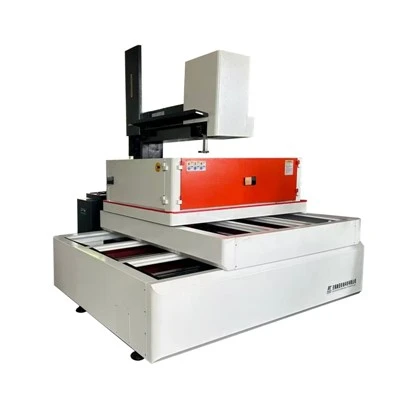
First, let’s start with the basics: ZNC Die Sinker EDM differs from more advanced machines like CNC ram EDM or wire EDM in how it controls the process. ZNC stands for “Zero Numerical Control,” meaning it uses a simple, fixed-program system to manage the spark gap, electrode feed, and depth—no adaptive real-time adjustments like full CNC models. That simplicity is why ZNC machines are so popular for small to mid-sized shops; they’re more affordable, easier to train new operators on, and ideal for jobs that don’t require 0.001mm-level precision on every feature. But that simplicity does shape its tolerance limits, so it’s important to set realistic expectations.
The core tolerance of a ZNC Die Sinker EDM falls into two main categories: dimensional tolerance and geometric tolerance. Dimensional tolerance refers to how close the finished part’s dimensions are to your design specifications, while geometric tolerance covers things like flatness, perpendicularity, and concentricity. For most standard jobs—like mold cavities for plastic parts, simple die cuts, or small tooling inserts—the typical dimensional tolerance range is ±0.005mm to ±0.015mm (±0.0002in to ±0.0006in). That’s not a random number; it’s what we consistently see on our customer machines when they’re set up correctly for typical work. But I’ve also seen shops hit ±0.003mm (±0.0001in) on very small, simple features, and some that end up with ±0.02mm (±0.0008in) if they’re working with larger electrodes or tougher materials without proper setup.
Geometric tolerance is where ZNC machines can sometimes surprise people, but also where they have limits. Flatness, for example, is usually within 0.003mm per 100mm (0.0001in per 4in) of work area for well-maintained machines. Perpendicularity between the electrode and the work piece is critical for EDM, because even a slight tilt can throw off the cavity walls. On a good ZNC machine, that perpendicularity is usually within 0.005mm over the full travel of the ram, which is more than enough for most mold and die applications. Concentricity for small, cylindrical features? Typically ±0.01mm, which is perfect for things like small gear hubs or pin inserts that don’t need the ultra-precise alignment of a wire EDM.
Now, I need to be clear: these aren’t hard limits. The tolerance level you get depends on five key factors that every shop needs to manage if they want consistent results from their ZNC Die Sinker EDM. Let’s go through each one, because this is where most new operators go wrong, thinking the machine is the only variable.
First, electrode quality and material. The electrode is the “tool” in EDM, and its accuracy directly translates to the part. If your electrode is made from poorly machined copper or graphite, has burrs on its edges, or isn’t held firmly in the chuck, that’s going to add error to your part. For ZNC machines, most shops use graphite electrodes for roughing operations and copper for finishing. A high-quality graphite electrode that’s precision-machined to ±0.002mm will let you hold tighter tolerances than a cheap, hand-machined one. Also, electrode wear is a big deal—ZNC machines don’t adjust for wear in real time, so a worn electrode will make your cavity slightly smaller than designed. We recommend that customers inspect electrodes before each job, and for tolerances tighter than ±0.005mm, they machine electrodes in-house to maintain control.
Second, work piece preparation. You can’t machine a rough, warped block of steel and expect tight tolerances. The work piece needs to be clean, flat, and securely fixtured to the machine’s table. If the work piece isn’t properly seated, it can shift slightly during the EDM process, throwing off dimensions. We’ve had customers bring back ZNC machines saying “the tolerance is way off” only to find their work piece was clamped with a single bolt on one side, causing a 0.02mm warp. Also, the material itself matters: soft materials like aluminum or mild steel are easier to hold tight tolerances than hard tool steel, which can have slight variations in hardness that affect spark erosion. For high-hardness materials, we suggest a slightly wider tolerance buffer, or a pre-machining step to level the work piece before EDM.
Third, machine maintenance and calibration. ZNC Die Sinker EDMs are sturdy, but they do need regular care to maintain their tolerance. The ram’s linear guides, the spindle chuck, and the table’s surface all wear over time. If the guides have play, the ram will wobble a little, leading to inconsistent spark gaps and dimensional error. We tell customers to do a monthly calibration check: measure the distance the ram travels 10 times between two points, and if there’s a variation of more than 0.005mm, it’s time to adjust the guides. Also, keeping the machine’s work area clean of debris—metal shavings from previous jobs, dust, or dielectric fluid buildup—prevents foreign particles from getting between the electrode and work piece, which can cause spark skips or uneven erosion that messes up tolerance.
Fourth, dielectric fluid and process parameters. Dielectric fluid (usually deionized water or oil) is what carries the sparks away and flushes out eroded metal particles. If the fluid is too dirty, it can cause short circuits, which lead to uneven material removal and looser tolerances. We recommend changing the dielectric fluid every 300 hours of use, or more often if you’re machining lots of small, fine features. Process parameters—like current, pulse on-time, and gap voltage—also play a role. Roughing operations use higher current for fast material removal, which has a wider gap tolerance (usually ±0.01mm to ±0.02mm), while finishing operations use lower current and shorter pulses, which narrow the gap to ±0.003mm to ±0.005mm. The trick for ZNC machines is to match the parameters to your electrode size and material; if you set finishing parameters too high, you’ll get extra material removed, and tolerance will slip.
Fifth, operator experience. This is the most human factor, and it’s one that can make or break tolerance. ZNC machines are simpler than full CNC models, but they still require an operator to adjust settings, inspect parts, and catch issues before they cause scrap. A new operator might not notice that the electrode is wearing halfway through a 2-hour job, leading to a final dimension that’s 0.01mm off. An experienced operator will run a test cut on a scrap piece of the same material first, measure it, and adjust the gap offset on the ZNC machine before machining the actual part. We’ve trained hundreds of operators on our ZNC machines, and the shops with the tightest tolerance consistently have teams that do test cuts and document each job’s parameters—no exceptions.
Now, let’s talk about common misconceptions. Some people think ZNC Die Sinker EDM can’t hold tolerances as tight as wire EDM, and that’s mostly true—wire EDM typically holds ±0.001mm or better. But for 80% of the jobs our customers do, ZNC’s tolerance is more than enough. For example, a plastic mold for a phone case might need a tolerance of ±0.01mm on the cavity walls; wire EDM can do that, but it’s slower and more expensive. ZNC can do it in half the time, at a lower cost, which makes it the better choice for high-volume mold production. Another misconception is that ZNC is only for roughing. While it’s great for roughing, with the right setup and parameters, it can handle finishing jobs too. We have a customer that uses a ZNC machine for finishing small, intricate die inserts for medical devices, holding ±0.004mm consistently—something they thought only a CNC wire EDM could do until they upgraded their setup and process.
I also want to share a real example from a customer of ours last year. A shop that makes automotive stamping dies was struggling with their old ZNC machine, getting ±0.02mm tolerance on their die cavities, which was leading to parts that wouldn’t fit together. They came to us, and we worked with them to re-calibrate the machine’s ram guides, switch to higher-quality graphite electrodes, and adjust their finishing parameters. Within a month, they were holding ±0.008mm tolerance on every job, and scrap rates dropped by 12%. That’s the thing about ZNC Die Sinker EDM tolerance: it’s not a fixed number from the factory—it’s what you make it with the right care, setup, and people.
Of course, there are limits. If you’re working on a job that needs ±0.001mm tolerance on multiple small features, a ZNC machine isn’t the best fit. Its fixed control system can’t adjust for real-time wear or gap variations, so you’ll end up with inconsistent results. But for the vast majority of die sinking, mold making, and tooling jobs, the tolerance range I mentioned earlier is more than sufficient. The key is to align your expectations with the machine’s capabilities, and to invest in the basics: good electrodes, proper work holding, regular maintenance, and a team that knows how to run the machine.
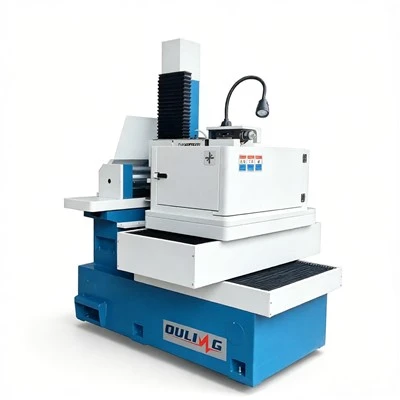
If you’re in the market for a ZNC Die Sinker EDM, or you’re looking to upgrade your current machine to get more consistent tolerance, let’s talk. We work with shops of all sizes, from small job shops to large mold manufacturers, and we can help you pick a machine that fits your tolerance needs, plus train your team on best practices to get the most out of it. Don’t guess at what your machine can do—reach out, and we can walk through your specific jobs and needs to make sure you’re getting the tolerance you need without overpaying for more machine than you need.
CNC Die Sinker EDM REFERENCES
- EDM Handbook, Modern Machine Shop Publishing, 2021
- Die Sinker EDM Performance Standards, National Tooling and Machining Association (NTMA), 2022
- ZNC vs CNC EDM: Tolerance and Application Comparisons, SME Journal of Manufacturing Processes, Vol. 24, No. 3, 2022
- Precision Machining Tolerance Guidelines for EDM Operations, American Society of Mechanical Engineers (ASME) B5.57, 2019
Taizhou Ouling CNC Equipment Co., Ltd.
As one of the most professional znc die sinker EDM manufacturers and suppliers in China, we’re featured by quality products and good price. Please rest assured to buy advanced znc die sinker EDM made in China here from our factory. Welcome to contact us for quotation.
Address: No.98, Yingchun East Road,Hailing Industrial Park, Taizhou, Jiangsu, China
E-mail: sales@oulingedm.com
WebSite: https://www.oulingedm.com/
