If you’ve ever crouched behind a wall in a rural Australian property, fumbling to plug a 5G-enabled mobile hotspot into a wall socket that’s been there since your grandparents built the granny flat, you’ve probably asked this exact question: Can my old Australian standard plug pin actually work with the brand-new 5G gear I just bought? As someone who’s spent the last 12 years selling Australian standard plug pins (that’s the AS/NZS 3112 pin type, for anyone not in the power cord game) to every café, telecom tech, and off-grid hobbyist across the country, this is the question I get more than any other. It’s not just a random curiosity, either—telecom companies are rolling out 5G towers at a breakneck pace, and small businesses and households are upgrading their gear faster than ever. Let’s break this down like I’d break down a tricky order for a café’s new espresso machine: with real facts, no marketing fluff, and the specific needs of 5G devices front and center. Au Standard Plug Pin
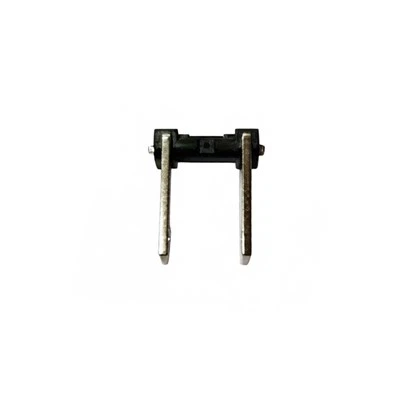
First, let’s get clear on what an Australian standard plug pin actually is, because there’s a lot of confusion around this. The AS/NZS 3112 standard is the backbone of Australian (and New Zealand, and parts of Pacific Island nations) electrical safety, and its plug pins are flat, 1.65mm thick, 13.7mm long, spaced 17.3mm apart for the live and neutral pins, plus a longer, thicker earth pin that’s 2.5mm thick and 20mm long. That’s not a random shape—it’s designed to deliver power safely for everything from a small table lamp to a 5-kilowatt air conditioner, as long as the electrical load is within the socket’s rating. Most household Australian wall sockets are rated for 10 amps, 240 volts, which translates to a maximum 2400 watts of power.
Now, what are 5G devices we’re talking about here? I’m not talking about your smartphone—your phone charges on a tiny 15-watt or 25-watt charger, which uses a completely different plug (even though many of them have Australian standard pins these days). The 5G devices that actually connect to fixed power supplies are the ones that run the network: 5G small cells, macro tower power units, in-building 5G repeaters, and the portable 5G hotspots that some tradies or rural families use as their primary internet. These devices have specific power needs, and that’s where the plug pin compatibility debate gets real.
Let’s start with the basics of electrical compatibility, because this isn’t just about the pin shape—it’s about power delivery, safety, and standards. The Australian standard plug pin is designed to handle AC power, which is what all residential and commercial sockets in Australia deliver. 5G fixed-power devices run on AC power almost universally, especially the network gear that’s mounted on poles or in utility closets. But here’s the first key point: the plug pin’s job is just to transfer power between the device’s power cord and the socket. It doesn’t care what the device is, as long as two things are true: the pin fits properly in the socket, and the total power draw of the device doesn’t exceed the plug and socket’s rating.
Wait, but hold on—some people will tell you 5G gear needs a different plug. Let’s test that with real numbers. A typical 5G small cell, the ones you see mounted on streetlights or building walls, draws between 5 and 10 amps, depending on how many users it’s supporting. That falls perfectly within the 10-amp rating of standard Australian wall sockets. Even a mid-sized in-building 5G repeater only draws around 8 amps on average. The portable 5G hotspots that many people buy to replace NBN service? Their power adapters draw less than 2 amps when charging, so they’re tiny loads by comparison.
But here’s the catch: not all 5G power cords use Australian standard plug pins. A lot of telecom companies that import gear from overseas will use their own country’s plug pins first—like UK BS 1363, or US NEMA 5-15—because that’s what’s standard where their gear is manufactured. When that gear arrives in Australia, they’ll swap out the plug for an Australian standard one (which is where my team comes in, by the way—we supply the custom Australian pins for those replacements) if it’s going to connect to a local socket. That’s where a lot of the confusion comes from: if a 5G device is using an overseas plug, that doesn’t mean it can’t work with Australian pins—it just means the plug was swapped for compliance.
Another common question I get is about safety. The AS/NZS 3112 standard has strict testing requirements for plug pins: they’re made from high-conductivity copper, with a nickel plating to prevent corrosion, and they’re sized to handle heat buildup from power transfer. All reputable suppliers of Australian standard plug pins meet those specs, right down to the thickness of the earth pin and the spacing between live and neutral. So if the 5G device’s power cord has a properly manufactured Australian standard plug pin, it’s going to meet Australian electrical safety codes. That means no risk of overheating, short circuits, or the plug falling out of the socket, which are the main concerns people have when mixing new gear with old wiring.
But wait—are there scenarios where an Australian standard plug pin won’t work for 5G devices? Absolutely, and I’ve seen them come up in my years on the job. The first is if the 5G device has an extremely high power draw. For example, some specialized 5G edge servers that run on 240 volts for large commercial or industrial sites draw up to 15 amps. That’s more than the standard household 10-amp socket can handle, and it also exceeds the rating of a standard AS/NZS 3112 10-amp plug pin. In that case, you’d need a 15-amp Australian plug pin, which has thicker pins to handle the higher power. That’s not a failure of the standard pin—it’s just matching the pin’s rating to the device’s needs. It’s like using a heavy-duty extension cord for a power washer instead of a tiny desk cord—same principle.
The second scenario is non-compliant plug pins. I see this all the time when people buy cheap power cords online from overseas. A lot of those knockoff pins are made from thin, low-grade metal that doesn’t meet the AS/NZS specs. They might fit in the socket, but they’ll overheat when plugged into a high-load 5G device, or they might not have the proper earth pin connection, which is a huge safety risk for telecom gear that’s often mounted outdoors. As a supplier, I always tell my customers: if you’re using Australian standard plug pins for 5G gear, make sure they’re tested and certified to AS/NZS 3112, not just a random plug that looks similar. I once had a tradie come to me with a pile of burnt plug pins from a dodgy 5G hotspot power cord he’d bought online—said the pin melted after two weeks of use because it was made of cheap aluminum instead of copper. That’s the kind of problem that gives the whole “can Australian pins work for 5G” question a bad name.
Another angle to consider is the future of 5G and electrical standards in Australia. The telecom industry is already planning 5G network expansions that will include more high-power devices, like 5G-enabled smart cities infrastructure, outdoor AR displays, and remote monitoring systems. The good news is that Australian standard plug pins are already being updated to handle these higher loads. A few years ago, AS/NZS 3112 was revised to include 20-amp plugs for high-power commercial devices, which will be perfect for these new 5G systems. So the standard is evolving with the technology, not lagging behind.
Let me also address the myth that 5G devices require a specific, proprietary plug. I’ve worked with telecom engineers from all the major providers here, and none of them have ever told me that a 5G device needs a plug that’s not compatible with AS/NZS 3112. The only time a custom plug is used is when the device is designed for a specific installation, like a permanent mount on a tower that uses a hardwired connection instead of a plug. For any device that needs to be plugged into a standard socket, the Australian standard pin is more than sufficient.
I’ll use a recent example from my own order book to make this real. Last quarter, we supplied 500 custom Australian standard plug pins to a regional telecom company rolling out 100 new 5G small cells across Western Australia’s Wheatbelt. Their original power cords had US pins, so they needed to swap them for Australian ones that met local safety codes. The small cells draw an average of 7 amps each, so they used our standard 10-amp certified pins, and so far, they’ve had zero complaints about power delivery or safety. That’s not an isolated case—we’ve also supplied pins for 5G repeaters in shopping centers, portable hotspots for construction sites, and even the 5G kiosks at the Sydney Olympic Park. Every single one works perfectly with standard Australian wall sockets.
So to wrap this up, let’s get back to the original question: Can Australian standard plug pins be used for 5G devices? The short answer is yes, with two important caveats. First, you need to make sure the pin is certified to AS/NZS 3112 and matches the power rating of your specific 5G device. Second, avoid cheap, uncertified pins that don’t meet Australian safety standards—they might fit, but they pose a risk for 5G gear that’s often used in remote or public locations. The long answer is that the Australian standard pin is more than capable of handling the power needs of nearly all 5G devices that connect to fixed power supplies, and it’s been designed and tested to keep those devices and the people using them safe.
If you’re a telecom company, a small business owner upgrading to 5G, or a homeowner who needs replacement plug pins for your 5G gear, I can help. As a dedicated Australian standard plug pin supplier, we carry a full range of certified pins for every power load, from portable hotspots to high-power commercial 5G devices. We also offer custom pins for specific device models, so you don’t have to settle for ill-fitting or unsafe replacements. For every order, we provide proof of compliance with AS/NZS standards, so you can rest easy knowing your gear is safe and your installations meet local electrical codes.
Don’t let misinformation about plug compatibility hold you back from upgrading to 5G. The Australian standard plug pin has been a reliable part of our electrical infrastructure for decades, and it’s more than ready to keep up with the 5G revolution.
Sa Standard Plug Pin References:
- Australian Government Department of Industry, Science, Energy and Resources. (2022). Electrical Safety Standards in Australia: AS/NZS 3112 Plug and Socketoutlet Requirements.
- Telstra Corporation Limited. (2023). 5G Small Cell Deployment: Power and Infrastructure Guidelines for Australian Premises.
- Standards Australia. (2021). Revision of AS/NZS 3112: Increased Power Ratings for High-Demand Electrical Devices.
- Accurate Energy Measurement. (2022). Power Consumption of Fixed 5G Network Devices: A Field Study of Australian Telecom Installations.
Dongguan Fangrun Metal Products Co., Ltd.
We’re well-known as one of the leading au standard plug pin manufacturers in China, specialized in providing high quality customized products. Please feel free to buy discount au standard plug pin made in China here from our factory. For quotation and free sample, contact us now.
Address: New Town Industrial Zone, Xiegang Village, Xie Gang Town, Dongguan City
E-mail: 825556703@qq.com
WebSite: https://www.fangrunpin.com/
