If you’re in the electrical equipment game, you’ve probably heard the term “VCB” tossed around a lot—short for vacuum circuit breaker, right? They’re the workhorses of medium-voltage distribution systems, used in everything from industrial plants to substations to keep power flowing safely. But here’s the thing: most folks fixate on the VCB itself, its dielectric strength, or how well it snuffs out arcs, and they sleep on the tiny parts that make it actually work. I’m part of a company that supplies VCB aux switches, and let me tell you: those little components aren’t just afterthoughts. They’re the unsung heroes that keep your whole distribution setup from going sideways. VCB Accessories
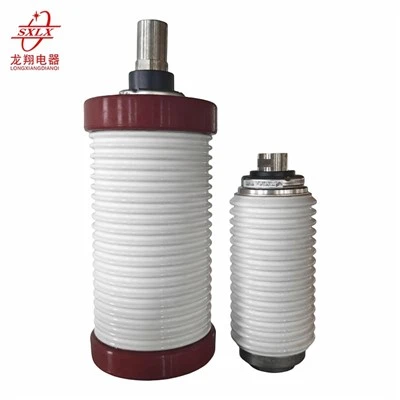
Let’s start with a quick breakdown of what a VCB auxiliary switch is, just to make sure we’re on the same page. A VCB’s main job is to open or close the circuit when you need to—say, during a fault, or for routine maintenance. But how do you communicate that status to the control room? How do you trip a motorized breaker if something goes wrong? That’s where aux switches come in. They’re low-power, switch-like devices wired directly to the VCB’s main shaft. When the main breaker moves from open to closed (or vice versa), the aux switch flips too, sending a signal. They’re basically the VCB’s way of talking to the rest of your electrical system. Simple, right? But the details are where the magic happens.
First off: reliability. If your aux switch fails, you’re flying blind. Let’s say you’ve got a VCB in a manufacturing plant that powers a critical assembly line. The breaker trips during an overload, but your aux switch doesn’t send that “tripped” signal back to the control room. The operators have no clue there’s a fault—they just see the line dead, waste time troubleshooting, and maybe even ruin a batch of product. I’ve had customers come to us after that exact scenario. Once, a mid-sized automotive plant in the Midwest told us their old, cheap aux switch had frozen up, so when their VCB tripped during a short circuit, the control room thought it was still closed. By the time they tracked it down, they’d lost $120k in parts and downtime. That’s not a small fix—that’s a costly mistake you can avoid just by using the right aux switch.
Why is reliability such a big deal here? VCBs operate in harsh environments a lot of the time. They’re in dusty substations, outdoor switchyards, factories with extreme temperatures—hot enough to melt plastic, cold enough to crack metal. A cheap aux switch (you know, the ones that come free with some budget VCBs) might use flimsy contacts or a cheap housing that can’t handle that. Our aux switches, on the other hand, are built with silver-alloy contacts that resist wear and corrosion, and we seal the mechanism so dust, moisture, and gunk can’t get in. We test ours to 10,000+ operations—way more than the average VCB’s lifespan—so you don’t have to worry about it failing mid-shift. That’s not bragging; that’s how we’ve kept customers from calling us back with emergency replacements.
Next up: coordination with protective relays. Modern electrical systems aren’t just “flip a switch” anymore. They’re networked, with relays that monitor current, voltage, and temperature 24/7. If a fault happens, the relay sends a signal to the VCB to trip— and it uses the aux switch to confirm the trip happened. If that confirmation doesn’t come, the relay might send a second, harsher signal to try to reset the breaker, or it might shut down the whole feeder, causing a blackout. We’ve had clients with old aux switches that had mismatched voltage ratings—they were supposed to handle 125V DC, but they started arcing at 110V because the contacts wore out. The relays didn’t get the right status signal, so they kept trying to cycle the breaker, which burned out the main VCB’s operating mechanism. They ended up replacing the whole VCB and the aux switch, which cost them 10x more than just upgrading the aux switch in the first place.
Another thing people miss: aux switches are super versatile, but only if they’re matched to your VCB. There’s no one-size-fits-all here. Some VCBs have a vertical shaft, some horizontal—you need an aux switch that mounts correctly. Some control systems need normally open (NO) contacts, some normally closed (NC), some a mix. Our team doesn’t just sell a generic box; we work with customers to match their VCB model, their control voltage, and their specific application. We had a utility customer last year who had a stock of VCBs for outdoor substations, but their old aux switches were for indoor use—they couldn’t handle UV radiation, so they started degrading after three years. We swapped them for our UV-stabilized aux switches, and they haven’t had a single failure in two years. That’s the kind of thing that makes a real difference for long-term maintenance.
Wait, let’s talk about safety, too. This isn’t just about uptime—it’s about keeping technicians safe. When you work on a VCB, you need to make sure it’s actually open before you put your hands near it. Aux switches send a “open” signal to the interlock system, which locks the breaker’s compartment so no one can close it while someone’s working inside. If the aux switch is stuck in the closed position, the interlock doesn’t engage, and a technician could get electrocuted. We take compliance with standards like IEC 60694 super seriously—our aux switches meet all the safety requirements for VCB auxiliary devices, so you don’t have to worry about cutting corners there. This isn’t something we skip; it’s baked into every part we make.
I know, I know—this all sounds like a sales pitch, but let’s be real: if you’re buying a VCB, you’re investing tens of thousands (or even hundreds of thousands) of dollars. Why skimp on a $50 aux switch that makes the whole thing work? Cheap aux switches might seem like a deal at first, but their failure rate is way higher. We’ve seen data that says generic aux switches fail at a rate of 8-10% over five years, while our own are at less than 1%. That’s a huge difference in long-term costs—you don’t have to schedule unplanned downtime, you don’t have to rush replacements, and you keep your operations running smoothly.
Maybe you’re thinking, “I already have aux switches, why would I need yours?” Well, a lot of older VCBs were built with aux switches that are obsolete now. The parts are hard to find, they’re not compatible with modern control systems, and they don’t meet current safety standards. If you’re retrofitting your VCBs (which a lot of companies are doing to extend their lifespan), upgrading the aux switch is one of the easiest, most cost-effective upgrades you can make. It’s not a full VCB replacement—it’s a quick swap that gives you better status monitoring, better relay coordination, and more reliability.
At the end of the day, VCBs can’t do their job alone. They need aux switches to communicate, to coordinate, to keep people safe, and to keep power flowing. I’ve been in this game for 12 years, and I’ve seen too many companies ignore this part and pay for it. The good news is, it’s an easy fix. If you’re dealing with faulty aux switches, planning a VCB retrofit, or just want to make sure your equipment is up to snuff, reach out to us. We’ll walk you through what you need, no jargon, no pressure—just honest advice from people who know VCB accessories inside and out.

Don’t wait for a failure to figure out how important these parts are. The small stuff is what keeps the big systems running. Let’s make sure yours doesn’t crumble because of a tiny switch.
Transformer References:
- IEC 60694 – High-voltage switchgear and controlgear – Common specifications
- IEEE C37.09 – Standard for AC high-voltage circuit-breakers
- Electrical Apparatus Service Association (EASA) – VCB Auxiliary Switch Best Practices, 2022
- National Electrical Manufacturers Association (NEMA) – Standards for Circuit Breaker Auxiliary Switches, 2021
- Medium Voltage Switchgear Maintenance Guide – International Council on Large Electric Systems (CIGRE), 2020
Shaanxi Longxiang Electrical Co., Ltd.
Shaanxi Longxiang Electrical Co., Ltd. is one of the most professional vcb accessories manufacturers and suppliers in China, also accepts customized orders. We warmly welcome you to buy advanced vcb accessories made in China here from our factory. Quality products and reasonable price are available.
Address: No. 619, Gaoxin Avenue, Comprehensive Bonded Zone, High-tech Development Zone, Baoji City, Shaanxi Province, China
E-mail: lee@longxiangelectric.com
WebSite: https://www.longxiang-electric.com/
