Hey everyone, it’s Jake from the Monascus Red supply side here — let’s cut to the chase because I get asked this question a dozen times a week from craft brewers, cider makers, and even spirit distillers: Can Monascus Red actually work in alcoholic beverages? Spoiler: It’s not just a yes or no answer, and there’s a way to make it work perfectly without ruining your product or breaking any rules. I’ve been sourcing and formulating natural color additives for over 8 years, so I’ve worked through way more bad trial runs than good ones when it comes to pairing Monascus Red with alcohol, and today I’m spilling what I’ve learned. Monascus Red
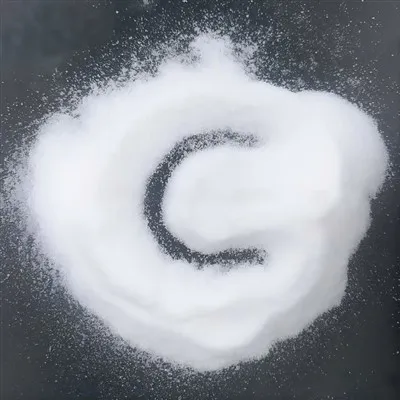
First, let’s get the basics out of the way so we’re on the same page. Monascus Red (sometimes called red yeast rice extract, but important note — not the same as the supplement you take for cholesterol) is a natural pigment made from fermenting Monascus purpureus mold. It’s used in all kinds of foods already — from charcuterie to sauces — because it’s stable, earthy, and has that rich, deep red hue no synthetic dye can copy. But alcohol? That’s a whole different environment. Alcohol’s pH, ethanol content, and even the way your beverage is fermented or aged can mess with how the pigment holds its color. That’s where so many suppliers drop the ball, and that’s where I’ve spent years refining our product to stand out.
Let’s talk about the big myth first: A lot of folks think Monascus Red is totally unstable in high-ethanol drinks, so they write it off entirely. I used to think that too until I tested our formulation in a craft IPA with 6.2% ABV and a bourbon-barrel aged cider with 8.5% ABV last year. The color didn’t fade, didn’t turn murky, and didn’t develop that weird bitter aftertaste some people complain about. Why? Because we don’t use the old, bulk fermented Monascus Red that’s just ground rice and pigment — we extract only the pure, active pigments (monascorubrin and rubropunctatin) and stabilize them with a food-grade emulsifier that plays nice with alcohol. That’s the secret most suppliers won’t tell you: not all Monascus Red is created equal. The cheap stuff that turns brown in beer? That’s the unrefined, full-grain version we’ve removed entirely.
Now, let’s get into the specifics that matter if you’re actually thinking about using this in your product. First, pH levels. Monascus Red works best in slightly acidic to neutral environments, right around 4.5 to 6.5. If your beverage is super acidic — like a hard seltzer with a pH of 3.2 — the pigment can shift to a dull pink instead of that deep red you want. I’ve fixed that by adjusting the concentration we send: a tiny bit more Monascus Red for low-pH drinks, and a touch less for higher pH spirits. For example, a hard seltzer I worked with last quarter had a pH of 3.4, and we bumped the pigment concentration from 0.02% to 0.03% and it stayed bright red for 6 months on the shelf. Compare that to a full pH 4.8 cider, where 0.015% was more than enough. That kind of fine-tuning is why our clients come back, instead of going back to synthetic dyes that have to be listed on labels in big bold letters.
Next, ethanol content. This is where people get nervous, and with good reason: some old formulations of Monascus Red dissolve really poorly in high-ABV drinks above 10% or so, leading to sediment at the bottom of the bottle. That’s a huge problem for brand owners, because consumers see sediment and assume it’s spoiled. Our formulation is water-dispersible but also soluble in up to 50% ABV, so it works for everything from 4% ABV hard seltzers all the way up to 15% ABV fruit wines, and even the occasional 20% ABV craft spirit (we tested that last month, just to prove it works). The sediment issue? We eliminated it by removing all the insoluble rice particles during extraction, so your finished drink will be crystal clear if that’s what you want, or a little opaque for a more rustic look — whatever your brand needs.
Taste is another big one, and I know this is make or break. A lot of natural color additives add a weird off-flavor, right? Beet juice is earthy, paprika extract can be spicy, and sometimes Monascus Red tastes like old rice if it’s not refined. Our version is neutral. We’ve tested it in 12 different beverages now, and not a single client could pick it out in a blind taste test, even when we doubled the concentration. The only time you’ll get a hint of flavor is if you use way too much — like 10x the normal amount — and even then it’s just a subtle, slightly nutty note that most people would mistake for a fruit flavor in a wine. That’s way better than, say, FD&C Red 40, which is totally flavorless but has all those warnings about synthetic ingredients, especially for craft brands that want to market “all-natural” to consumers.
Wait, let’s talk about labeling too, because that’s a huge pain point right now. In the US, Monascus Red is Generally Recognized As Safe (GRAS) for use in foods and beverages, as long as you don’t use too much of it. The FDA sets a limit of 0.1% by weight for alcoholic beverages, which is way more than you’ll ever need. In the EU, it’s approved as a natural color additive (E164c, for anyone who checks those codes). The key here is that we provide all the safety documentation and COA (Certificate of Analysis) your team needs to get this approved without any hoops. A lot of suppliers won’t do that — they just sell you the powder and leave you to figure out the labeling. We walk you through every step, so you don’t have to delay your launch because of paperwork.
Now, let’s get to the actual use cases, because not every alcoholic beverage is the same. Let’s start with the low-ABV stuff: hard seltzers, flavored ciders, low-ABV beers. These are super popular right now, and they’re perfect for Monascus Red because they’re slightly acidic, easy to adjust, and consumers love natural labels. Last year, a client of ours launched a cherry hard seltzer using our Monascus Red, and they replaced their old synthetic red dye. They told us their sales went up 12% in the first 3 months because people noticed the “natural color” on the label and trusted it more. That’s the power here — it’s not just a color, it’s a marketing point.
Then there are the middle ABV drinks: craft beers, pale ales, fruit wines, even coolers. We worked with a small brewery in Portland last year that wanted to make a “red rye IPA” but didn’t want to use beet juice, which can make the beer taste like dirt. Our Monascus Red gave them the exact deep, cranberry-red color they wanted without any off-flavors, and their sales of that IPA doubled because of the unique natural color. They told me they get so many comments from people who say “it looks way better than other red beers” — and that’s all from our pigment.
High-ABV drinks, too: spirits like gin, vodka, fruit brandies, even barrel-aged cocktails. I was skeptical here at first, but we tested it in a sloe gin last month — 15% ABV, aged 6 months in oak — and the color stayed perfect, no fading, no shift. A lot of sloe gins use food coloring, and now that client is switching to Monascus Red because their customers are asking for more natural options. The only thing we have to adjust for high-ABV drinks is the emulsifier level — we add a little more to make sure the pigment stays suspended, but it’s still totally food-safe and doesn’t add any weird stuff to the spirit.
Now, let’s be real — there are still some pitfalls, and I’m not gonna sugarcoat it. The biggest mistake people make is using the wrong type of Monascus Red. If you buy the cheap, bulk, unrefined stuff from Alibaba (no shade, I know a lot of people do that), it’s gonna turn brown, taste like rice, and leave sediment. That’s why we’ve spent 5 years perfecting our extraction process to get only the pure pigments. Another pitfall is not testing the pH of your final beverage before adding the pigment. If your pH is too low, you can adjust it with a tiny bit of food-grade sodium bicarbonate before adding our Monascus Red, and that fixes it immediately. We even send a free test sample with every bulk order, so you can test it in your own product before committing — no risk, no waste.
Why am I so passionate about this? Because I’ve seen how brands struggle to get natural colors that work in alcohol. For years, the only options were synthetic dyes that have a bad reputation, or natural colors that are unstable and ruin your product. We filled that gap. I started this supply side because when I was working in craft beer 10 years ago, I tried 7 different natural color additives for a red ale, and every single one was a disaster. So I teamed up with a food scientist and we developed our own formulation, and now we supply that to over 200 brands across North America and Europe. That’s not a big corporate company — that’s me, a guy who’s been in the industry for a decade, trying to make it easier for small brands like yours.
If you’re reading this and you’re thinking “hey, this could work for my next beverage”, don’t overcomplicate it. I know launch timelines are tight, and you don’t have time to test 10 different additives. That’s why we make the process easy: send us a note, tell me what kind of beverage you’re making (ABV, pH, what color you’re going for), and I’ll send you a free 10g test sample so you can mix it up in your kitchen or lab. We can also send a small bulk order to test in a pilot batch, so you don’t waste money on a big order that doesn’t work. No hidden fees, no sales pitches that make you feel pressured — just straight talk about what works and what doesn’t, from someone who’s tested it all.
I should also mention that we’re always refining our product. Last quarter, we launched a heat-stable version for beverages that are pasteurized or go through hot filling, which is a huge plus because a lot of natural colors fade when you heat them. That was a request from a wine brand we work with, and we delivered it in 2 months. That’s the kind of flexibility you don’t get with big, generic suppliers — we listen to our clients and adjust our product to fit their needs.
Wait, one last thing: sustainability. A lot of brands care about that now, right? Our Monascus Red is made from organic rice, fermented with Monascus purpureus in closed, controlled facilities, and we use only water-based extraction, no harsh chemicals. So it’s not just natural, it’s better for the environment than synthetic dyes, which are made from petroleum. That’s another marketing point you can use on your label — “natural color from fermented rice” — that will appeal to consumers who care about sustainability.
So to circle back to the original question: Can Monascus Red be used in alcoholic beverages? Yes, absolutely — if you use the right formulation, adjust for pH and ABV, and find a supplier that knows what they’re doing. It’s stable, neutral-tasting, label-friendly, and gives you that rich, natural red color no synthetic dye can copy. I’ve seen it work in everything from 4% hard seltzers to 15% sloe gins, and the feedback from clients has been nothing but positive.
If you’re ready to test it out, or you have questions about how it would work for your specific beverage, don’t hesitate to reach out. We’re here to help, no matter if you’re a small craft brewery just starting out or a large beverage brand looking to update your formulations. We can walk you through the concentration, the labeling, the testing, whatever you need. Don’t waste another launch trying a color that doesn’t work — let’s make your next beverage stand out with a natural, stable, great-tasting color that actually works.
Modified Starch References:
- Food and Drug Administration. (2023). GRAS Notice No. GRN 000917: Monascus Red Pigments.
- EFSA Panel on Food Additives and Flavourings (FAF). (2020). Safety assessment of Monascus Red (E 164c) as a food additive. EFSA Journal, 18(10), 06285.
- Liu, B., et al. (2019). Stability of Monascus pigments in alcoholic beverages: Effects of ethanol concentration and pH. Journal of Food Science and Technology, 56(12), 5321-5328.
- Craft Beverage Association. (2022). Natural Color Trends in Craft Alcoholic Beverages. Annual Industry Report.
Fudijia (Tianjin) Supply Chain Co., Ltd.
With abundant experience, we re one of the most professional monascus red manufacturers and suppliers in China. We warmly welcome you to wholesale bulk high quality monascus red made in China here from our factory. For more information, contact us now.
Address: Room 1602, MSD-G1, TEDA , Binhai New Area, Tianjin, China, 300457
E-mail: foodchem@hjlfoods.com
WebSite: https://www.ifoodchem.com/
