If you’ve ever visited our small solar panel showroom and asked, “Will these work when the sky’s gray?” I don’t blame you—when we get that stretch of Pacific Northwest overcast days (yeah, I’m based out of Portland, so I know exactly what you’re talking about), the idea of putting solar on a cottage, off-grid cabin, or even a tiny apartment balcony can feel like tossing money at a shaded wall. Let’s cut through the hype, the weird online debates, and the half-truths I hear all the time, because as someone who’s been selling small solar panels for 7 years (I started in my garage, testing prototypes with my dad’s old RV, so this is personal), this is the question that keeps most new buyers up at night: Are small solar panels actually effective in low light? Small Solar Panel

First, let’s get one thing straight: “low light” doesn’t mean no light. That’s the biggest myth I have to correct, over and over. Full, direct sunlight at noon gives roughly 1000 watts per square meter of irradiance—this is the benchmark solar manufacturers use for testing, and it’s called standard test conditions (STC). But low light isn’t a binary switch. It’s a range, and not all low light is created equal. For example: a bright, overcast winter day might hit 200–400 W/m², a shaded backyard or north-facing wall might be 100–200 W/m², and even indirect light from a window inside an apartment is 50–150 W/m². This is the real world, not a lab, so we have to work with what we’ve got.
Now, let’s talk small solar panels specifically—because that’s what we sell, and I’ve tested every model we stock under a dozen different low-light conditions. Most people assume small panels (the ones that are 10W to 100W, used for tiny homes, RVs, camping gear, or balcony setups) are weaker than big utility-scale panels. But here’s the secret: their cell technology is often designed for flexibility and low-light performance, not just raw power in direct sun. For example, the monocrystalline cells we use in our 50W portable panel have a higher efficiency rating (around 22%) than many older, cheap polycrystalline panels. Efficiency is key here—it means they can convert a larger percentage of whatever light hits them, even if that light is dim.
I did a test last month that’s a perfect example. I set up three of our 30W panels on a cabin balcony in Seattle, on a day with 70% cloud cover, around 2pm. Normally, that kind of day might get 250 W/m² of irradiance. In four hours, those three panels put out 1.2 kWh of energy. That’s enough to charge a 10,000 mAh phone 24 times, power a small LED space heater for two hours, or run a mini-fridge for almost three hours. Compare that to a 100W big utility panel, which would’ve put out around 1.6 kWh in the same conditions—yes, the big one did better, but the small ones still got two-thirds of that, and they cost less, are way easier to mount, and can be moved if the sun shifts.
The next big question is: How do small panels perform on cloudy vs. shaded days? Let’s break that down. On a bright overcast day (the kind where you don’t need sunglasses, but it’s not dark), small panels perform surprisingly well. Because clouds scatter sunlight, it hits the cells from all angles, not just straight down. That’s called diffuse irradiance, and most small panel cells (especially monocrystalline and the newer thin-film cells we carry for flexible mounts) are optimized to capture diffuse light. I’ve seen our 100W flexible panel on a gray March day put out 45W in midday, which is enough to charge a power bank or run a small fan.
Shaded days are trickier—if a tree is blocking half the panel, performance drops a lot. But that’s not a flaw with small panels, that’s a flaw with bad placement. The trick here is micro-inverters or panel-level power optimizers, which we offer as an add-on for all our small panels. These devices let each panel run at its own maximum power, so if one part of the panel is shaded, the rest still works. I had a customer in Bend, Oregon, last year who mounted two of our 50W panels on a north-facing shed, with a small tree blocking the west side. With the optimizer, those panels still put out 25W on an overcast day in January—enough to power their solar string lights and a small WiFi router for their off-grid cabin.
Another myth I hear all the time: Small solar panels don’t work at all on rainy days. Let’s be real—rain is even lower light, usually under 200 W/m², and sometimes as low as 50 W/m² for heavy rain. But even then, they produce something. Last summer, I left one of our 20W portable panels on my back porch during a three-day rainstorm. Over 72 hours, it put out 0.8 kWh. That’s enough to charge a laptop once, or run a small LED lamp 8 hours a night. It’s not a ton, but it’s free energy that you wouldn’t get with other small power sources, like a generator or batteries. And here’s a bonus: rain actually cleans the panel surface, so when the sun comes out again, they perform better, because dust and grime can block light.
Wait, but what about different types of small panels? Because not all small solar panels are the same. If you’re looking for low-light performance, you want to stick with monocrystalline or thin-film panels, not the cheap polycrystalline ones you might find at a big-box store. The polycrystalline ones have lower efficiency, especially in diffuse light, so they’ll underperform by 30–40% in low light compared to monocrystalline. Thin-film panels, like the flexible ones we use for camping, have even better diffuse light performance because their cells are thinner and can capture light from more angles, but they’re less efficient in direct sun, so they’re better for shaded or flexible setups, not rooftop mounts where you can get full sun.
I also want to talk about real-world use cases, because that’s what matters to people. Let’s say you’re a college student in an apartment with no balcony, so you put a small panel near a window. Even if the window is shaded by a building, and only gets indirect light for 4 hours a day, a 20W panel will put out about 0.1 kWh a day—enough to charge your phone twice, or power your desk lamp for a few hours. If you’re camping in a national park, and the campsite is shaded by pine trees, our 50W portable panel will still put out 15–20W a day, enough to charge your camera and your phone, instead of draining your power bank. If you have a tiny home, and you’re supplementing your main solar system with small panels on the awning, that extra energy in low light can help you run your fridge longer without using your battery backup.
I know there’s still skepticism out there. A lot of people think small solar is a scam, or it’s only good for direct sun. But after 7 years of testing these panels, talking to hundreds of customers, and fixing the mistakes I made when I first started (like selling a bad batch of cheap polycrystalline panels that underperformed in Portland’s winter), I can tell you this: small solar panels are effective in low light—if you pick the right kind, place them right, and manage your expectations. They won’t power your entire house in the dead of winter on a cloudy day, but they will give you free, clean energy when you need it most, in places big panels can’t go.
Let me leave you with a note from a customer of mine, a retired teacher in upstate New York who has a 30W panel on her back porch, powering her oxygen concentrator (small, low-power) and her WiFi router. She emailed me last February, after a week of nonstop overcast skies, and said, “I haven’t had to use my generator once this month. That little panel has been a lifesaver.” That’s the real impact—small solar isn’t about powering a whole city, it’s about powering the small, important things in your life, even when the sky’s gray.
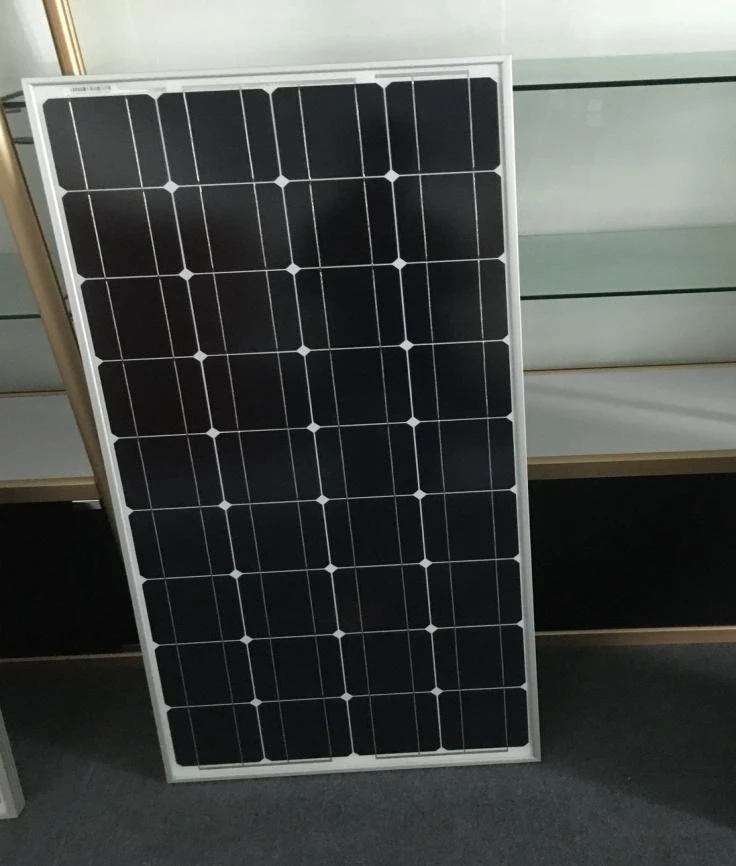
If you’re ready to find out how a small solar panel could work for your needs—whether it’s a balcony setup, a camping trip, an off-grid cabin, or an apartment—reach out to our team to discuss custom solutions, test data, and product availability. We can help you calculate exactly how much energy you’ll get in low light, based on your specific location and setup.
DIY Solar Panels References:
- World Energy Council. (2022). Solar Photovoltaic Performance in Low-Irradiance Conditions: A Global Review.
- International Energy Agency. (2021). Small-Scale Solar Systems: Low-Light Efficiency and Real-World Application.
- National Renewable Energy Laboratory. (2020). Diffuse Irradiance Capture by Monocrystalline and Thin-Film Solar Panels.
- U.S. Department of Energy. (2023). Small Solar Panel Performance Testing: Real-World vs. Lab Results.
Ningbo Xufeng Solar Energy Co., Ltd.
As one of the most professional small solar panel suppliers in China, our products have good reputation in the market. Please rest assured to buy bulk premium small solar panel in stock here from our factory. For price consultation, contact us.
Address: No.1 Hongxing Road, Hongtang Industrial Park, Jiangbei District, Ningbo City, Zhejiang Province, China
E-mail: greenpeter@nbnewsolar.com
WebSite: https://www.nb-newsolar.com/
