If you’ve ever run your fingers over a sturdy, diagonal-patterned fabric that doesn’t snag as easily as plain weave, chances are you’ve come across 3 2 twill—even if you didn’t know the name. I’ve been supplying these fabrics for over a decade, and I still get questions from clients who recognize the pattern on workwear, upholstery, or even high-end apparel: “Where did this weave come from? Why does it feel so tough?” Let me break it down, straight from someone who’s spent countless hours at the loom explaining how 3 2 twill went from a simple ancient technique to a go-to for everything from construction overalls to handbag linings. 3 2 Twill Weave
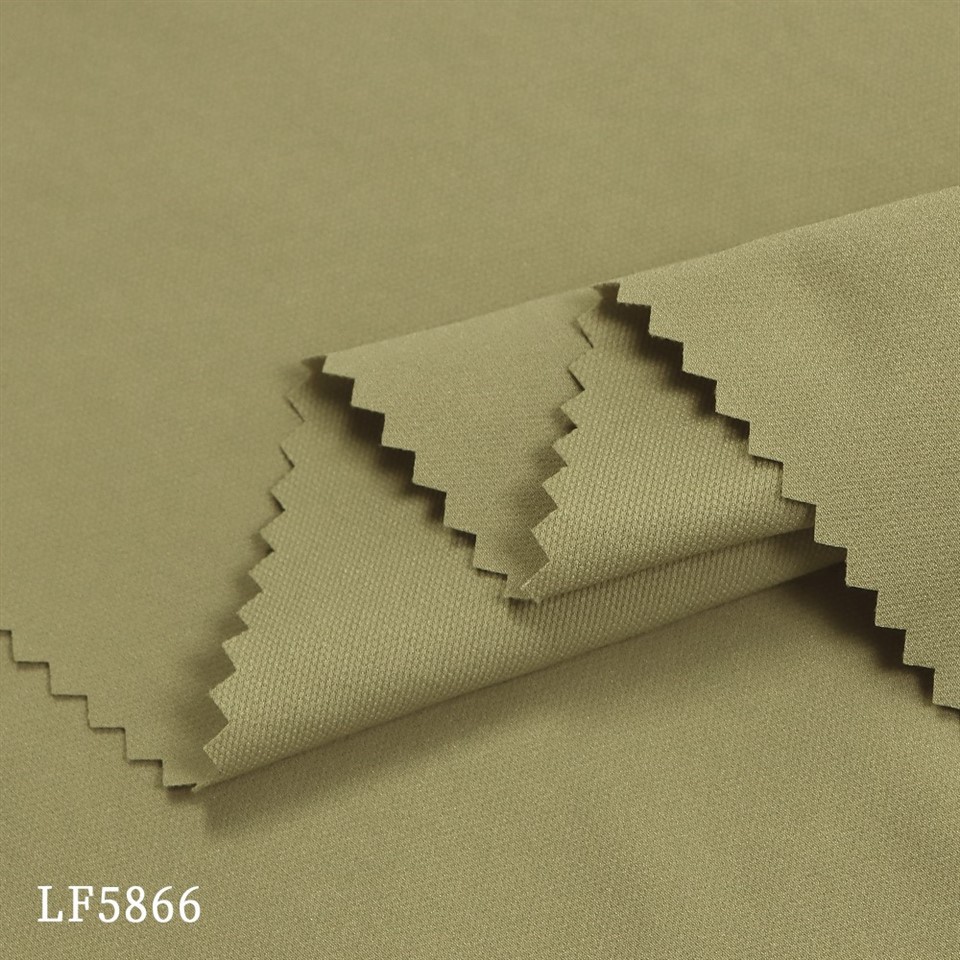
First, let’s get one thing straight: “3 2 twill” isn’t some random label we made up for inventory tracking. It refers to the weave’s structure: every 3 warp threads (the lengthwise threads stretched tight on a loom) interlace with every 2 weft threads (the crosswise ones that build up the fabric) to make that signature slanted line. Plain weave is 1 1—thread over, thread under, all crisscrossed evenly—so it’s lightweight but fragile. Twill weaves (where the interlace shifts one thread each row) popped up almost as soon as humans started making cloth, because they fix a big flaw in plain weave: the threads don’t sit flat, so they lock together tighter without extra thickness.
Now, the history part. You might be surprised to learn twill isn’t a medieval European invention—far from it. The earliest evidence of twill weaves, including early versions of 3 2 patterns, dates back to around 3400 BCE in ancient Egypt. I’ve seen fragments of linen from the tomb of Hetepheres (the mom of King Khufu, who built the Great Pyramid) at the Cairo Museum, and the diagonal lines are unmistakable. Back then, weavers worked by hand, no power looms, no spreadsheets for thread counts. They noticed that shifting the weave pattern just a little made the linen hold up better for wrapping mummies, making tents, or cloaks for workers building the pyramids. Those early Egyptian weavers didn’t call it “3 2 twill”—they called it “the strong weave”—but their technique is the foundation of what we use today.
Fast forward a few thousand years, and twill traveled with traders along the Silk Road. By the Middle Ages, it was a staple in Europe, especially in Flanders (modern-day Belgium) and northern France, where wool was king. Medieval weavers had a whole set of twill types, and 3 2 was the workhorse of peasant clothing—think the heavy wool tunics that farmers wore to work in muddy fields, or the sturdy fabric for sails on trade ships. Back then, they used hand looms, and adjusting the 3 2 pattern meant manually lifting the warp threads with a heddle stick (a small tool that holds each warp thread). It was tedious, but every farmer knew 3 2 twill didn’t tear when they grabbed a wrench to fix a plow, and it dried faster than plain linen when it rained.
The big shift for 3 2 twill came with the Industrial Revolution, around the 18th and 19th centuries. Before that, weaving was a home-based job—people made cloth in their cottages, hence “cottage industry.” Then power looms were invented, starting with the flying shuttle in 1733, which let weavers throw the weft thread across the loom way faster. Suddenly, they could make way more fabric, including 3 2 twill, for a growing global market. That’s when the label “3 2 twill” started sticking. Weavers and merchants needed a way to talk about specific weaves without confusing terms, so they started using numbers for the thread count shift: 3 threads over, 2 under. That’s way easier than describing the pattern every time. By the 1800s, 3 2 twill was everywhere: it was used for military uniforms (the U.S. Army adopted it for wool overalls during the Civil War), for upholstery on train cars, and even for the first jeans—wait, yeah, Levi Strauss used a heavy canvas-like twill that’s basically a 3 2 weave for his early work jeans back in the 1870s. That’s why those jeans got that tough, diagonal look you still see today.
I know some folks think all twill is the same, but 3 2 has a unique spot in the twill family, unlike 2 2 twill (which shifts 2 threads each row, making a tighter, more pronounced diagonal) or 4 1 twill (which has a flatter, more subtle pattern). The 3 2 balance is perfect: it’s not too heavy, not too flimsy. That’s why we’ve been supplying it for so long—every time a client needs fabric that works as hard as they do, 3 2 twill is the first pick.
Wait, let’s talk about how we make it now, to tie the history to what I do. Back in the day, hand weavers used natural fibers: linen, wool, cotton, even hemp. Today, we still use natural fibers, but we also blend with polyester or spandex for stretch, which makes 3 2 twill even more versatile. The structure hasn’t changed, though—we still follow that 3 warp, 2 weft interlace. If you’re a tailor making workwear, the 3 2 weave gives you enough durability to last through months of construction work, but it’s not so stiff that it can’t be sewn easily. If you’re a furniture maker, it’s tough enough to stand up to pets and kids scratching at couches, but soft enough to not feel like a cardboard box.
I’ve had clients who come to me because they found a vintage pair of work pants with a diagonal pattern, and they want to reupholster a jacket or a chair with the same fabric. Most of the time, that’s 3 2 twill—because that’s the weave that’s been used for heavy-duty, everyday fabrics for millennia. It’s not a trendy weave, like the ones used for fast fashion that fall apart after a wash or two. It’s a workhorse, and that’s why it’s stood the test of time.
Let me clear up a common myth, too: some people think 3 2 twill is named after three strands of warp and two of weft, but it’s actually the shift. Let me explain it simply: on a loom, each weft thread is woven either over or under the warp. For 3 2 twill, the first weft thread goes over 1 warp thread, under 1, over 1, under 1? No, wait, no—wait, it’s a repeating pattern where each weft shifts 3 over, 2 under. Yeah, that’s the best way to remember it: if you count the number of warp threads a single weft crosses, it’s 3 over, 2 under. That creates that slanted diagonal line that’s instantly recognizable. Unlike plain weave, where each weft crosses exactly one warp thread, so the lines are straight, twill’s shift makes it diagonal, and 3 2’s shift is just the right angle—steep enough to look distinct, not so steep that it’s prone to snags.
Now, why has this weave lasted so long when so many other old techniques have fallen by the wayside? Because it’s functional. Think about it: when you’re building a house, you need fabric that can handle being dragged over nail-studded planks, right? 3 2 twill’s interlaced threads don’t pull apart easily. When you’re sitting on a train for hours, you want a seat that doesn’t stretch out of shape—3 2 twill holds its form way better than plain weave. Even in fashion, designers use it for dresses and skirts because the diagonal pattern looks flattering and the fabric doesn’t wrinkle as much as plain cotton.
I’ve seen 3 2 twill evolve, too. Back in the 1950s, it was mostly used for workwear and uniforms. In the 1980s, fashion designers started using it for high-end jackets, because it had that rugged, “cool” vibe that was big for workwear-inspired fashion. Now, it’s everywhere—from backpacks to bed sheets, from dog beds to car seat covers. It’s one of those weaves that’s gone from a practical ancient tool to a universal fabric that fits almost any need.
As a supplier, I’ve got clients from all walks of life: a small-batch clothing brand that makes sustainable work jeans, a furniture maker specializing in eco-friendly couches, a construction company looking for durable coveralls. We don’t just stock 3 2 twill—we know its history, its strengths, and how to tailor it to what each client needs. For example, if a brand wants a lightweight version for summer jeans, we use a 10 oz cotton blend, whereas for heavy-duty work overalls, we use a 16 oz canvas that’s still a 3 2 twill weave. The structure stays the same, just the weight changes.
A lot of new suppliers will try to sell you “fancy” weaves with weird names, but I tell my clients: 3 2 twill is the one that’s proven. It’s been around for over 5,000 years, survived the Industrial Revolution, two World Wars, and countless fashion trends. It’s not flashy, but it works.

If you’re reading this, chances are you’re either someone who’s worked with 3 2 twill before, or someone who’s curious about why that diagonal fabric is so tough. If you’re in the market for durable, timeless fabric that’s built to last, we’ve got options in different weights, fibers, and colors. We’re always happy to walk you through the history of our weaves, answer questions, or send a sample so you can feel the texture for yourself. Don’t waste time on fabrics that fall apart after a few uses—go with the weave that’s stood the test of time. Reach out to our team to talk through your project and find the right 3 2 twill for your needs.
Cavalry Twill References
- Barber, E. J. W. (1991). Women’s Work: The Original Use of Cloth. W.W. Norton & Company.
- Jenkins, D. T. (Ed.). (2003). The Cambridge History of Western Textiles. Cambridge University Press.
- Rieter, J. (2018). The History of Twill Weaves: From Ancient Egypt to Modern Textiles. Textile History Journal.
- Wilson, E. (2012). Adorned in Dreams: Fashion and Modernity. I.B. Tauris.
Shaoxing Huichao Textile Co., Ltd.
As one of the most professional 3 2 twill weave manufacturers and suppliers in China, we offer a wide range of products with superior quality. We warmly welcome you to wholesale bulk 3 2 twill weave in stock here from our factory. If you have any enquiry about cooperation, please feel free to email us.
Address: Shenyue International Build ing, Unit 1603-1605, Keqiao District, Shaoxing City, Zhejiang Province, China
E-mail: darrenzhong@huichaotextile.com
WebSite: https://www.huichaotextile.com/
