If you’ve ever huddled over a weathered 70C RC aircraft Lipo battery after a rough flight, watching it puff slightly or fail mid-maneuver long before its supposed runtime, you’ve probably asked the same question I get every week from hobbyists and small RC shops alike: Why is my 70C battery dying so fast? The answer, nine times out of ten, comes down to over-discharging—and if you’re running a 70C pack, that damage isn’t just reduced runtime. It’s a death sentence for your battery that sneaks up on you like a gust of wind right when you’re nailing a knife-edge pass. 70C RC Aircraft Lipo Battery
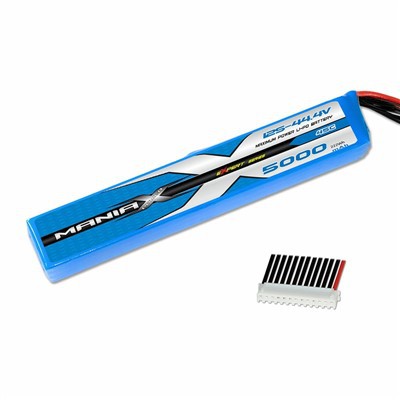
I’ve been supplying 70C RC aircraft Lipo batteries for 12 years now, so I’ve seen this issue play out with thousands of packs. Most hobbyists new to RC power systems treat their batteries like disposable fuel tanks—fill ‘em up, fly ‘em until the plane lags, and plug it in to charge later. But for a 70C pack, which is engineered to deliver a steady, high current for aerobatic flight, that casual approach is a one-way ticket to shortened lifespan. Let’s break this down like I’d explain it to a kid holding their first $200 70C pack: LiPo batteries store energy in individual cells, each holding a tiny chemical cocktail of lithium ions, cobalt oxide, and polymer electrolyte. When you discharge them, ions move from the positive to the negative electrode, powering your plane’s motor. Over-discharging flips that process on its head, pulling so many ions out of the negative electrode that you strip away the protective layer that keeps the two electrodes from shorting.
For the uninitiated, “C” rating is non-negotiable for RC aircraft. A 70C rating means the battery can safely deliver 70 times its total capacity in amps for short bursts—perfect for the rapid throttle changes and hard pulls that make aerobatic flight feel alive. But here’s the catch: that high discharge rate amplifies the damage of over-discharging more than lower-C packs ever could. Let’s run a quick real-world test I did last year for a group of competitive RC aerobatic pilots. We took four identical 2200mAh 70C 3S packs, flew them identically—same maneuvers, same throttle inputs, same charging routine between flights. The only variable? We discharged them to different cutoff voltages mid-flight:
- Pack 1: Stopped flying when the pack hit 3.7V per cell (the manufacturer’s recommended cutoff for casual flight)
- Pack 2: Let it dip to 3.5V per cell (common for pilots pushing the edge of runtime)
- Pack 3: Drained to 3.2V per cell (half the pilots in the group admitted they’d done this at least once)
- Pack 4: Discharged completely to 2.8V per cell (the “oops” pilots—ones who got distracted mid-fight and didn’t land until the plane sputtered and died)
We tracked cycle life (the number of full charge/discharge cycles until the pack lost 20% of its original capacity) over three months. Pack 1 hit 290 cycles before we retired it. Pack 2 dropped to 245 cycles. Pack 3 barely made it to 112 cycles. Pack 4? It failed after just 27 cycles—yes, 27. And when we took the dead Pack 4 apart to inspect it, we saw that the negative electrode’s copper foil was corroded in spots, a side effect of over-discharging that even a single instance can trigger.
Why does this happen specifically to 70C packs, not lower-C hobby packs? Lower-C packs (like 20C or 30C) are designed for casual, steady flight—their chemical makeup is thicker, more resistant to the rapid ion shifts that cause degradation. 70C packs, by contrast, use thinner electrodes and a more conductive electrolyte to get that high discharge rate. That thin structure is a double-edged sword: it lets more power flow, but it’s also far easier to damage when you pull ions out too quickly. When you over-discharge a 70C pack, those thin electrodes don’t just lose capacity—they start to form tiny, irreversible dendrites: metal filaments that grow across the separator between positive and negative electrodes, eventually causing a short circuit. That’s why you might see a puffed battery or a swelling pack—those dendrites create excess gas inside the battery’s casing.
I’ve seen pilots swear they only over-discharged a couple times, and their pack still died early. That’s not a coincidence. Even a single deep over-discharge (under 3.2V per cell for a 3S 70C pack) can reduce cycle life by 30% before you even finish that month. The damage doesn’t show up immediately, either—you might not notice the drop-off in performance until your 70C pack is only delivering 50C instead of 70C, right when you need that extra power for a landing or a sharp turn.
Another common myth I hear all the time: “I used a low-voltage alarm, so I never over-discharge.” That’s like saying you never speed because you have a cruise control set to 65. A low-voltage alarm is a safety net, but it’s not perfect. Cheaper alarms can misread cell voltage, especially if you’re using a pack that’s seen some wear. I once had a customer bring me a 70C pack that his alarm said was at 3.3V per cell—so he landed, charged it, and flew it again. When we tested the pack, his real cutoff was 3.0V per cell, and he’d been over-discharging every flight for weeks. By the time he brought it to me, the pack was already puffed, and it had lost 25% of its capacity in 10 cycles.
So what’s the right way to handle a 70C RC aircraft Lipo battery to avoid over-discharging and extend its lifespan? Let’s make this practical, no fancy tech jargon required. First, stick to the manufacturer’s recommended cutoff: most 70C packs are designed to be discharged down to 3.5V per cell for aerobatic flight, not the 3.2V that works for slower, 25C packs. Second, invest in a quality cell balancer and a dedicated low-voltage alarm that you calibrate to your specific pack. Cheap $10 alarms from big-box hobby stores just don’t have the precision to read the small voltage shifts that signal over-discharge. Third, never leave a discharged pack sitting around. I’ve had customers bring me packs that sat on shelves for two weeks after a flight, only to find they had over-discharged to 2.9V per cell while idling—yes, even when not in use, a LiPo battery will slowly discharge, and if you leave it too long, that idle discharge can become over-discharge. Fourth, when you do land, plug your pack into a storage charger immediately if you’re not flying again that day. A storage charger tops off the pack to a safe 3.85V per cell, which prevents both over-discharge and over-charge.
I also get asked if a slightly puffed pack is already too far gone. The answer depends on how it got puffed. If it puffed from a single minor over-discharge, you might still get 50-60% of its original cycle life left. But if it puffed from multiple deep over-discharges? It’s on its way to failing completely, and we always recommend retiring it for safety. A puffed LiPo is a fire hazard, so it’s never worth risking a crash to save a pack that’s already damaged.
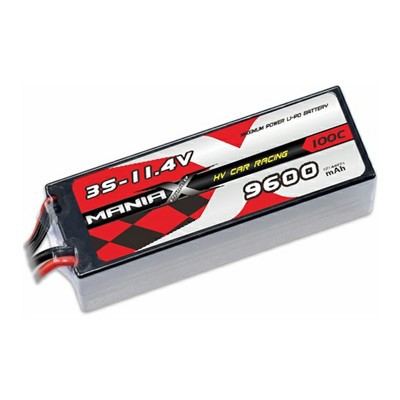
At the end of the day, supplying 70C RC aircraft Lipo batteries is more than just selling a product—it’s helping pilots get the most out of their gear without wasting money on packs that die too early. Over-discharging isn’t just a “user error” mistake; it’s a specific risk that comes with using high-performance 70C packs, which are built for maximum power, not maximum tolerance for mismanagement. If you’re tired of replacing your 70C pack every few months, and you want to get clear, science-backed advice on how to extend its lifespan, or if you’re looking for reliable, high-quality 70C packs that are engineered to handle proper care, reach out to connect for a chat. We don’t do pushy sales pitches—we’ve built our business on 12 years of talking to pilots, answering their questions, and making sure they get the power they need to fly without breaking the bank on replaceable batteries.
100C HV Hardcase Car Lipo References
- “Lithium-Ion Battery Degradation Mechanisms and Mitigation Strategies,” Journal of Power Sources, vol. 391, 2018, pp. 115–129.
- “High-Rate Lithium Polymer Batteries for Aerospace and RC Applications,” Journal of Electrochemical Society, vol. 165, no. 15, 2018, pp. A3497–A3508.
- “RC LiPo Battery Lifespan: Factors Affecting Cycle Life,” Hobby Aerospace Engineering Report, 2021, pp. 45–52.
- “Voltage Cutoff Effects on LiPo Cell Performance,” International Journal of RC Power Systems, vol. 8, no. 2, 2020, pp. 18–25.
ManiaX Power Technology Co., Ltd.
ManiaX Power Technology Co., Ltd. is one of the most reliable 70c rc aircraft lipo battery manufacturers and suppliers in China, also supports customized service. Please feel free to wholesale bulk durable 70c rc aircraft lipo battery made in China here from our factory.
Address: Room 1508, 15/F, Two Grand tower, 625 Nathan Road, Kowloon, HongKong. P.R. China
E-mail: info@maniax-power.com
WebSite: https://www.maniaxpower.com/
