As a home appliance stamping parts supplier with over a decade of experience working with brands across refrigeration, laundry, and small kitchen appliance sectors, I’ve spent countless hours on the shop floor observing what makes or breaks stamping line efficiency. When clients reach out asking why their prototype parts take twice as long to stamp as ours, or why their high-volume production lines are falling short of output targets, the answer almost never boils down to “the machine is slow.” Stamping speed for home appliance parts is a delicate balance of material properties, part design, tooling precision, press selection, and even the operator’s on-hands expertise—each factor tied directly to the unique demands of home appliance components, which range from thin-gauge stainless steel oven doors to thick galvanized steel washing machine brackets. Home Appliance Stamping Parts
Let’s start with the foundation of every stamping job: the material itself. Home appliance stamping parts rely on a narrow range of materials, but their properties vary widely enough to drastically alter stamping speed. For example, cold-rolled steel (CRS), the go-to for most cabinet brackets and control panel frames, is soft and uniform, so it can handle high press speeds without tearing or wrinkling—we regularly run CRS parts at 15 to 20 strokes per minute (SPM) on our servo presses. But when a client requests parts made from 304 stainless steel for a dishwasher interior, that material’s higher tensile strength (around 515 MPa for standard 304, compared to 330 MPa for CRS) means it resists deformation far more. To avoid tool wear and part defects like edge cracking, we have to drop speeds to 8 to 12 SPM for stainless steel components. Even coatings matter: galvanized steel, used for exterior appliance panels, has a brittle zinc coating that can flake if the press moves too fast, so we cap speeds at 10 to 15 SPM for galvanized parts unless we adjust tooling to feature rounded die radii that reduce shear force on the coating. We once had a new client send us a sample of a custom refrigerator handle made from 409 stainless steel, and because they didn’t specify the material grade upfront, we almost ran it at our standard CRS speed—this would have resulted in a 30% scrap rate and delayed their launch by two weeks. That’s why we always ask for material certifications before quoting a job; it’s not just about cost, it’s about speed.
Next, part design is the second major factor, and it’s where many clients underestimate how much their initial design choices impact stamping line output. Home appliance parts have specific functional requirements, but even small tweaks to features like complex geometries, tight tolerances, or sharp angles can force a tradeoff between part quality and speed. For example, a simple flat control panel for a microwave takes only a few seconds per stamp to produce, but a fan cover with 12 precision louvers that must align to within 0.1 mm requires multiple progressive stamping stations, each with its own stop-and-align cycle. Each additional station adds time: a 5-station progressive die for a washing machine drum mount runs at 12 SPM, while a 10-station die for a stove burner bracket runs at just 7 SPM, because each station must accurately register the part before applying the next operation. Tight tolerances are another culprit: if a client demands a part with a tolerance of ±0.05 mm instead of the standard ±0.1 mm for their cabinet bracket, we have to slow the press to ensure the tool doesn’t overwork the material or cause misalignment, adding roughly 2 SPM to the cycle time. We recently worked with a small appliance brand that redesigned their toaster frame to have a 90-degree sharp bend instead of the original 105-degree bend with a 5 mm radius. The sharp bend required slower speeds to prevent cracking, and it also required a secondary operation to deburr the edge, adding 10 seconds per part. After working with our design engineering team to adjust the bend radius, we were able to increase stamping speed by 4 SPM and eliminate the deburr step, cutting their part cost by 18%. That’s why our team always partners with clients early in the design phase to optimize for manufacturability—speed and quality go hand in hand when the design is done right.
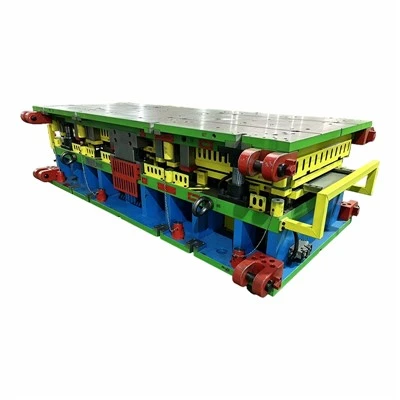
Tooling precision and condition are equally critical, and as a supplier, we’ve seen firsthand how worn or poorly maintained tooling can kill stamping speed. Stamping dies are custom-built for each part, and even a tiny amount of wear on the die punch or die cavity can cause defects that force the line to stop. For home appliance parts, which are produced in volumes ranging from 1,000 prototype units to 1 million units annually, die wear is a major concern. A die for a high-volume washing machine bracket, for example, should last for 500,000 to 1 million cycles before it needs regrinding. If a die is only 100,000 cycles old but has a small chip on the punch, we have to run the press 20% slower to avoid tearing the part’s edge, which would lead to scrap. We also use advanced tool coatings—like titanium nitride (TiN) or diamond-like carbon (DLC)—to reduce friction between the die and the material. A DLC coating on a die for stainless steel oven doors can increase stamping speed by 3 SPM, because the material slides more easily through the die, reducing the force the press needs to apply. Another factor is die alignment: if the top and bottom halves of the die are even slightly misaligned, the press can’t cycle quickly without causing a bent or misshapen part. Our team performs a die alignment check before every production run, which might add 15 minutes to setup time, but it prevents costly speed reductions and defects during long runs. We once had a client switch to a cheaper tooling supplier, and their line speed dropped by 5 SPM—their dies were not heat-treated properly, so they wore out after just 50,000 cycles, requiring frequent die changes that added hours of downtime. Cutting tooling costs often ends up costing more in lost production speed.
The type of stamping press being used is another often-overlooked factor, and not all presses are created equal for home appliance parts. There are three main press types in common use: mechanical presses, hydraulic presses, and servo presses. Mechanical presses are the fastest, with standard models running at 15 to 30 SPM, but they’re less flexible for complex parts and can be harder to adjust. Hydraulic presses are slower, typically 5 to 15 SPM, but they offer more force control, which is useful for deep-drawn parts like dishwasher tubs, where you need consistent force to prevent tearing. Servo presses, which are our go-to for most home appliance stamping jobs, combine the best of both worlds: they offer variable speed control, so we can run them at high speeds for simple parts and slow them down for complex geometries, and they’re more energy-efficient than mechanical presses. For example, a deep-drawn refrigerator liner requires a hydraulic press because it needs 100 tons of force to form the deep draw, and even with that, we can only run it at 8 SPM. But for a small bracket for a dryer, we can use a servo press at 18 SPM, which cuts production time by more than half. Even press size matters: a 200-ton press is fast for small parts, but a 500-ton press takes longer to accelerate and decelerate, so it runs at a lower SPM even for simple parts. That’s why we match press size and type to every job—using a big, slow press for a small part would be a waste of capacity, and using a small press for a big part would force us to slow down to avoid damaging the press.
Cycle time adjustments and setup processes also play a role, especially for low-to-medium volume jobs, which are common for smaller appliance brands. Many people think stamping speed is just SPM, but it’s actually the total time from start to finish for a part, including loading, unloading, and any secondary operations. For example, if a part requires a secondary operation like welding or brushing after stamping, we have to account for that time when quoting speed. We also use automated part loading and unloading for high-volume runs, which can increase speed by 2 to 3 SPM compared to manual loading, because manual loading takes 5 to 10 seconds per part, while automated loading takes less than a second. Setup time is another factor: when we switch from running one part to another on the same press, if the die change takes longer, that means the press is idle, which reduces overall effective speed. We use quick-change die systems, which let us swap out dies in under 30 minutes, compared to 2 hours for a manual die change, so we can switch between jobs much faster, increasing the total number of parts we can produce in a day. For a client that needs 10 different stamping parts for a new line of coffee makers, being able to set up quickly means we can run all 10 parts in a week, instead of two weeks, which keeps their production on track.
Finally, human factors can’t be ignored, even in an era of automated stamping lines. The press operator’s experience, training, and ability to spot small defects before they turn into downtime can have a big impact on speed. Our operators average 12 years of experience in home appliance stamping, so they know exactly when a press is running at the right speed for a stainless steel part, or when a die needs a quick adjustment instead of a full shutdown. They also perform regular small checks during runs—like measuring a part’s thickness or checking for burrs—which catch issues early, preventing longer delays. We once had a new operator who wasn’t used to running our servo presses, and they kept cycling the press too fast for a new batch of galvanized steel, causing flaking that led to a 2-hour downtime. After additional training, they were able to adjust the speed correctly, and the line’s speed returned to normal. That’s why we invest heavily in operator training; a skilled team can add 10 to 15% more effective speed to a line, just by knowing how to work with the equipment and materials.
At the end of the day, the stamping speed of home appliance stamping parts is a system, not a single variable. It’s not just about what the press is capable of, but how the material, design, tooling, and operator all work together. For our clients, that means we don’t just quote a speed based on general guidelines—we ask for detailed specifications on the part, material, volume, and tolerance, then work with them to optimize every factor to get the speed they need without sacrificing quality. Whether you’re a small brand launching a new countertop appliance or a major manufacturer scaling up production, the right stamping speed is a balance between speed, cost, and quality—and as a supplier dedicated to home appliance parts, we have the expertise to get it right.
If you’re looking to optimize your stamping process, need a quote for custom home appliance stamping parts, or want to discuss how to boost your line’s output, reach out to our team to start a conversation tailored to your specific needs.
Metal Stamping Dies References:
- Groover, M. P. (2020). Fundamentals of Modern Manufacturing: Materials, Processes, and Systems. John Wiley & Sons.
- Tooling and Manufacturing Association. (2019). Stamping Process Guidelines for Consumer Appliances. TMA Press.
- Dieter, G. E., & Schmidt, K. D. (2018). Mechanical Metallurgy. McGraw-Hill Education.
- American Iron and Steel Institute. (2021). Steel Stamping Best Practices for Home Appliance Components. AISI Publications.
- Johnson, R. (2022). Servo Press Technology for High-Precision Stamping. Industrial Manufacturing Journal.
Dongguan Changdong Tool & Die Co., Ltd.
With abundant experience, we are one of the most reliable home appliance stamping parts manufacturers and suppliers in China. Please feel free to buy advanced home appliance stamping parts made in China here from our factory. Good service and quality products are available.
Address: No. 56-B, Fumin South Road, Dalang Town, Dongguan City, Guangdong Province, China
E-mail: sales@stamping-die.com
WebSite: https://www.metalstampingdie.com/
