If you’ve ever walked past a textile mill at 2 a.m. and seen a row of big, whirring machines lined up like they’re working their way through a pile of cotton bales, you’ve probably spotted carding machines. These things are the unsung heroes of fabric production—they take messy, mixed-up fibers and turn them into a neat, uniform web that gets spun into yarn later on. But if you’ve ever shopped around for these machines (whether you’re a small mill owner or a big production manager), you’ve probably noticed two main types: manual and automatic carding machines. As someone who’s been in the carding machine game for over 10 years—helping mills of all sizes pick the right gear for their lines—I’ve heard way too many people mix these two up. Today, let’s break down exactly what separates them, no jargon, no confusing textbook stuff, just real talk that’ll help you decide what’s worth your cash. Carding Machine
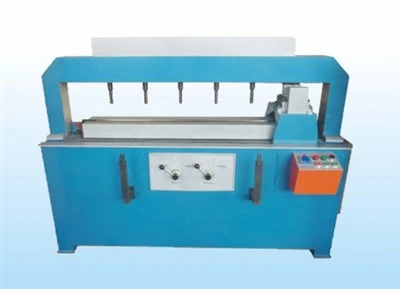
First, let’s start with what a carding machine actually does, because you can’t tell the difference between manual and automatic if you don’t get the basics right. Think of raw cotton (or wool, or synthetic fibers—works for almost any natural or man-made fiber) like a tangled pile of loose yarn from a closet you’ve ignored for months. There’s all kinds of gunk in there: leftover seeds, dirt, short fibers that are useless, maybe even a few stray pieces of leaf or something from the field. The carding machine’s job is two-fold: first, it cleans all that junk out, and second, it lines up the long, good fibers all in the same direction so they’re not a chaotic mess. That uniform web of fibers it spits out? That’s the stuff you feed into a spinning machine to make yarn for t-shirts, jeans, blankets—anything you wear or use that’s made of fabric. Got it? Good, now let’s get to the two types.
Let’s start with manual carding machines, because these are the OG, the ones that’ve been around since long before robots were a thing in factories. If you’ve ever watched a craftsperson carding wool at a farmers’ market—using those big, handheld wooden tools with metal teeth, right? That’s basically the tiny, hobbyist version of a manual industrial carding machine. The big difference is scale: hobbyist ones are for small batches (like a few pounds of wool for a home knitting project), while industrial manual carding machines are built for mills, but they still rely on human hands to do most of the heavy lifting.
So how does a manual carding machine actually run, for real? Let’s walk through a shift on a mill that uses manual ones. First, an operator has to prep the raw fiber: they’ll weigh out a set amount (usually around 5 to 10 pounds, depending on the machine size) and feed it by hand into the machine’s main hopper—that’s the big opening at the top where fiber goes in. From there, the fiber moves to the main carding cylinder, which is a big metal drum covered in those fine metal teeth that grab the fibers, straighten them, and pull out the dirt and short stuff. But here’s the key manual part: the operator has to stand by the machine the entire time, checking every few minutes if the web (that neat fiber strip) is coming out right. If there’s a tangle, or too much dirt got left in, or the web is too thin/thick, they have to stop the machine, adjust the settings, maybe even pull out a clump of tangled fiber by hand. Then, at the end of the run, they have to manually cut the finished web off the machine, roll it up, and load a new batch of raw fiber into the hopper to start the next cycle.
Wait, you’re probably thinking—why would anyone still use manual machines in 2024? Let’s be honest, they’re not for big, high-volume production mills. But they serve a super specific, important niche. Small, family-run mills that make specialty fabrics—like organic cotton yarn for luxury towels, or wool for hand-knit sweaters, or even fiber for specialty paper—love manual machines. Why? Because they give way more control over the final product. If you’re making a small batch of premium wool from a specific farm, you don’t want a machine that cranks out 1,000 pounds an hour and might mix in fibers you don’t want. Manual machines let operators tweak things on the fly: if a batch of wool is extra dirty, they can adjust the cleaning settings mid-run instead of having to stop a whole production line. Also, they’re way cheaper upfront. A new industrial automatic carding machine can cost $50,000 to $100,000, while a quality manual one is more like $10,000 to $20,000—big difference for a small mill that doesn’t have a huge budget.
But here’s the catch with manual machines: they’re slow, and they rely heavily on skilled labor. A good manual carding operator makes all the difference—someone who’s been doing it for years, knows exactly how to adjust the settings when the fiber is too moist or too dry, can spot a tangle in 10 seconds. But finding that person is harder than it sounds. Most young workers don’t want to do manual, repetitive, physically demanding work (you’re on your feet 12 hours a day, handling heavy fiber bales, adjusting metal parts that get hot). So small mills often struggle with turnover, which means downtime when an operator calls out sick or leaves. And the output? A manual machine might crank out 20 to 50 pounds of finished web an hour. Compare that to automatic, and the gap is huge.
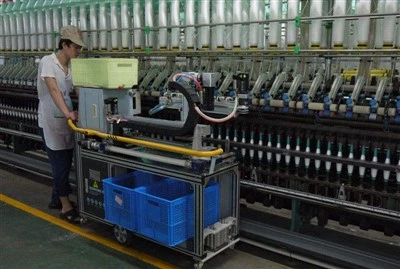
Now let’s talk about automatic carding machines—these are the workhorses of modern, high-volume textile production. If you’ve ever been to a big mill that makes fabric for Walmart or fast fashion, 90% of their carding machines are automatic. These are built to run 24/7, with almost zero human intervention once you load the raw fiber at the start. Let’s break down how they work. The hopper is still there, but it’s connected to a whole feeding system that automatically meters out the right amount of raw fiber—no operator weighing and dumping by hand. The main cylinder is automated too: sensors check the web’s thickness every second, adjust the speed of the cylinder, tweak the cleaning settings, even flag if there’s a tangle or too much dirt. The best part? The finished web is automatically cut, rolled, and stacked on a pallet at the end—no one has to stand there for hours cutting and rolling.
What makes automatic machines so different is consistency. Every single pound of fiber that comes out is almost identical in thickness, length, and cleanliness. That’s non-negotiable for big production runs. If you’re making 10,000 t-shirts a day, you can’t have one batch of yarn that’s too thin and another that’s too thick—it’ll mess up the sewing machines and waste fabric. Automatic machines also run way faster: 200 to 500 pounds of finished web an hour, sometimes even more for super high-capacity models. That’s 10x the output of a manual machine, which means you can produce way more fabric in less time, with lower labor costs. Wait, labor costs are way lower too—an automatic machine might only need one operator to supervise 5 or 6 machines, instead of one operator per manual machine. That’s a huge saving for big mills, especially when wages are going up everywhere.
But automatic machines aren’t perfect, and that’s a big thing I see people miss when they’re shopping. First, they’re way more expensive upfront. A mid-range automatic is $50k to $100k, and a high-capacity one can hit $200k+—that’s a big investment, especially for a small mill. They’re also way more complex to maintain. If a sensor breaks, or the automated feeding system malfunctions, you can’t just grab a wrench and fix it like you can with a manual machine. You need a skilled technician, and parts are way pricier too. Also, automatic machines work best with consistent, high-quality raw fiber. If you feed them raw fiber that’s full of clumps or way too much dirt, the sensors can’t adjust fast enough—they’ll mess up the web, waste fiber, and even break parts. So if you’re working with low-quality or variable fiber (like recycled cotton, which can be messy), automatic machines might not give you the same final product as a manual one.
Let’s do a quick side-by-side to make this concrete, because I know you guys love numbers. Let’s say you’re a mill making organic cotton yarn for t-shirts, and you have two options: manual or automatic. Manual: Cost of machine = $15k. Output = 30 lbs/hour. Labor = 1 operator per machine, $18/hour. So if you run it 8 hours a day, 5 days a week, that’s 3085 = 1,200 lbs/week, and labor cost is $1840 = $720/week. Automatic: Cost of machine = $80k. Output = 300 lbs/hour. Labor = 1 operator for 5 machines, so $18/5 = $3.60/hour per machine. Same 8 hours a day, 5 days a week: 30085 = 12,000 lbs/week, labor cost is $3.6040 = $144/week. Wait, that’s a huge difference in output and labor cost, right? But the catch is that $80k vs $15k difference. So if you’re a small mill that only needs 1,000 lbs a week, the manual machine is way more affordable. If you’re a mid-sized mill that needs 10,000 lbs a week, automatic is worth the upfront cost because you’ll make that money back in a year or two, even with higher maintenance.
Another big difference I see all the time is flexibility. Manual machines are way easier to switch between fiber types. If one week you’re processing cotton, the next week wool, the next recycled polyester, you can adjust a manual machine in 10 minutes, just by tweaking a few dials. Automatic machines? They can do it, but it takes longer—you have to reprogram the settings, calibrate the sensors, maybe even swap out some small parts. So if you’re a mill that does a lot of custom, small-batch runs, manual is way more flexible. Automatic is for mills that stick to a few consistent fiber types, running big batches for months at a time.
Wait, let’s talk about common myths, because I get asked these all the time. First myth: Manual is always lower quality. No, that’s not true. Manual machines give you way more control over small batches, so if you’re making premium, handcrafted fabric, you can get a higher quality product than an automatic machine, which is built for consistency, not tiny tweaks. Second myth: Automatic is always faster. If you’re running a small batch, setting up an automatic machine takes an hour, while a manual takes 10 minutes—so actually, manual is faster for small runs. That’s a big one I hear all the time from new mill owners who don’t realize setup time matters just as much as run time.
So who should buy which? Let’s break it down for different types of mills, so you can figure out what fits you. If you’re a small, specialty mill (making organic, luxury, or custom fabrics for small brands, farmers’ market vendors, etc.), manual is probably the right call for you. It’s cheaper upfront, easier to handle small batches, gives you more control over quality, and you don’t need a huge team of technicians to maintain it. Just make sure you have a reliable operator who knows what they’re doing—good ones are worth their weight in gold.
If you’re a mid-sized or large mill, making high-volume, consistent fabric for big brands, fast fashion, or mass market products, automatic is the way to go. The faster output, lower labor costs, and consistent quality will make you way more profitable in the long run. Just make sure you’re working with a supplier who can help you calibrate the machine for your specific fiber, and has maintenance support nearby—automatic machines only work if they’re running 24/7 with minimal downtime.
And for those of you who are somewhere in between? There are hybrid models now, too—automatic machines that let you adjust settings manually when you need small tweaks, so you get the best of both worlds. I’ve installed a few of those for mills that do a mix of big batches and small custom runs, and they’ve worked great.
At the end of the day, the biggest mistake I see people make is just picking whichever is cheaper or faster without thinking about their specific needs. A friend of mine runs a small wool mill in Vermont, and he bought an automatic machine a few years back because he thought it would make more money. But his batches are only 500 pounds max, and setting up the automatic took so long that he ended up losing money compared to his old manual machine. On the flip side, a big mill in North Carolina I work with would have folded if they stuck with manual—they need 100,000 pounds a week, so automatic is the only way they can keep up with orders.
If you’re still not sure which is right for you, that’s what I’m here for. I’ve helped dozens of mills assess their production needs, budget, and fiber types to pick the right carding machine—no pressure, no sales pitch that’s all hype. The last thing I want is for a small mill to drop $80k on an automatic machine that’s way too much for their needs, or a big mill to go manual and lose out on profits because of slow output. If you’re ready to chat through what you’re making, how much you need to produce, and what your budget looks like, just reach out—we can walk through all the details together.
Drawing Frame Machine References:
- Textile Institute. (2022). Carding Machinery: Principles and Applications for Modern Textile Production. Woodhead Publishing.
- International Fiber Journal. (2023). Global Market Trends for Manual and Automatic Carding Machines: Capacity, Labor Costs, and Quality Metrics.
- Small Textile Mill Association. (2021). Guide to Selecting Carding Equipment for Specialty and Custom Fabric Production.
Shandong Hongye Machinery Co., Ltd.
Shandong Hongye Machinery Co., Ltd. is one of the most professional carding machine manufacturers and suppliers in China, featured by quality products and low price. Please rest assured to buy advanced carding machine in stock here and get quotation from our factory. Also, 1 year warranty is available.
Address: Room 1104, Building No. 2, Haier Yunjie, No. 99 Chongqing South Road, Qingdao, China
E-mail: sales@seavincn.com
WebSite: https://www.sdhymachinery.com/
