If you’ve ever walked through a busy retail store—say, a local boutique selling handmade candles, a corner kiosk for tech accessories, or even a grocery store endcap for premium snacks—you’ve probably noticed something: the products that stand out aren’t always the shiniest or cheapest. More often than not, they’re sitting on a display that makes them feel intentional, valuable, and easy to reach. As a tabletop display stand supplier who’s worked with small retail owners and big chain managers over the past seven years, I can tell you that a good tabletop stand isn’t just a “pretty prop”—it’s a quiet sales tool that bridges the gap between a product on a shelf and a customer who decides to buy. Tabletop Display Stand
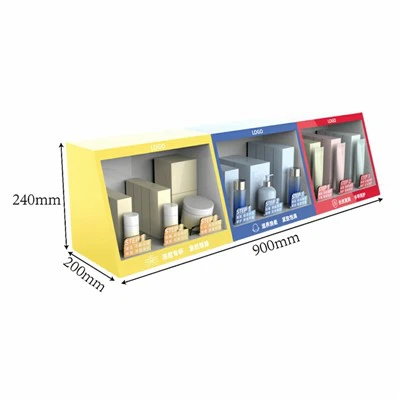
Let me start with a story that stuck with me early in my career. A client who sold artisanal olive oils reached out because her sales were flat, even though reviewers loved her product. We walked through her shop, and I saw her bottles were stacked in cardboard boxes on a back table, propped up by old books to keep them from rolling. I suggested replacing those books with a custom curved tabletop stand that cradled each bottle at a 15-degree angle—enough to let the label be fully visible without forcing customers to bend down. Three months later, she told me her olive oil sales had jumped 42%. That’s when I realized: most retailers underestimate how much a small, well-designed tabletop stand can change customer behavior. It’s not about flash—it’s about solving two core retail problems: visibility and ease of interaction.
First, let’s talk about visibility. Retail spaces are crowded. A single endcap can have a dozen products competing for attention, and a back table might have 50 items crammed into a 2×3 foot space. Tabletop display stands are designed to cut through that clutter by elevating products just enough to catch a customer’s eye as they walk by. The 15-degree angle I mentioned for olive oil? That’s not random. It’s the industry standard for flat, label-heavy products because it aligns the label with a customer’s natural line of sight—no craning, no leaning. For small items like jewelry, phone grips, or lip balms, tiered tabletop stands create vertical space without taking up too much counter area. Instead of piling products on top of each other, a tiered stand lets customers see every SKU at a glance, eliminating the frustration of having to move items around to find what they want.
But visibility only matters if it’s paired with durability and functionality, especially for small retailers who often have to adjust displays for seasonal promotions or new product lines. Early on, I made the mistake of offering stands made from thin, particleboard that warped within a month of being set up near a busy store’s coffee machine (where humidity from steam took its toll). Now, all our stands are built from materials chosen for specific retail environments: BPA-free acrylic for shops with food or skincare products, powder-coated metal for high-traffic areas like mall kiosks, and FSC-certified wood for boutiques that prioritize sustainability. I also learned to add small, practical details like non-slip rubber feet for stands on tiled counters (so they don’t slide when a customer grabs a product) and modular components that let retailers rearrange tiers or add slots for new products without buying an entirely new stand.
Another big mistake I see retailers make is treating tabletop stands as one-size-fits-all. A stand that works for a set of wine glasses won’t work for a line of organic soap bars, and vice versa. That’s why we work with every client to tailor stands to their product’s size, weight, and brand identity. For a small batch candle brand that sells 3-ounce and 8-ounce jars, we make a dual-sized stand that holds both without tilting. For a tech accessory store selling phone chargers and wireless earbuds, we design a stand with cutouts that fit each device perfectly, so products sit securely without looking cramped. Even brand alignment matters: if a boutique sells minimalist clothing, a stand with ornate carvings will clash, so we offer sleek, matte acrylic or natural wood finishes that blend in, not stand out.
I also want to address a common concern from small retail owners: cost. A lot of people think a custom tabletop display stand is out of their budget, but that’s not true. Our modular stands let retailers start small—even with a single tier for a new product launch—and add to it over time. We also offer bulk pricing for chains or pop-up shops that need dozens of stands at once, and we’re transparent about pricing from the start, no hidden fees for design adjustments. The olive oil client I mentioned earlier didn’t spend thousands of dollars; she spent a fraction of her monthly marketing budget, and the return on investment paid for the stand in less than a month. That’s the thing about retail: the best tools are the ones that work for your bottom line, not just your shelf.
Now, let’s talk about a trend we’ve noticed over the past two years: tactile interaction. Customers want to pick up products and touch them, but too often, stands lock products behind glass or make them too hard to access. A good tabletop stand balances security and accessibility. For example, our jewelry stands have slots that hold necklaces securely on display hooks, but the hooks are spaced so customers can easily slide a necklace off to examine it. For snack products, we make stands with open, shallow bins that let customers grab a bag without fumbling with a lid or a tight compartment. I once worked with a specialty candy shop owner who told me her sales of chocolate truffles doubled after we switched her display from a closed glass case to a tabletop stand with individual clear plastic cups for each truffle—customers could see the product, pick it up, and hold it without worrying about breaking packaging.
Durability can’t be overstated either. Retail environments are rough: cleaning supplies are spilled, carts bump into counters, and stands are moved multiple times a day. Last year, a client who ran a beauty supply store told me a competitor’s stand had broken after three months because the metal frame was too thin. Our stands have reinforced joints and weight ratings that go up to 50 pounds—more than enough for even the heaviest product lines, like large ceramic mugs or glass bottles. We also offer a one-year warranty on all our stands, which is rare for small suppliers, because we stand by the quality of what we make.
Another way we help retailers is by designing stands that work with seasonal promotions. For holiday pops, we add removable acrylic inserts with festive patterns, so a stand that holds regular lip balm can be turned into a holiday-themed display in five minutes. For back-to-school, we make stands with pre-cut slots for notebooks and pencil cases that align with store marketing displays. This flexibility is key because retail is constantly changing—what works in January might not work in November, and a good tabletop stand should adapt with those changes, not become a static object that gets stored in a back room for 11 months of the year.
I know some retailers are tempted to make their own displays instead of buying from a supplier, and I get it. Cutting your own wood or drilling acrylic might seem like a way to save money, but there’s a skill to making a stand that’s both functional and visually appealing. I’ve seen DIY displays that were lopsided, so products kept falling off, or displays that were too tall, blocking the view of other items on the counter. The time spent fixing those mistakes adds up—time that could be spent restocking products, training staff, or talking to customers. Buying a well-made tabletop display stand means you’re not just getting a product; you’re getting years of design and manufacturing experience tailored to retail needs.
Let’s circle back to what makes a tabletop stand essential, not just a nice-to-have. It’s about turning a product from a generic item on a shelf into something customers can connect with. A candle that looks lost on a plain table becomes a focal point on a stand. A pair of earrings buried in a box becomes easy to spot on a slanted stand. Even the smallest adjustment—elevating a product, aligning its label, making it easy to touch—can make a customer stop, look, and decide to buy. That’s the magic of a good tabletop display stand: it’s invisible in the best way. It doesn’t draw attention to itself; it draws attention to the product.
If you’re a retail owner looking to boost sales, refresh a tired display, or launch a new product line, now’s the time to consider how a tabletop display stand can work for you. Every store, product, and customer is different, and we’re here to help you design a stand that fits your exact needs—no generic designs, no one-size-fits-all solutions, just a product that helps your products shine. If you’re ready to talk through your needs and get a custom quote, reach out to our team to discuss your retail display goals.
Tabletop Display Stand References
- The Balance Small Business. (2023). "Key Retail Displays That Drive In-Store Sales."
- Retail Dive. (2022). "The Impact of Point-of-Purchase Displays on Customer Behavior."
- National Retail Federation. (2021). "Small Retail Trends: Maximizing Counter Space and Visibility."
- Journal of Retailing and Consumer Services. (2020). "The Role of Tactile Displays in Impulse Purchases."
Guangzhou Guangjie Display Products Manufacturing Co., Ltd.
We’re well-known as one of the leading tabletop display stand manufacturers in China, also support customized service. Welcome to buy bulk high quality tabletop display stand at competitive price from our factory. If you have any enquiry about pricelist and quotation, please feel free to email us.
Address: No.16-1 Lilv Road, Dashi Street, Panyu District, Guangzhou City, Guangdong Province
E-mail: guangjie_dp888@163.com
WebSite: https://www.gjdisplaystand.com/
