Hey there, fiber cable squad! If you’ve ever ordered duct optical fiber cable for a project, you’ve definitely seen the terms “single-mode” and “multi-mode” thrown around like they’re the same thing—but trust me, they’re total night and day. I’ve been selling these cables out of our warehouse for 6 years, and I still get at least three calls a week from contractors going, “Wait, which one do I need again?” Today, I’m breaking this down like I’m chatting with you over a coffee, no boring textbook jargon, and definitely no sales fluff (okay, maybe a tiny bit of sales stuff at the end, but it’s good stuff). Duct Optical Fiber Cable
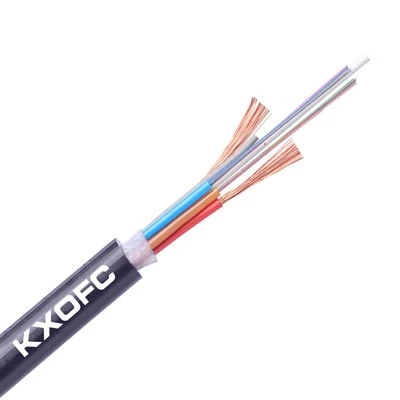
First off, let’s keep it simple: both are fiber optic cables designed to live in ducts—those underground or overhead pipes that keep cables safe from weather, digging, random lawnmowers, you name it. The difference boils down to how light travels through them, and that’s not just a tech detail—it directly affects how far your signal goes, how fast it runs, and how much cash you drop on the project. Let’s start with the most common mix-up: single-mode.
Single-mode (we call it SM for short, everyone does) has a tiny core—like, super tiny. We’re talking 9 microns. For reference, a human hair is about 80 microns thick, so this core is 1/10 the width of a hair. That’s so small, light only travels straight through it, no bouncing around. Multi-mode (MM, obvi) has a way bigger core—50 or 62.5 microns, depending on the type, so light can bounce all over the place as it moves. That bouncing is called modal dispersion, and it’s basically the main reason multi-mode can’t go as far. Think of it like two runners: the single-mode runner is on a straight track, never swerves, so they finish fast and steady every time. The multi-mode runner is on a track with tons of potholes, so some steps are shorter, some are longer, and they all end up arriving at different times—messy, right? That’s modal dispersion in a nutshell.
Now, speed and distance—this is where it gets real for anyone dealing with actual projects. Let’s use real numbers, not made-up ones I heard in a conference. For single-mode, with modern lasers (we use 1310nm or 1550nm lasers for SM), you can run it for 100km or more without needing a repeater to boost the signal. I once did a job for a rural school district that needed to connect a middle school to a high school 12km away—single-mode was the only way, because multi-mode would’ve died after 550 meters tops. Wait, hold on—don’t confuse multi-mode’s max distance. The latest 10G multi-mode (OM4, that’s the new good multi-mode) can do 100 meters for 10G, or 550 meters for 10G at the old 850nm wavelength. If you need 40G or 100G on multi-mode? Good luck—you’re looking at max distances of 100 meters (100G) or 400 meters (40G). Single-mode? You can hit 100G for 80km, or 400G for 2km, even 1Tbps for 10km. That’s insane. For datacenters? Multi-mode works because everyone’s within 100 meters, but if you’re connecting cities, campuses, or even remote sites? Single-mode is non-negotiable.
Next up, cost. I know, I know—everyone cares about price. Let’s get that out. Single-mode cable is cheaper per meter than multi-mode? Wait, wait—hear me out. The cable itself is cheaper because the core is smaller, so less material. But the transceivers (the little devices that turn light into data at each end) are way more expensive for single-mode. Because you need those fancy lasers that can shoot light that straight. Multi-mode uses cheaper LEDs or VCSELs, which are like the entry-level light bulbs for fiber. So if you’re doing a short run, like wiring a single datacenter floor or a small office, multi-mode is cheaper total, because the cable is a tiny bit more, but the gear is way less. If you’re doing a long haul, like connecting two office buildings 2km apart? Single-mode is cheaper long-term, because you don’t need extra repeaters along the way. Let me give you an example: last quarter, a client ordered 2km of SM duct cable plus two transceivers—total cost was around $1,200. Another client ordered 2km of MM duct cable plus two transceivers for the same speed—wait, no, they couldn’t get 10G for 2km with MM, so they had to go with 10G over MM at 550 meters, and then lay extra cable with repeaters in between, adding $800. So yeah, cost depends on your length and speed, not just the cable.
Wait, what about what they’re used for? That’s the easiest way to pick. Multi-mode is for short-range, high-speed stuff where distance doesn’t matter: datacenters, LANs, between floors of a building, small campus networks. I sell a ton of OM4 multi-mode duct cable to datacenter builders—they love it because it works for their server racks, and the transceivers are cheap for their 10G/25G/100G connections. Single-mode is for long-haul, anything over 500 meters: connecting cities, rural broadband, healthcare facilities that need to link multiple sites, utility grids, even the undersea fiber stuff (though that’s usually armored, but same single-mode core logic). I also sell a lot of SM to internet service providers (ISPs) that are expanding their networks—they lay duct cable along roads, and it can go miles without needing to boost the signal.
Wait, let’s clear up a common myth: multi-mode is older, single-mode is new? No, actually—both were developed around the same time, but multi-mode was more popular for short runs in the 80s and 90s because it was cheaper for then, and single-mode only caught up in the 2000s as speed requirements got higher. Also, don’t mix up core numbers: 50 micron multi-mode is the standard now, 62.5 is the old one that’s basically obsolete—we hardly get any orders for 62.5 MM anymore, everyone uses OM3 or OM4, which are 50 micron and way better for higher speeds.
Another thing I get asked a lot: can I mix them? Short answer: no. You can’t plug a single-mode cable into a multi-mode port without a converter, and even then, it’s not worth it because you’ll lose so much signal. We’ve had a few clients try that to save a buck, and they end up calling us a week later, frustrated because their connection is slow or dropping all the time. It’s like putting a square peg in a round hole—sometimes it fits, but usually it doesn’t, and it breaks something.
Now, let’s talk about duct-specific stuff, since that’s what we do here at our shop (you know, the duct optical fiber cable supplier I mentioned earlier). Both types are made to be pulled through ducts—they have different jackets, right? We use outdoor-grade jackets for both, but single-mode jackets are usually lighter, since the cable core is smaller, making it easier to pull through tight duct bends (super important—you don’t want to kink a cable mid-pull). Multi-mode is a bit thicker, but still flexible enough for ducts. Also, we label every single cable we sell with SM or MM, so there’s no confusion when it shows up to the job site—no more “is this the right one?” panic when you’re on a ladder at 7pm.
Wait, let’s add a real example from last year. A construction company called us to order cable for a new industrial park. They thought multi-mode would be cheaper because they were only connecting 5 buildings, each 200 meters apart. But when we calculated, their total run was 800 meters between the farthest buildings, so 10G multi-mode would only do 550 meters—they’d need repeaters, which would cost more than single-mode. They switched, and their install went off without a hitch, no repeaters needed. That’s exactly the kind of call we love—helping people avoid costly mistakes before they dig a single trench.
So, to recap the key differences, let’s make a quick cheat sheet (no, I won’t make you memorize it, but write this down):
- Core size: SM = 9 microns, MM = 50/62.5 microns
- Signal travel: SM = straight, MM = bouncing (modal dispersion)
- Max distance for 10G: SM = 100km, MM = 550m
- Transceivers: SM = expensive, MM = cheaper for short runs
- Best for: SM = long-haul, cities/remote sites; MM = datacenters/LANs/small spaces
Now, here’s the part you’ve been waiting for—if you’re in the market for duct optical fiber cable, don’t guess. We stock both single-mode and multi-mode, all outdoor-grade, duct-ready, tested before it leaves our warehouse. We’ve been working with contractors, ISPs, datacenter builders, and small business owners for years, so we know exactly what you need—no upselling, no jargon, just straight talk. If you’re not sure which one fits your project, shoot us a message (no website link, just reach out to our team) and we’ll help you pick the right cable, no pressure. We also offer bulk discounts for big jobs, same-day shipping for most orders, and 24/7 support if you run into issues on the job. No more staying up till 2am Googling “single mode vs multi mode” at 7pm on a Friday—we’ve got your back.
Before I wrap this up, let’s make sure I didn’t miss anything. Oh—one more myth: single-mode is always faster. For short distances, 10G multi-mode is just as fast as 10G single-mode. The speed only drops when you go long. So it’s not about “better” or “worse”—it’s about matching the cable to your project’s needs. If you’re wiring a 50-meter office, MM is perfect. If you’re connecting 10km between two towns, SM is the only way to go.
At the end of the day, I see a lot of suppliers selling cable without explaining this, and that just leads to mistakes. We don’t do that here. We’ve built our business on helping customers get the right cable the first time, no headaches. So whether you’re a contractor with a big duct pull coming up, a small business owner setting up a new network, or an ISP expanding into rural areas, we’ve got the duct optical fiber cable you need, with the advice to back it up.

Reach out anytime for a chat, a quote, or just to ask a random fiber question—we’re here to help. Let’s get your project wired right.
Indoor Optical Fiber Cable References:
- ITU-T Recommendation G.652: Characteristics of a single-mode optical fibre and cable
- IEEE 802.3: Standard for Ethernet, Clause 10 (10 Gigabit Ethernet)
- Fiber Optic Association (FOA): "Fiber Optic Technology Basics"
- TIA-598-C: Optical Fiber Cable Color Coding Standard
Hangzhou Lin’an Kexin Optical Cable Co., Ltd.
As one of the most professional duct optical fiber cable manufacturers and suppliers in China, we’re featured by quality products and good price. Please rest assured to wholesale discount duct optical fiber cable made in China here and get pricelist from our factory. Customized orders are welcome.
Address: No. 28 Linglong Street,Lin’an Area, Hangzhou City, Zhejiang Province, China
E-mail: sales@kexincable.com
WebSite: https://www.kexincable.com/
